22 Small Bedroom Ideas with Smart Storage Solutions
This editorial is an exploration of the twenty-two strategies that transform compact quarters into definitive statements of style. We are no longer maximizing space; we are maximizing experience. Through the lens of architectural theory and the application of rare materials—from patinated brass to honed Arabescato marble—we redefine what it means to live small. We invite you to view the following pages not as a set of rules for “making do,” but as a blueprint for a high-fashion, sensorial retreat where the scale is modest, but the ambition is infinite.
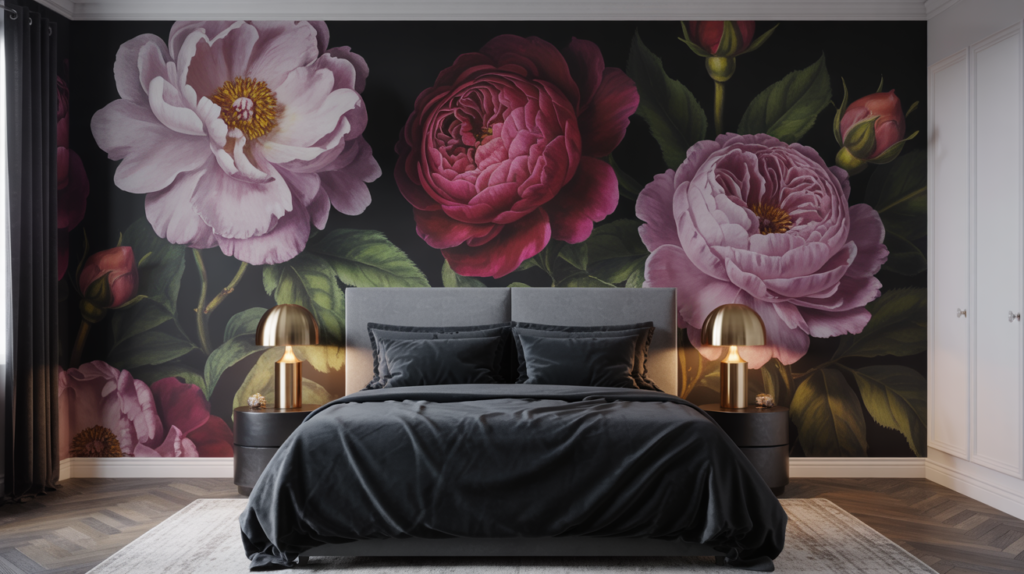
1. The Power of Monochromatic Saturation
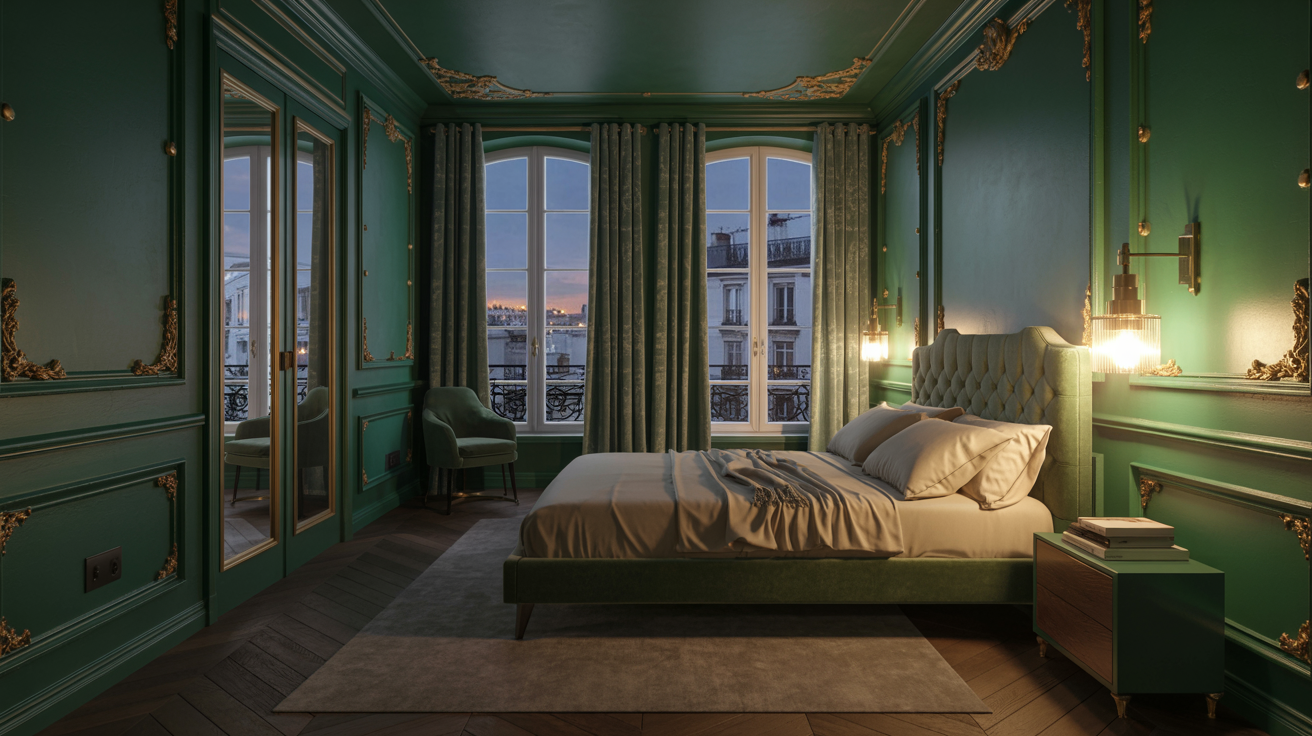
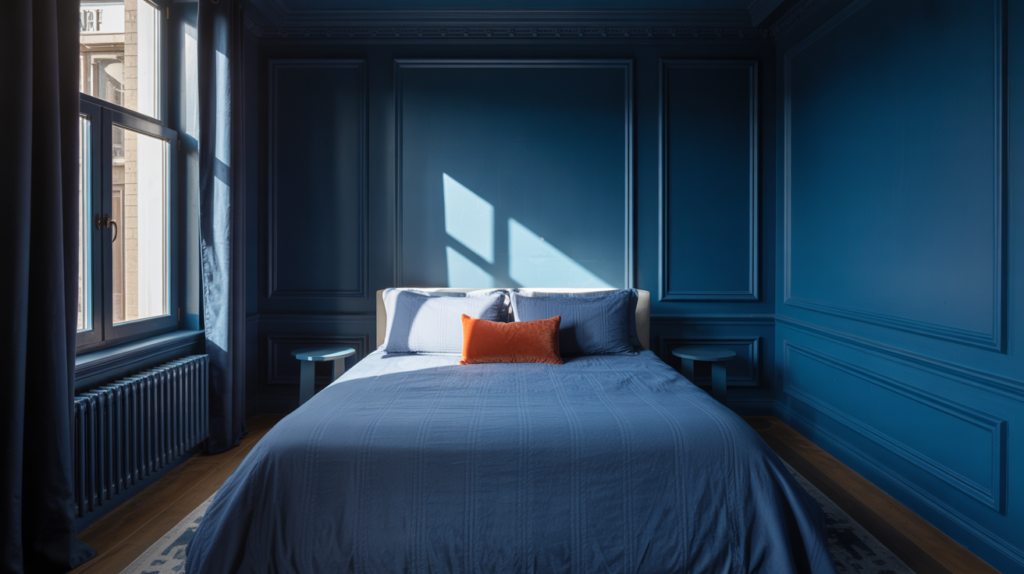
To achieve the coveted jewel-box effect, one must abandon the fear of dark pigments. Enveloping a small room in a single, saturated hue—perhaps a deep oxblood, a stormy petrol blue, or a forest green so dark it flirts with black—collapses the boundaries of the space. By painting the walls, the baseboards, and the ceiling in the same matte finish, the corners of the room visually disappear, creating an infinite, cocoon-like atmosphere. This technique, often referred to as “color drenching,” shifts the focus from the room’s dimensions to its depth. The psychological impact is immediate: the mind ceases to measure the walls and begins to feel the mood. It is a bold, sartorial choice that demands high-quality pigments with high light-absorption properties, turning a cramped sleeping quarter into a cinematic escape.
2. Bespoke Architectural Millwork
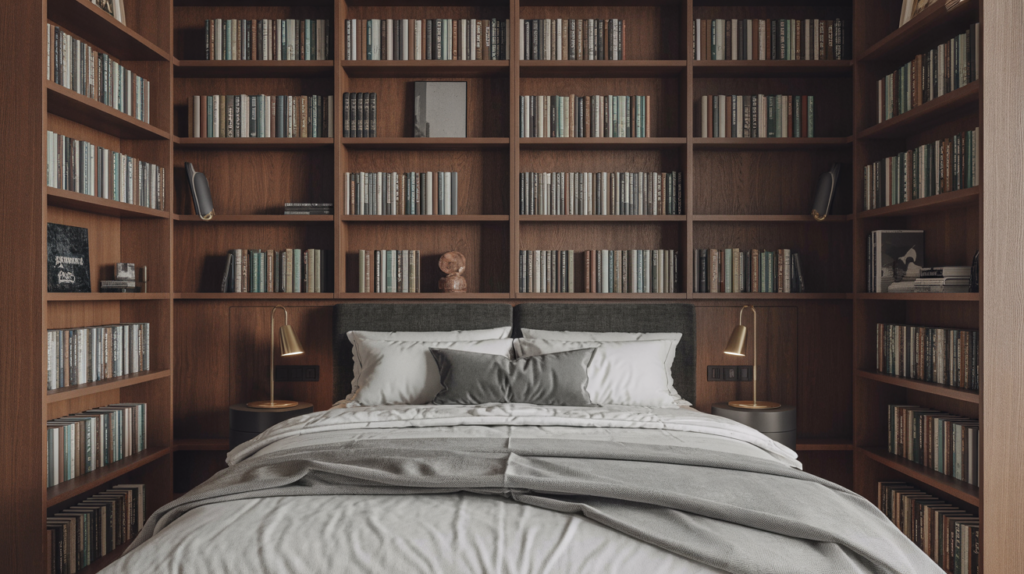
In a room where every inch is a premium asset, off-the-shelf furniture is a cardinal sin. The transition from a mere bedroom to a designer suite lies in bespoke millwork that follows the room’s unique topography. Imagine floor-to-ceiling cabinetry crafted from wire-brushed oak or dark walnut, integrated so seamlessly that it appears to be part of the original architecture. These installations should prioritize verticality, drawing the eye upward to celebrate the height of the room even if the footprint is narrow. By incorporating hidden touch-latch mechanisms instead of hardware, the cabinetry remains quiet, allowing the grain of the wood to serve as the primary visual interest. This is storage reimagined as art—a functional sculpture that houses one’s wardrobe while anchoring the room’s aesthetic.
3. The Chiaroscuro Effect
Mirrors in a luxury context are not merely functional tools; they are instruments of light and shadow, or chiaroscuro. To elevate the classic mirror trick, avoid the frameless, utilitarian sheets of glass. Instead, opt for antiqued or “foxed” mirrors with a subtle bronze tint. Placed strategically opposite a light source, these mirrors do not just reflect a room; they distill it into a soft-focus dreamscape. A large, floor-to-ceiling mirror framed in patinated brass or blackened steel creates a portal-like effect, doubling the visual depth while adding a layer of historical weight. The goal is to create a play of reflections that feels mysterious rather than clinical, turning a small wall into an expansive, shimmering vista that breathes life into the shadows.
4. Dual-Purpose Heirlooms
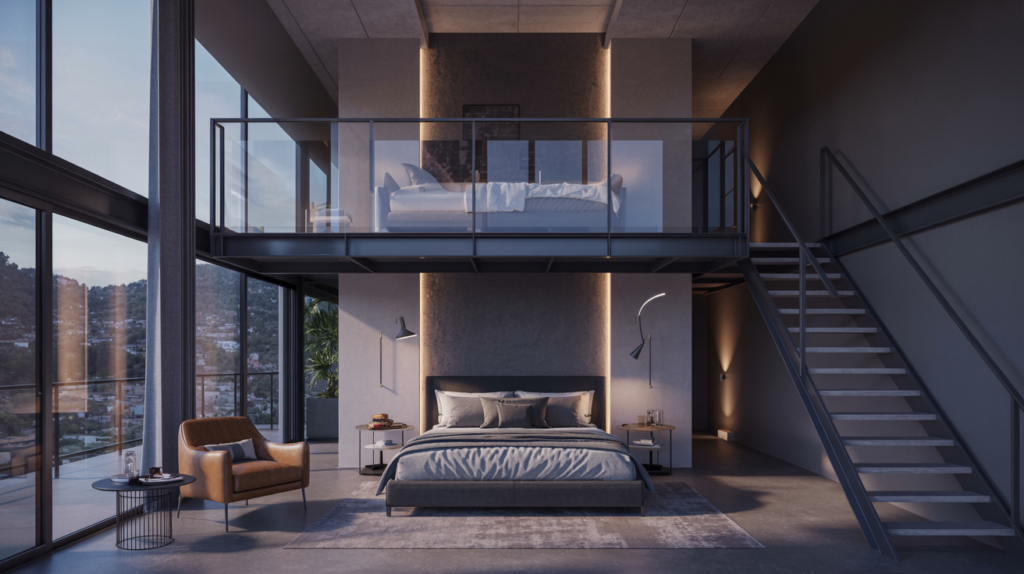
Multi-functional furniture often conjures images of plastic folding desks, but in the prestige interior, it refers to the “High-Function Heirloom.” This is a piece of furniture that performs multiple roles without compromising its pedigree. Consider a vintage Chinoiserie chest that serves as both a sculptural bedside focal point and a repository for fine linens. Or perhaps a custom-carved marble plinth that acts as a nightstand by night and a gallery pedestal by day. The key is to select items with enough character to stand alone. When a single piece of furniture solves two spatial problems while providing a moment of historical or material beauty, the room feels curated rather than crowded. It is about the economy of objects—fewer things, but of a vastly higher caliber.
5. The Luminary Layer
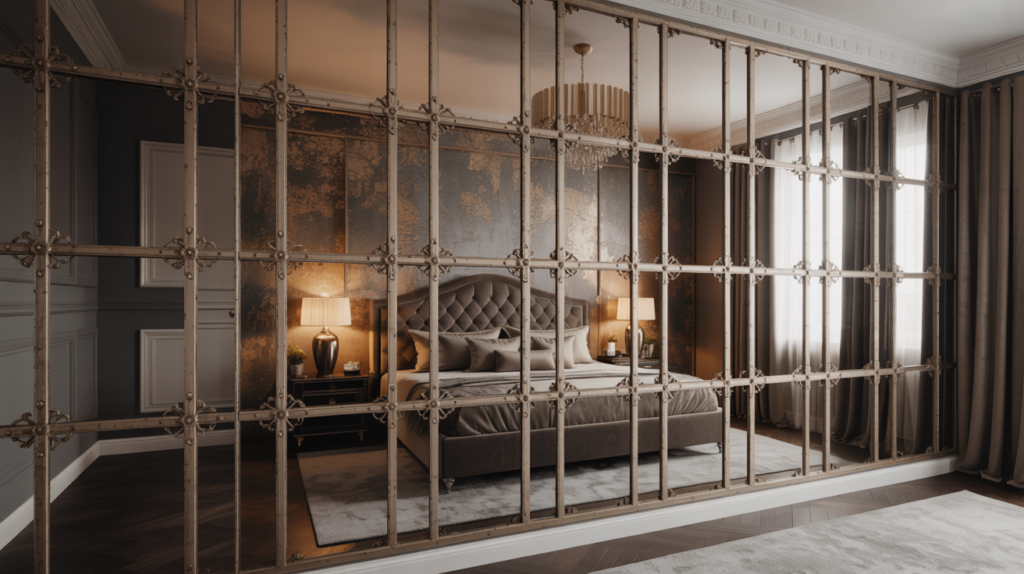
Lighting is the most potent tool for manipulating the perception of volume. A single overhead fixture is a design failure in a small space; it flattens the room and highlights its limitations. Instead, a sophisticated scheme utilizes layered illumination to create “pockets” of interest. Incorporate low-slung, hand-blown glass pendants that hover just above the nightstands, creating an intimate glow that keeps the eye focused on the mid-level of the room. Supplement this with discreet floor-level up-lighting to wash the walls in a soft, architectural haze. Using dimmers is non-negotiable, allowing the inhabitant to dial down the environment into a state of twilight. This gradation of light creates a sense of mystery, making the room feel like a sprawling suite that has simply been shrouded in evening.
6. The Elevated Plinth Bed
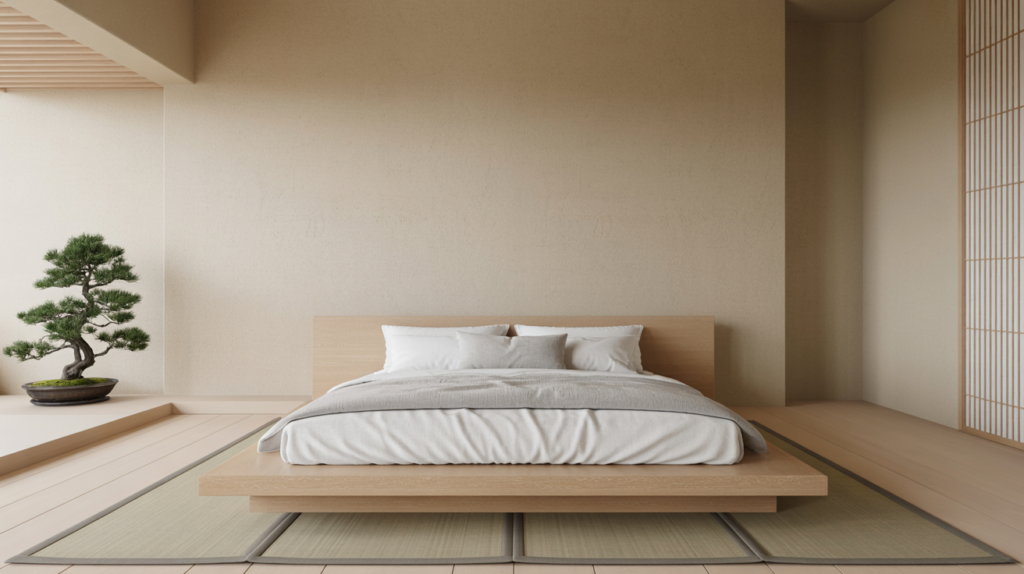
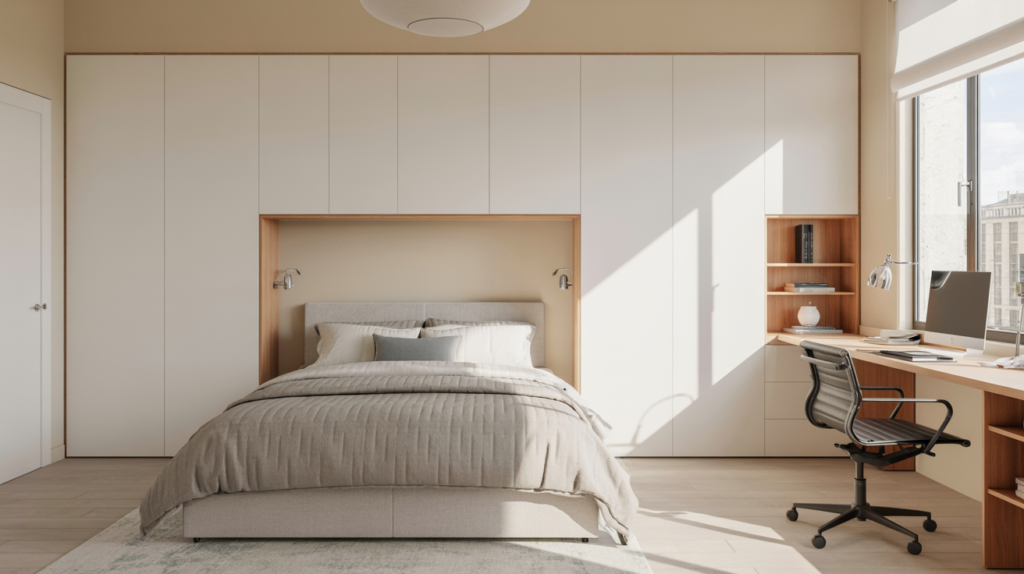
The bed is the architectural anchor of the room, and in a small space, it must serve as the foundation of organization. The “Plinth Bed” is a custom-built platform, often upholstered in a heavy Belgian linen or a supple nubuck leather, which sits atop hidden, integrated storage. Unlike the clunky drawers of mass-market frames, these should be seamless, perhaps even motorized, sliding out to reveal cedar-lined compartments for seasonal cashmere and archival textiles. By raising the bed on a solid, recessed base, you create a “floating” effect that maintains the visual flow of the floor while surrendering nothing in terms of utility. It is a sleek, modernist solution that treats storage as a hidden luxury rather than a visible necessity.
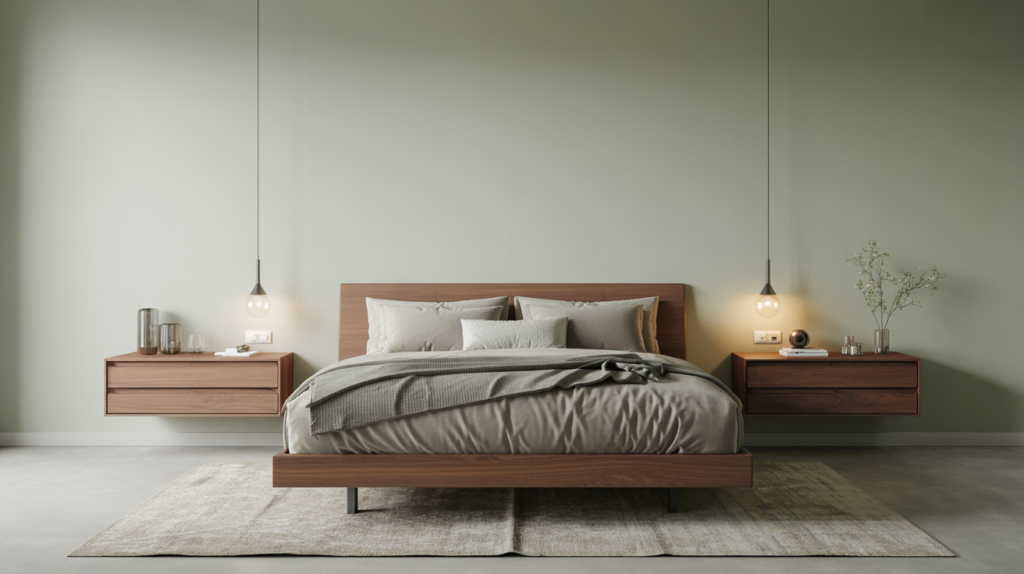
7. Suspended Cantilevered Nightstands
Floor space is the most valuable currency in a small bedroom. To preserve it, one must look to the walls. Cantilevered, or “floating,” nightstands provide a surface for evening essentials without the visual weight of legs. For a high-end finish, consider a thick slab of honed Calacatta marble or a block of charred Shou Sugi Ban wood anchored directly into the wall. This architectural sleight of hand creates an uninterrupted view of the floor, which psychologically signals to the brain that the room is larger than it is. When the floor remains visible beneath the furniture, the room breathes. These floating surfaces should be treated as minimalist altars, holding nothing but a single, well-curated object and perhaps a discreet, integrated charging port hidden within the stone.
8. Textural Accentuation
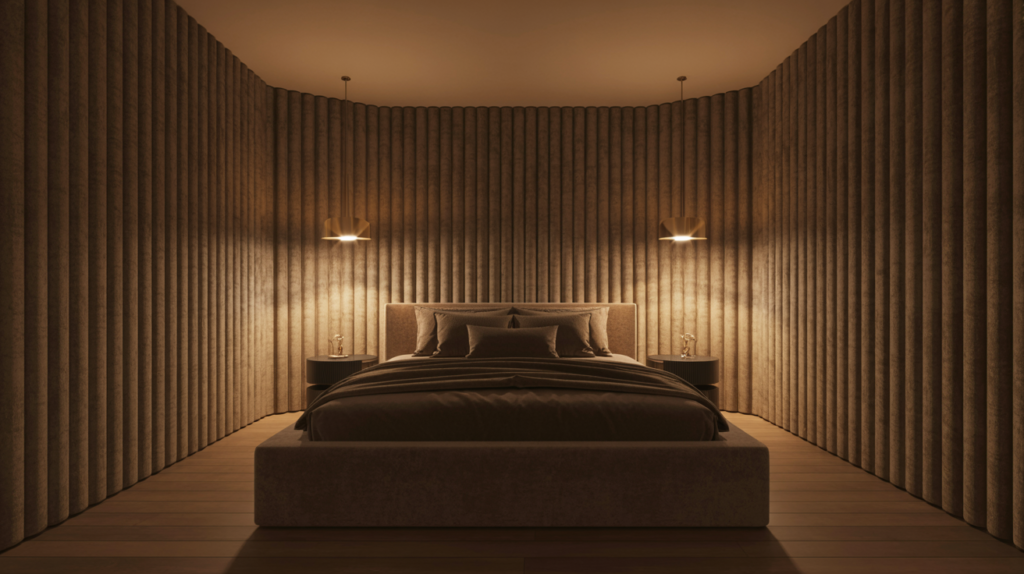
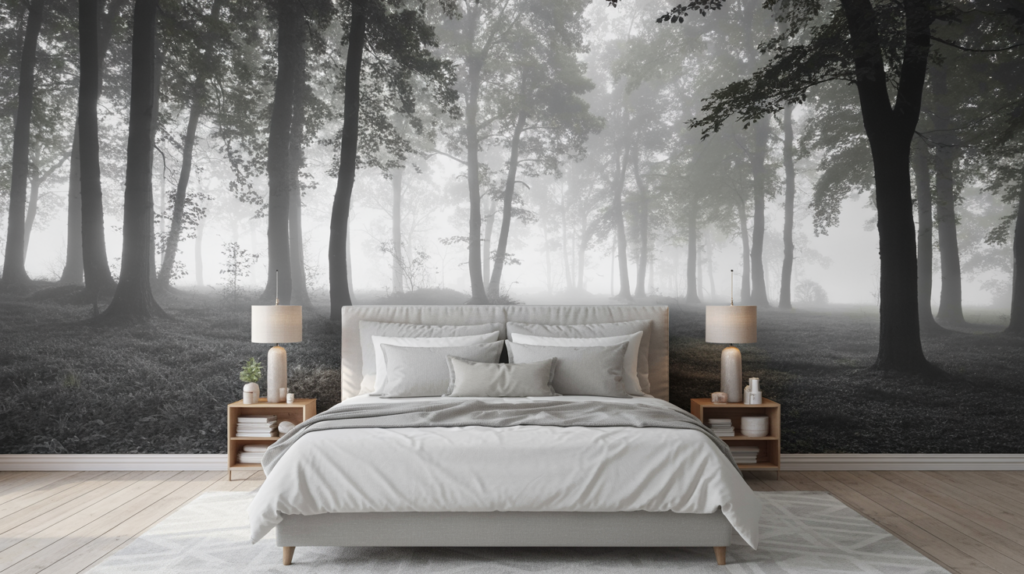
In the absence of vast square footage, texture becomes the primary storyteller. An accent wall in a jewel-box bedroom should never be a mere “pop of color.” It should be a tactile experience. Consider a wall upholstered in deep-tufted silk velvet, or perhaps a hand-applied plaster finish with a subtle metallic shimmer that mimics the interior of an oyster shell. Another sophisticated option is a floor-to-ceiling installation of fluted wood panels, which adds vertical rhythm and acoustic dampening. These textures invite touch and provide a sense of “gravitas” to the room. By focusing the most intense material application on the wall behind the headboard, you create a theatrical backdrop that defines the room’s identity and absorbs sound, furthering the sense of a private, quiet sanctuary.
9. Sinuous and Slender Silhouettes
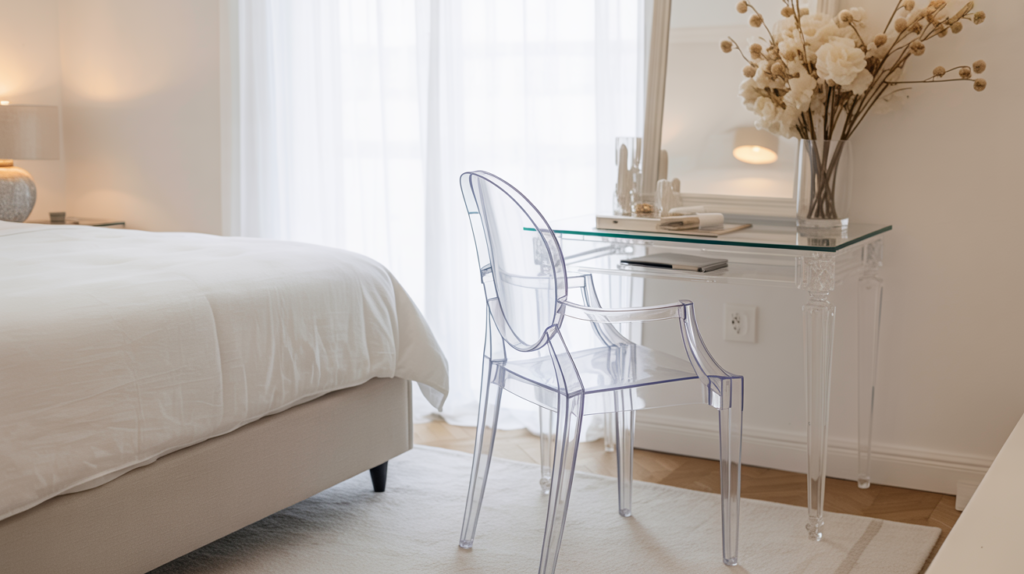
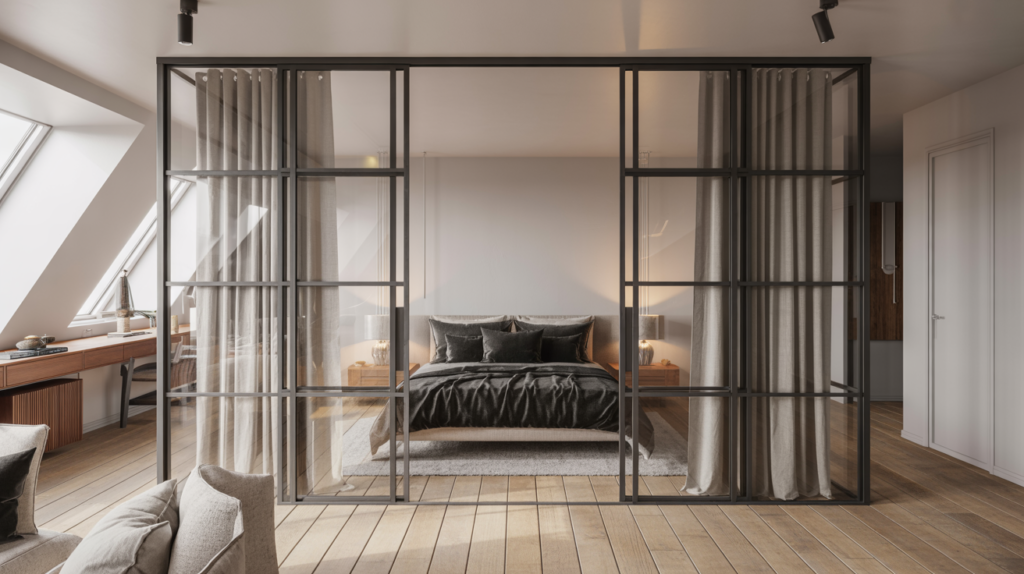
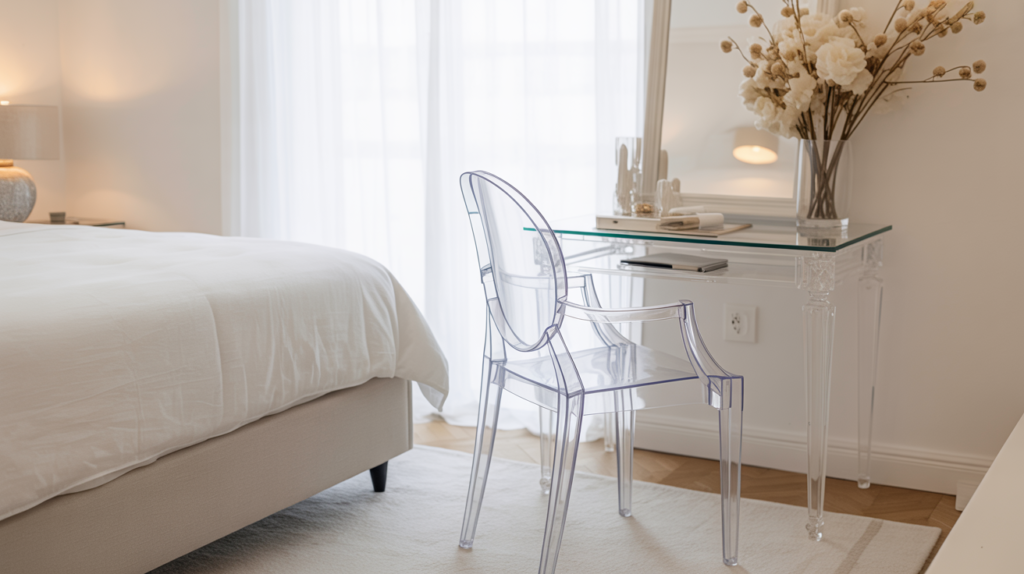
The geometry of furniture in a compact space is critical. Heavy, blocky pieces stifle the flow of energy and light. Instead, the prestige bedroom favors “Sinuous Silhouettes”—furniture with slender, tapered legs and organic, curved lines. A chair with a delicate, blackened steel frame and a bouclé seat provides a place to rest without blocking the visual path. Mid-century Italian design often offers the perfect inspiration here, emphasizing “La Dolce Vita” elegance through thin profiles and high-quality materials like rosewood and brass. By choosing pieces that feel “leggy,” you allow light to circulate around and under the furniture, maintaining a sense of levity and grace that prevents the room from feeling weighed down by its own contents.
10. The Dramaturgy of Drapery
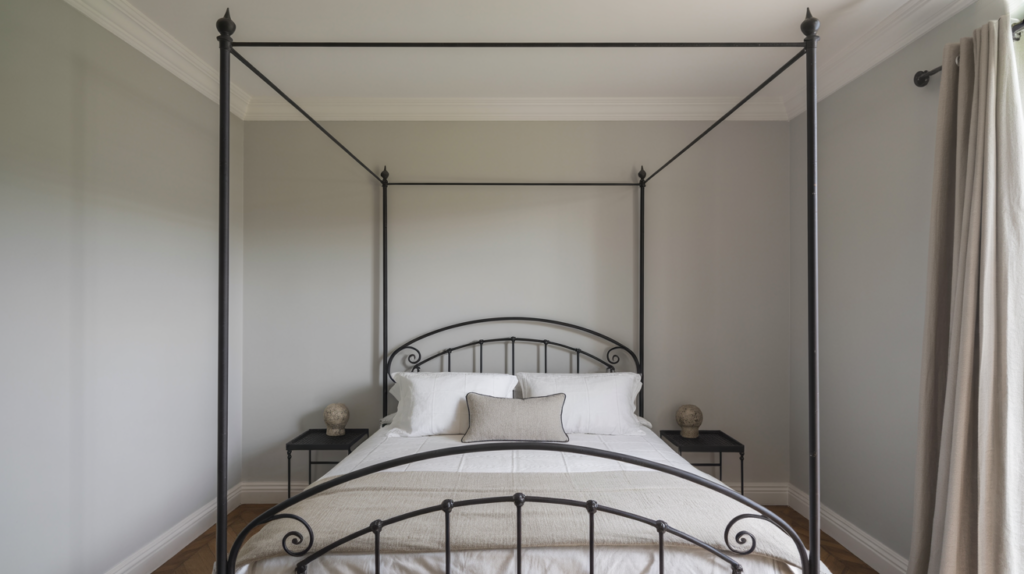
Window treatments in a small bedroom are an opportunity for architectural correction. To create the illusion of soaring heights, drapery must be hung “high and wide,” ideally from a recessed track in the ceiling itself. The fabric should be heavy and opulent—think double-width wool sateen or a thick, raw silk that “puddles” slightly on the floor. By extending the curtain rod well beyond the window frame, you allow the fabric to frame the view without obstructing the natural light when open. When closed, the curtains become a soft, acoustic wall that wraps the room in luxury. This is not just about privacy; it is about using fabric to alter the room’s proportions, turning a standard window into a grand, floor-to-ceiling portal.
11. The Sculptural Headboard as Anchor
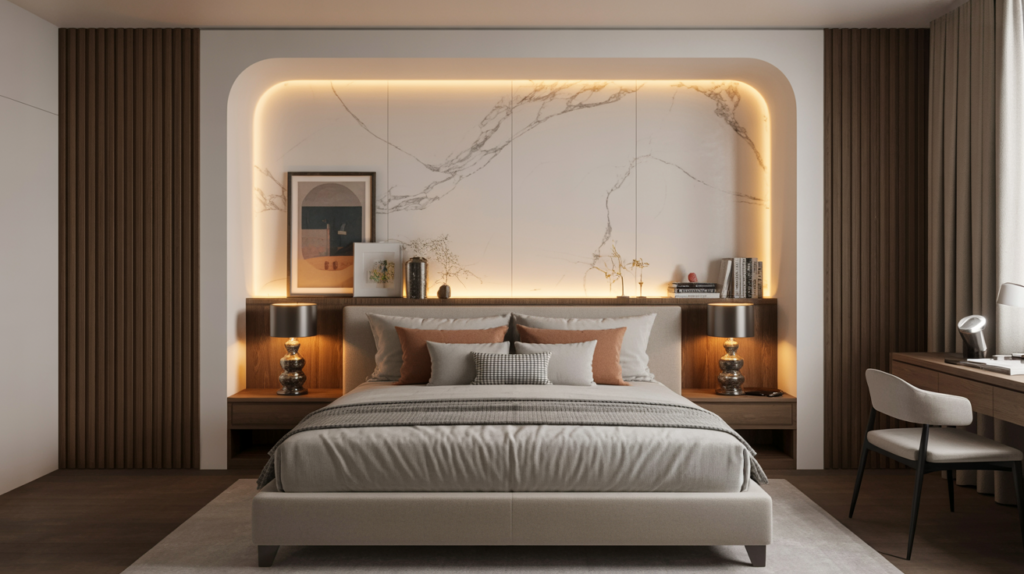
In a small room, the headboard must do the work of three pieces of art. We move away from the standard rectangular form and toward something sculptural and oversized. A custom-shaped headboard that spans the entire width of the wall can make the bed feel like a built-in architectural feature rather than an afterthought. Whether it is an asymmetrical design in a rich mohair or a series of vertical, padded “bolsters” in a soft leather, the headboard serves as the room’s visual North Star. It provides a sense of enclosure and protection—a psychological “hug” that is essential in a space designed for rest. By making the headboard the dominant feature, the rest of the room can remain minimalist and serene.
12. The Atelier Closet System
The closet in a luxury small bedroom is not a place to hide mess; it is a meticulously organized “atelier.” Internal lighting is paramount—LED strips that activate upon opening, illuminating rows of perfectly spaced garments. Replace standard doors with tinted glass or upholstered panels to add another layer of texture. The interior should be as beautiful as the exterior, with custom inserts for watches, jewelry, and accessories. By treating the closet as a high-end boutique, the act of dressing becomes a ritual of pleasure rather than a struggle with clutter. This level of organization ensures that no “overflow” enters the sleeping area, preserving the bedroom’s status as a pristine, curated environment.
13. Radical Curation and Negative Space
The most difficult luxury to achieve in a small space is the luxury of “nothing.” Radical curation is the process of editing one’s belongings down to the sublime. In a prestige bedroom, every object must have a “soul”—a story, a hand-crafted origin, or a profound aesthetic purpose. This leaves room for “Negative Space”—the empty corners and clear surfaces that allow the mind to rest. A single, exquisite ceramic vase on a dresser is more powerful than a dozen trinkets. By intentionally leaving portions of the room “undecorated,” you highlight the quality of the pieces that remain. It is the architectural equivalent of a well-placed pause in a piece of music; it gives the room its rhythm and its elegance.
14. Foundation Textiles: The Oversized Rug
A common mistake is selecting a rug that is too small for the room, which visually “shrinks” the floor. In a small bedroom, the rug should be expansive, often custom-cut to sit just inches away from the walls. A large-scale rug in a high-pile silk and wool blend provides a soft, acoustic foundation that unifies the furniture. Avoid busy, small-scale patterns; instead, look for “shimmer” textures or subtle, tone-on-tone geometric carvings. The rug acts as the “fifth wall,” grounding the space and adding a layer of warmth that is both visual and tactile. When the bed and the nightstands all sit comfortably on a single, luxurious plane, the room feels cohesive, stable, and surprisingly grand.
15. Biophilic Sculptures
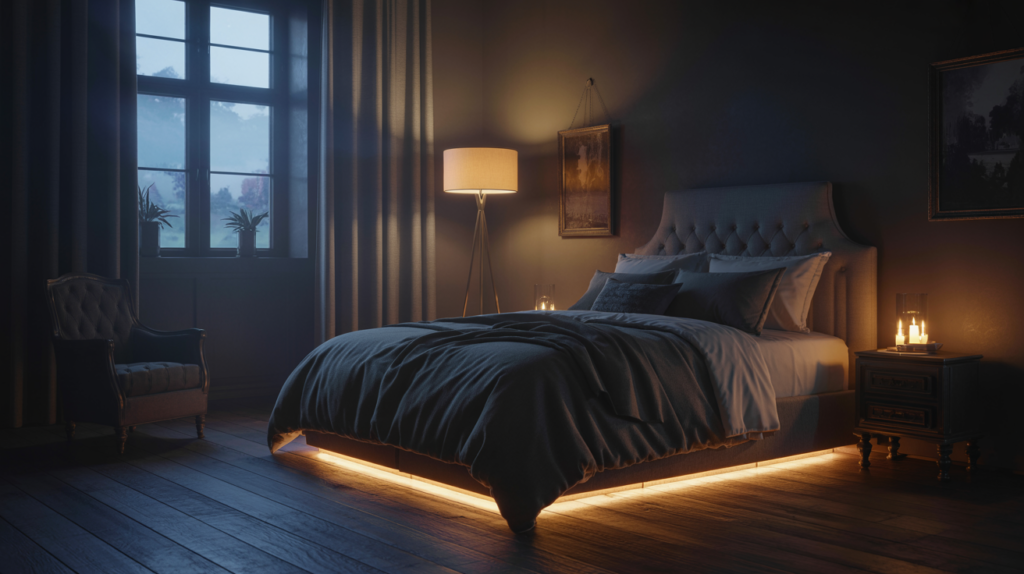
In a compact environment, greenery should be treated as a living sculpture. Rather than a clutter of small pots, choose one significant, architectural plant—perhaps a gnarled olive tree or a dramatic Fiddle Leaf Fig—placed in a handcrafted stone or terracotta vessel. If floor space is non-existent, a trailing “string of pearls” or a lush pothos can be placed on a high shelf, allowing the foliage to cascade down like a green waterfall. This connection to the natural world—biophilia—is essential for mental well-being in urban environments. The organic shape of a plant breaks up the rigid lines of the architecture, adding a sense of softness and vitality that makes the room feel fresh and expansive.
16. The Invisible Portal: Hidden Doors
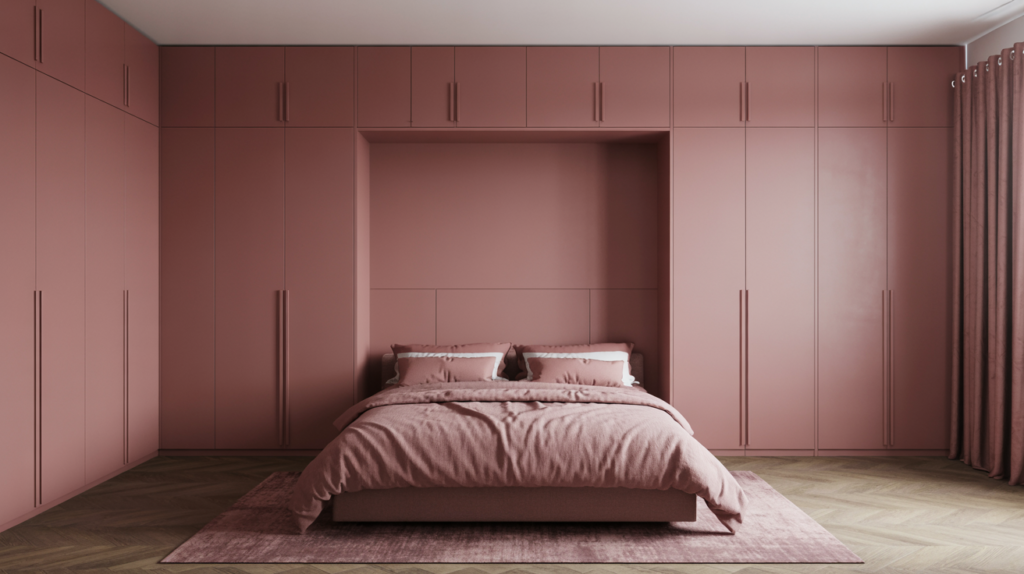
To maintain the visual integrity of a jewel-box room, the entry door and closet doors should be “invisible.” This is achieved through jib doors—doors that are flush-mounted and painted or papered to perfectly match the surrounding wall. Without the visual break of a door frame or traditional hardware, the room becomes a seamless, uninterrupted sanctuary. It creates a sense of “secret room” mystery that is incredibly sophisticated. The handle should be a minimalist, integrated pull or a hidden touch-mechanism. This architectural sleight of hand removes visual noise, allowing the focus to remain on the bed and the primary design features, making the room appear as a solid, unbroken volume of luxury.
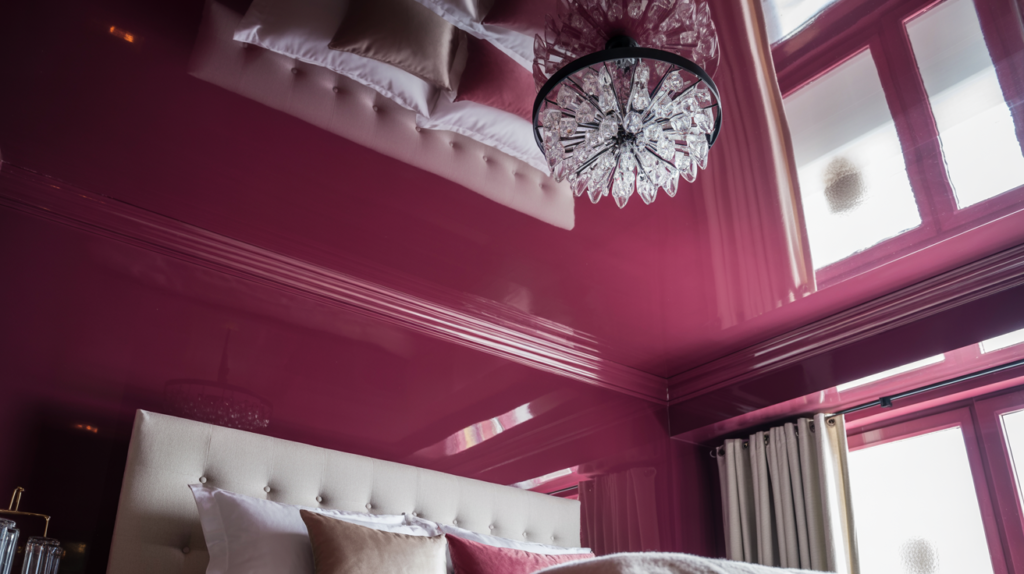
17. The Ceiling as the Fifth Wall
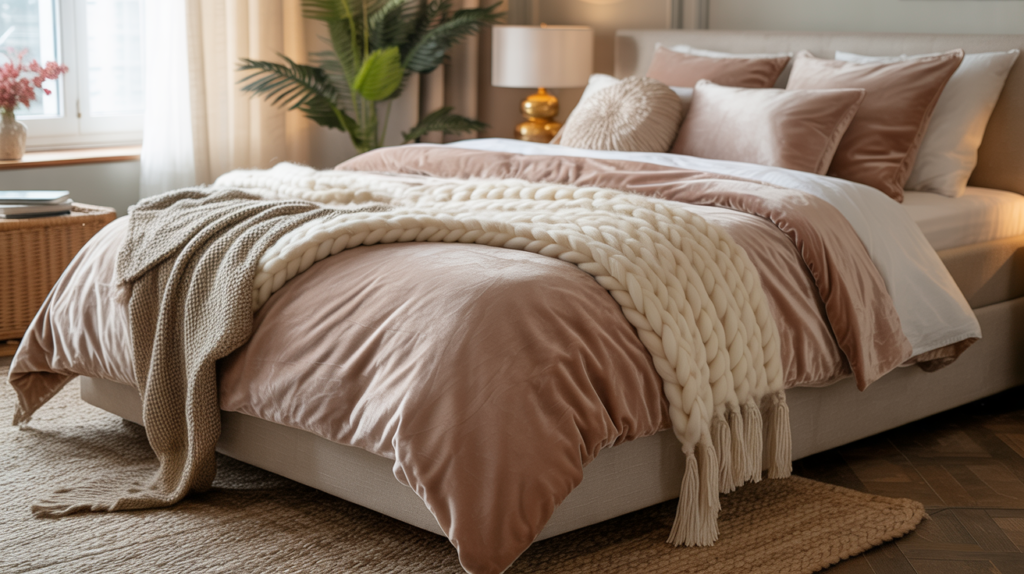
The ceiling is often the most neglected surface in a bedroom, yet in a small space, it offers a vast canvas for drama. To heighten the jewel-box feel, consider a high-gloss lacquer finish on the ceiling. This reflective surface acts like a dark pool of water, mirroring the room below and creating an illusion of double height. Alternatively, a subtle, hand-painted mural or a soft, metallic leaf can add a sense of celestial wonder. By drawing the eye upward, you celebrate the vertical volume of the room, making even the most compact footprint feel airy and limitless. A ceiling with character ensures that when you are lying in bed, your view is as considered and curated as the rest of the room.
18. Integrated Architectural Sconces
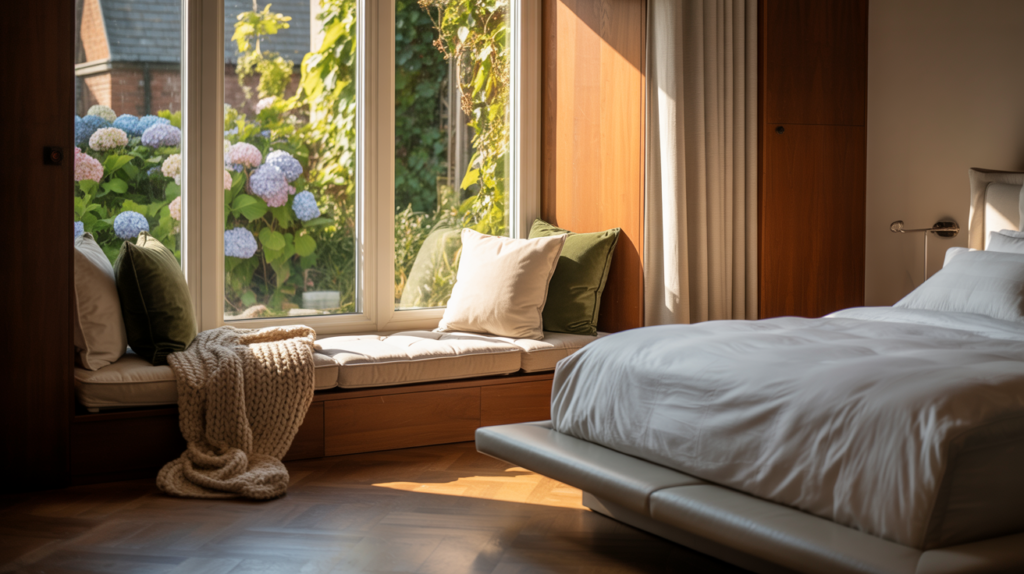
Surface space on a nightstand is sacred. To preserve it, we move the task lighting to the walls. Integrated sconces should be treated as functional jewelry. Look for designs in unlacquered brass, hand-stitched leather, or alabaster. These fixtures should be hardwired into the wall to eliminate messy cords, furthering the room’s streamlined aesthetic. A swing-arm sconce offers the ultimate in functionality, allowing the light to be positioned perfectly for evening reading before being tucked neatly back against the wall. The warm, diffused light emitted from these fixtures creates a soft halo effect, highlighting the textures of the wall treatments and adding to the room’s overall atmospheric depth.
19. The Dialectic of Materials
Luxury is found in the contrast of materials—the “dialectic” between the hard and the soft, the rough and the smooth. In a small bedroom, this dialogue must be intentional. Pair a cold, honed marble nightstand with a warm, plush mohair rug. Set a patinated brass lamp against a matte, lime-washed wall. Place a crisp, high-thread-count cotton duvet under a heavy, hand-knitted wool throw. These juxtapositions create sensory interest that keeps the eye moving and the mind engaged. In a small space, you are always close to the surfaces; therefore, the quality of these materials is felt more acutely. This material richness provides the “weight” that transforms a small room into a prestigious retreat.
20. Built-in Niches and Alcoves
When there is no room for a bookshelf, we carve one into the architecture. A recessed niche or alcove built directly into the wall—perhaps behind the bed or in a corner—provides a place for books and art without encroaching on the floor. For an elevated look, line the interior of the niche in a contrasting material, such as a dark wood veneer or a soft, back-lit onyx. This adds architectural depth to the walls, creating shadows and layers that make the room feel more complex and thoughtfully designed. A niche is a permanent, curated moment—a way to display one’s most cherished objects within the very fabric of the home.
21. Sliding Pocket Doors
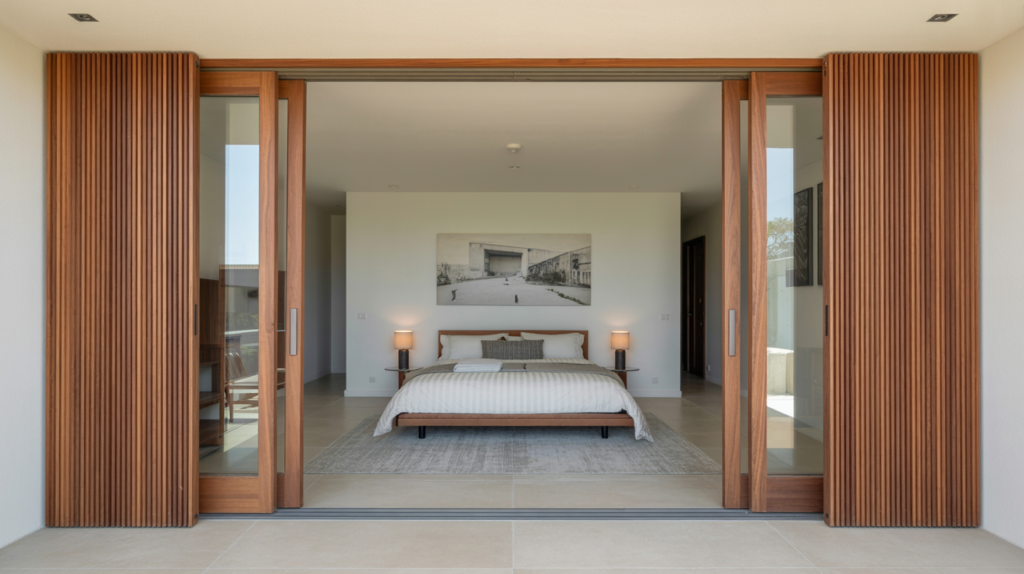
In a room where every square inch of “swing space” matters, traditional doors are an encumbrance. The sliding pocket door is the ultimate spatial luxury. Disappearing entirely into the wall when open, it creates a wide, unobstructed flow between the bedroom and the ensuite or dressing area. To elevate the pocket door, consider a heavy, solid-core door with a unique finish, such as fluted glass or a rich, dark lacquer. The hardware should be recessed and substantial, providing a tactile sense of quality every time the door is moved. This transition between spaces becomes seamless and fluid, making the bedroom feel like part of a larger, interconnected suite rather than a closed-off box.
22. Artful Symmetry and Visual Balance
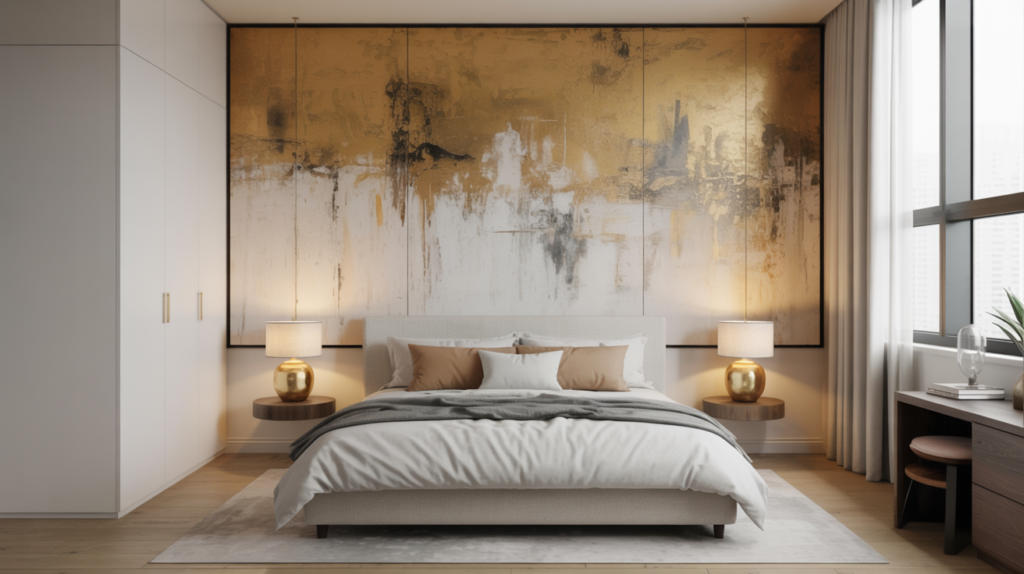
The human brain finds peace in symmetry, and in a small space, this balance is essential for preventing a feeling of chaos. A symmetrical layout—identical nightstands, matching sconces, and a centered bed—creates a sense of order and “rightness.” It grounds the room and provides a clear, central axis. This doesn’t mean the room should be boring; rather, the symmetry provides a stable framework within which you can play with texture and color. When the visual “weight” of the room is evenly distributed, the space feels larger, calmer, and more professional. It is the final touch of the editor’s hand, ensuring that the jewel-box bedroom is a place of absolute, harmonious repose.