21 Style Half Paneled Walls for a Timeless Home Look
There is an architectural humility to the plain, drywall box that simply does not resonate with the soulful home. In our pursuit of the “Jewel Box” aesthetic—spaces that feel enveloped, curated, and deeply atmospheric—we often look to the walls to provide the first layer of clothing for a room. Half-paneled walls, or wainscoting, serve as the historic anchor of interior design. They lower the visual center of gravity, creating a sense of permanence and grounding that paint alone rarely achieves.
However, the modern application of this classic technique is far removed from the stiff, formal parlors of the past. Today, half-wall paneling is a vehicle for texture, color theory, and light manipulation. It is the juxtaposition of the raw and the refined; the dialogue between historic molding and contemporary art.
Whether you are looking to create a moody, monochromatic study that feels like a warm embrace, or a hallway that acts as a gallery for your life’s collection, the half-wall is your most potent tool. Below, we explore 21 distinct approaches to this timeless architectural feature, curated for the design-forward eye.
1. The Color Drench: A Monochromatic Envelope
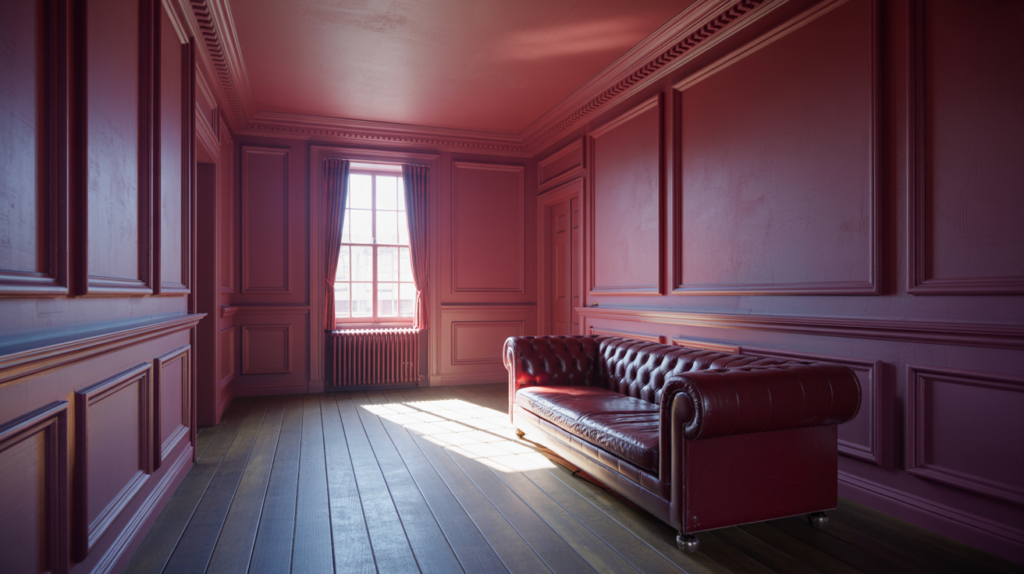
The era of the stark white ceiling is quietly fading. To achieve true atmospheric depth, we turn to “color drenching.” This technique involves taking a single, rich hue—perhaps a bruised plum, a deep cognac, or a forest canopy green—and applying it to the paneling, the skirting, the upper walls, and even the cornicing. By unifying the surfaces, you dissolve the harsh boundaries of the room. The paneling no longer cuts the room in half; instead, its relief pattern catches the light, creating a shadow play that serves as the only necessary decoration. It transforms a room into a cocoon, perfect for spaces intended for rest or intimate conversation.
2. The Graphic Horizon: High-Contrast Architecture
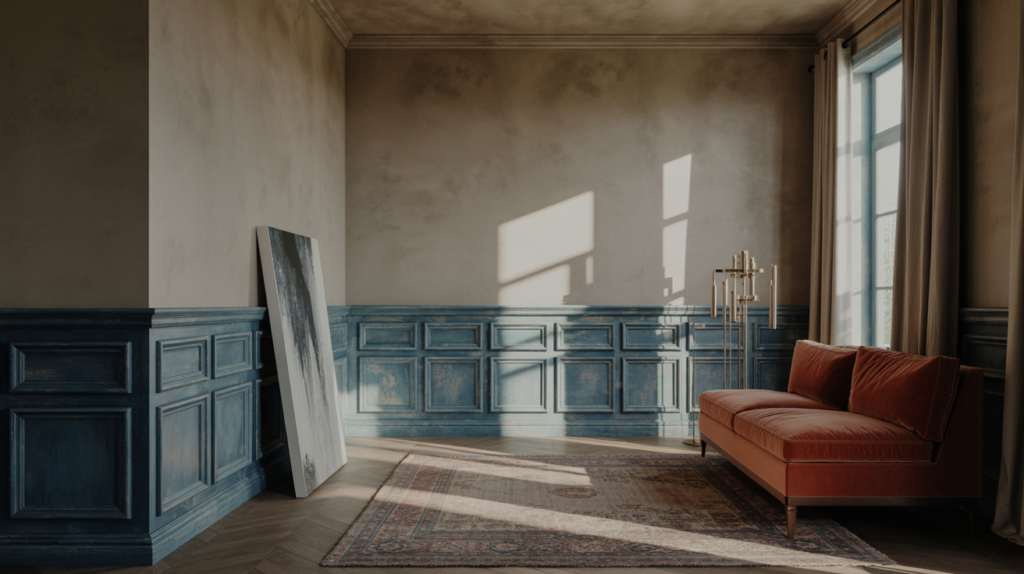
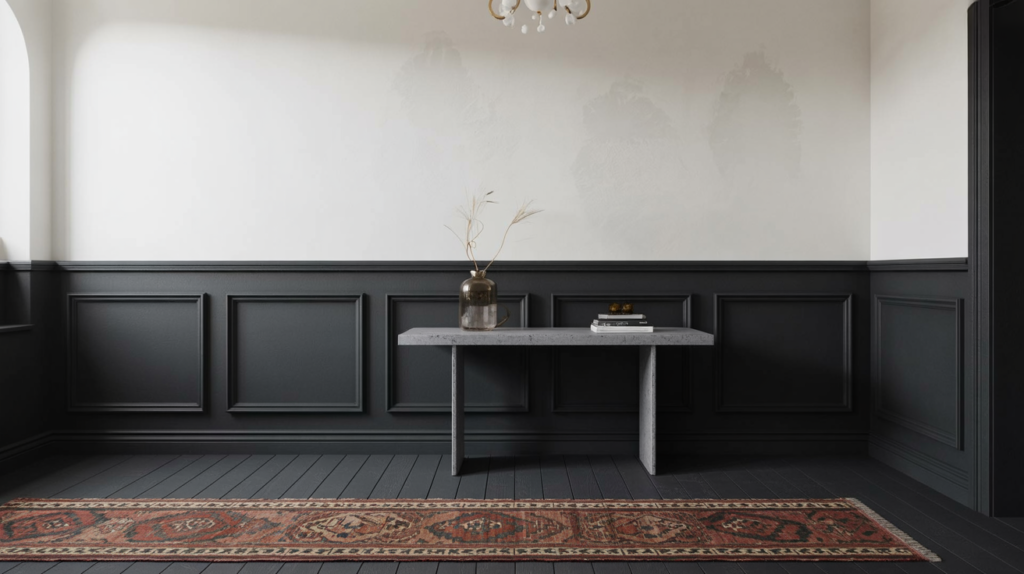
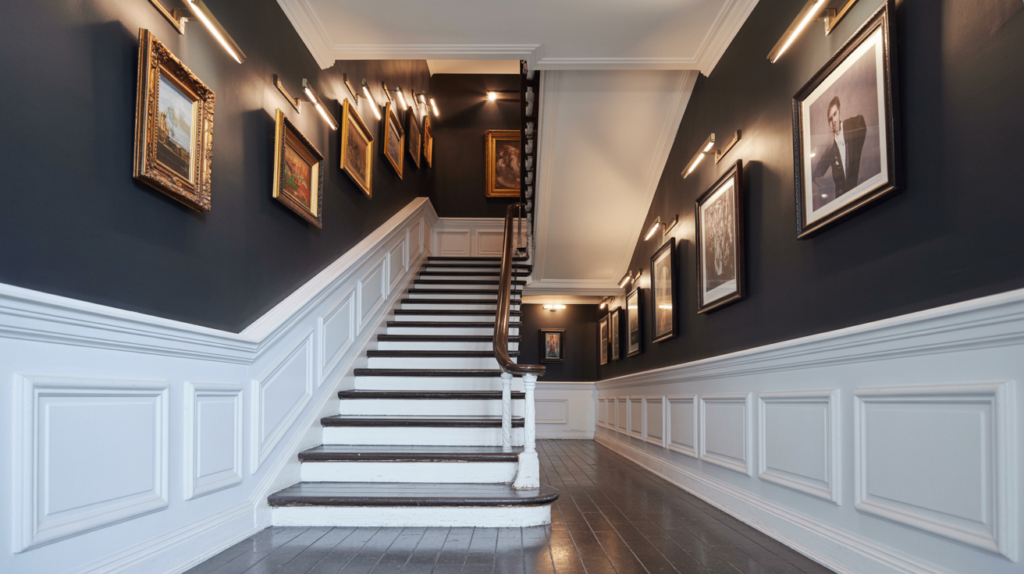
For those who appreciate the crispness of a tailored suit, the high-contrast look offers definitive structure. This is not merely about black and white; it is about weight. By anchoring the lower half of the room in a heavy, saturated tone—such as charcoal or midnight blue—and leaving the upper walls in a chalky, limestone white, you artificially heighten the ceiling. The dark paneling acts as a visual plinth for the room’s furnishings, allowing lighter fabrics and woods to pop against the dark backdrop. It is a look of disciplined elegance, ideal for entryways where first impressions are paramount.
3. The Patterned Dialogue: Wallpaper Integration
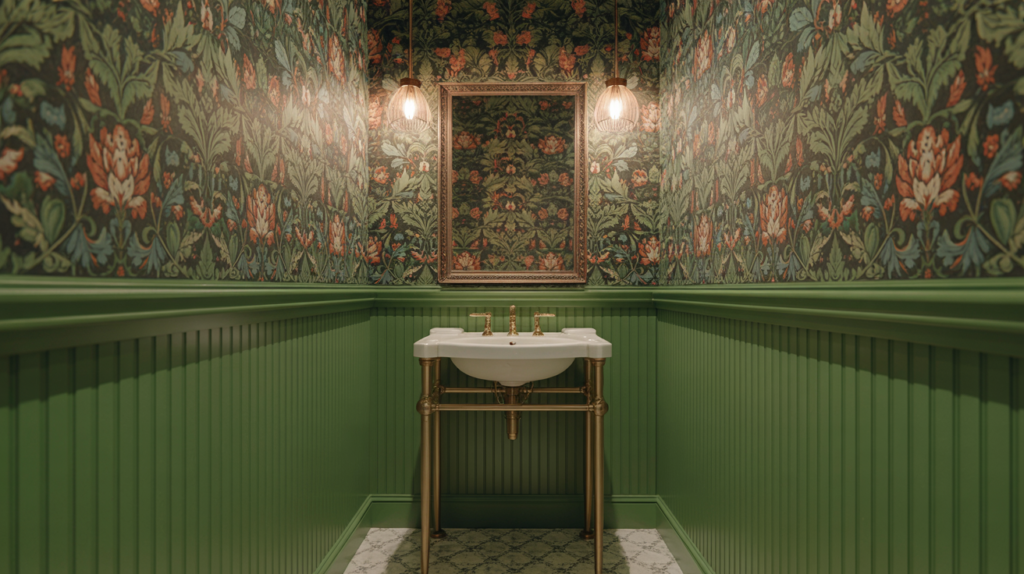
There is a distinct romance in pairing rigid carpentry with the whimsy of paper. Half-wall paneling serves as the disciplined editor to a chaotic print. If you have fallen in love with a bold, maximalist wallpaper—a William Morris botanical or a House of Hackney floral—but fear it may suffocate the room, paneling is the solution. The solid color of the wainscoting grounds the frenetic energy of the pattern. For a truly bespoke feel, pull a secondary, muted tone from the wallpaper design and color-match your paint to it. This creates a seamless visual thread that connects the architectural to the ornamental.
4. The Curated Ledge: The Gallery Unbound
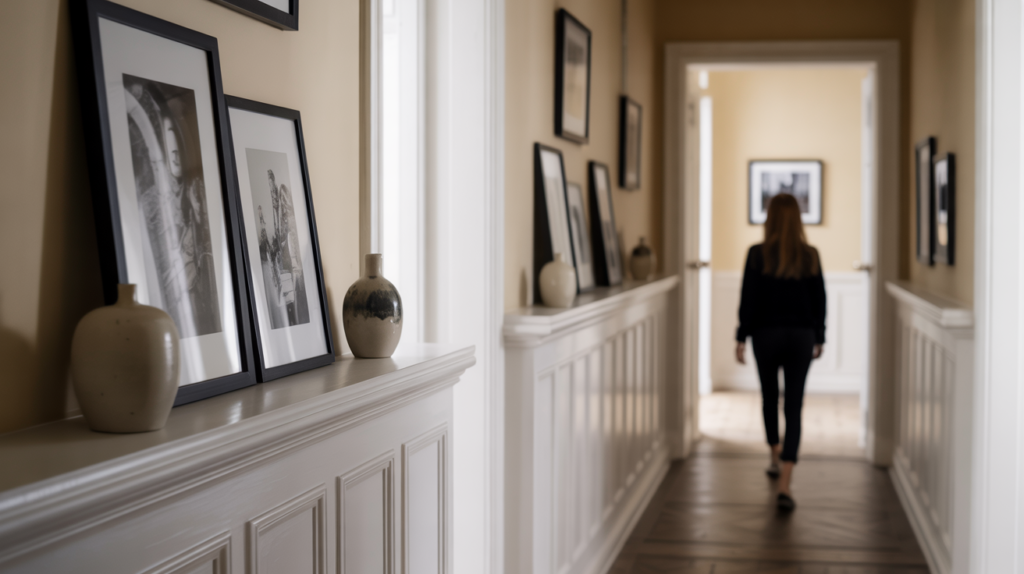
We often treat art as static, nailed permanently to a single spot. The “Picture Ledge” style of paneling disrupts this rigidity. By capping your wainscoting with a deeper, pronounced shelf (roughly 3 to 4 inches), you create a linear stage. This allows for an ever-evolving curation of framed prints, leaning mirrors, and small sculptural objects. It suggests a casual, collected lifestyle—the home of a traveler who gathers artifacts. It removes the pressure of the perfect “gallery wall” layout, allowing you to layer pieces with an artist’s insouciance.
5. Quiet Layers: The Tone-on-Tone Shift
Subtlety is the hallmark of true luxury. The tone-on-tone approach eschews high contrast for a whisper of difference. Imagine a bedroom where the paneling is painted a soft griege in a satin finish, while the wall above is the exact same hue but in a chalky, flat matte. Or perhaps, the upper wall is just one shade lighter on the color card. This technique relies on the play of light across different sheens and slight tonal shifts to create interest. It is restful to the eye, making it the superior choice for master suites and sanctuaries.
6. Raw & Organic: The Exposed Timber
In a world of synthetics, honest materials sing. We are seeing a resurgence of unpainted, stained timber paneling—not the shiny orange pine of the 70s, but matte, white-oiled oaks and rich, dark walnuts. This approach brings the texture of nature indoors. It pairs exceptionally well with bouclé fabrics, travertine stone, and blackened steel. The wood grain introduces a natural movement and warmth that paint cannot mimic, instantly lending a space a sense of history and permanence, akin to a mid-century library or a Japanese listening bar.
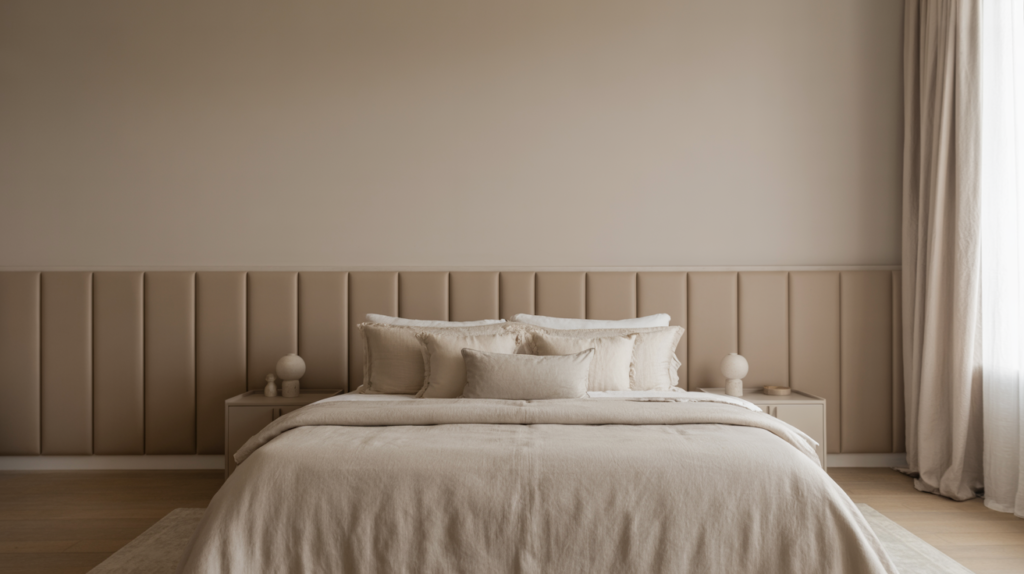
7. Modern Heritage: The Elevated Beadboard
Beadboard has long been pigeonholed as purely “coastal,” but when executed with precision, it transcends the beach house. The secret lies in the scale and the finish. Avoid the flimsy, thin sheets; opt for deeper, wider grooves and cap them with substantial molding. When painted in sophisticated, dusty hues—sage, slate, or terracota—beadboard takes on a Shaker-like utility that feels honest and hardworking. It is the perfect textural backdrop for kitchens and mudrooms, offering a rhythm of vertical lines that elongates the walls.
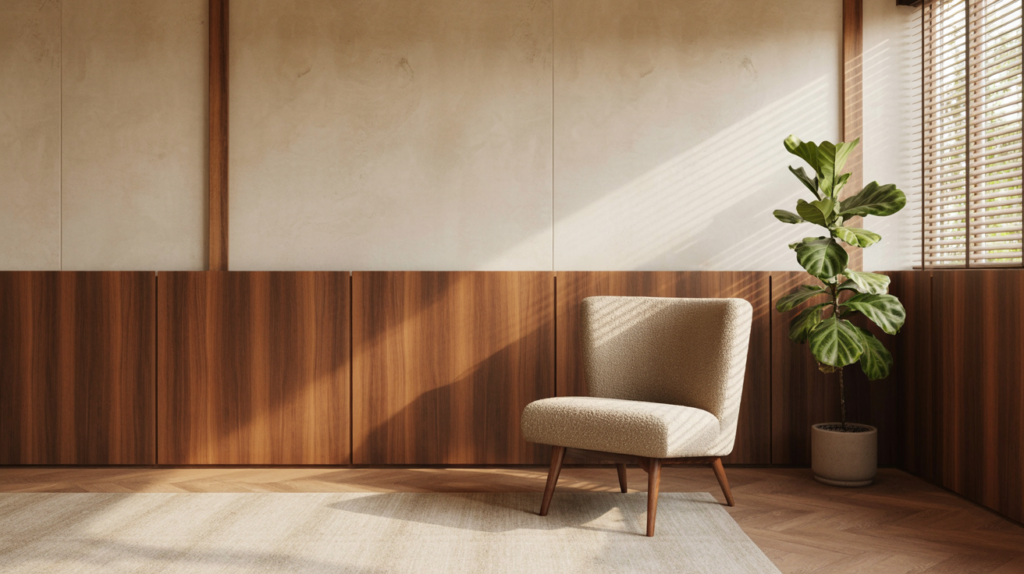
8. Midnight Drama: The Dining Room Statement
The dining room is a theater for hospitality; it deserves a set design that captivates. Dark, immersive paneling here creates intimacy, drawing guests closer to the table. We favor high-gloss finishes in these spaces—a lacquer-like shine on navy or aubergine paneling that reflects candlelight and crystal. By keeping the lower walls dark and potentially introducing a metallic wallpaper or a dark mural above, you create a nocturnal atmosphere that feels exclusively designed for evening entertainment.
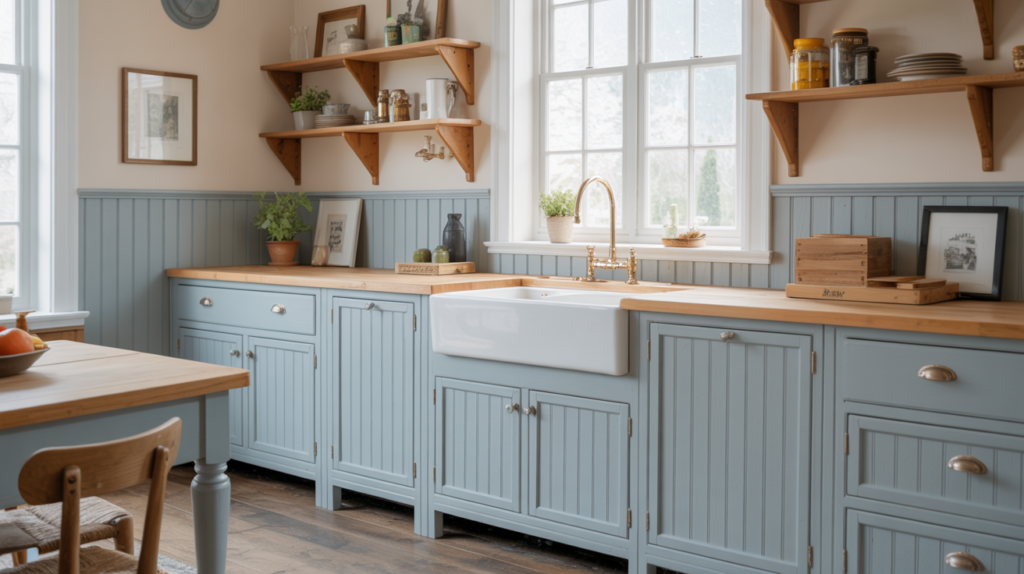
9. Whimsical Durability: The Child’s Atelier
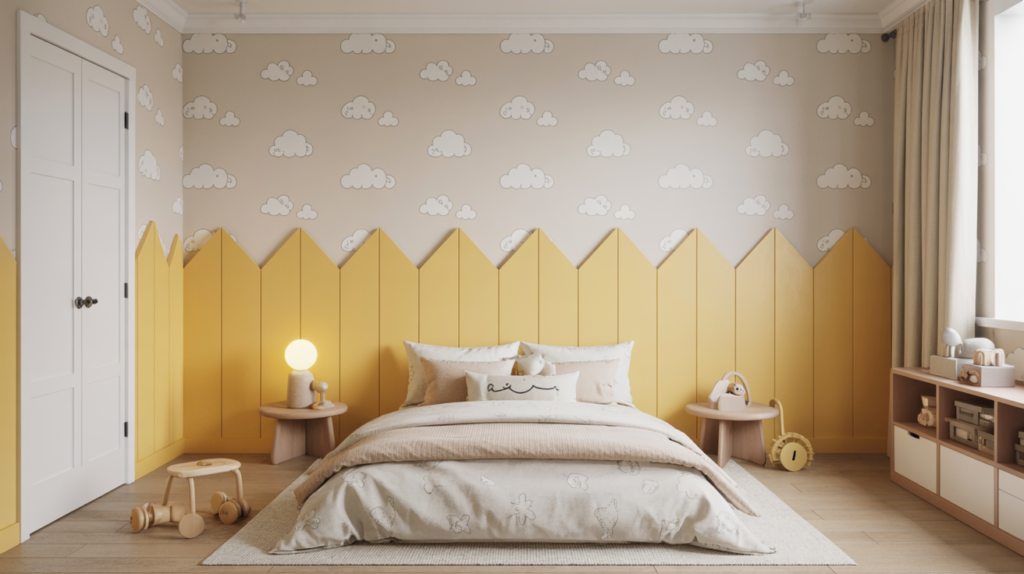
Design for children need not be childish. Half-wall paneling offers a practical armor against the wear and tear of play while providing a baseline of sophistication. By painting the durable lower section in a playful yet grounded color—mustard yellow or Nordic blue—you protect the walls from scuffs. The upper wall then becomes a canvas for imagination: a hand-painted mural, a gallery of their own art, or a playful wallpaper that can be easily changed as they grow, while the classic millwork remains a constant investment.
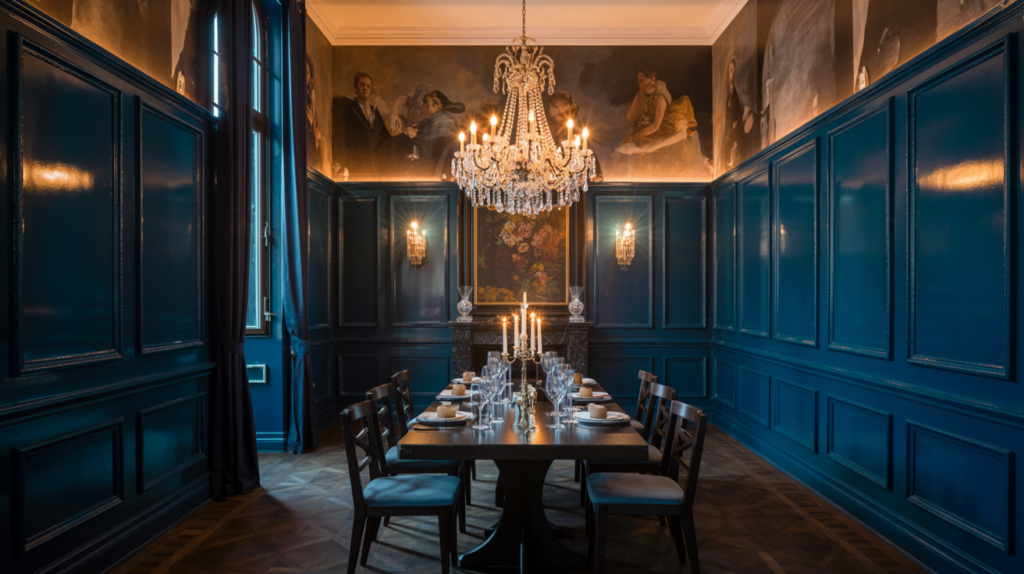
10. The Transitional Journey: Hallway Rhythm
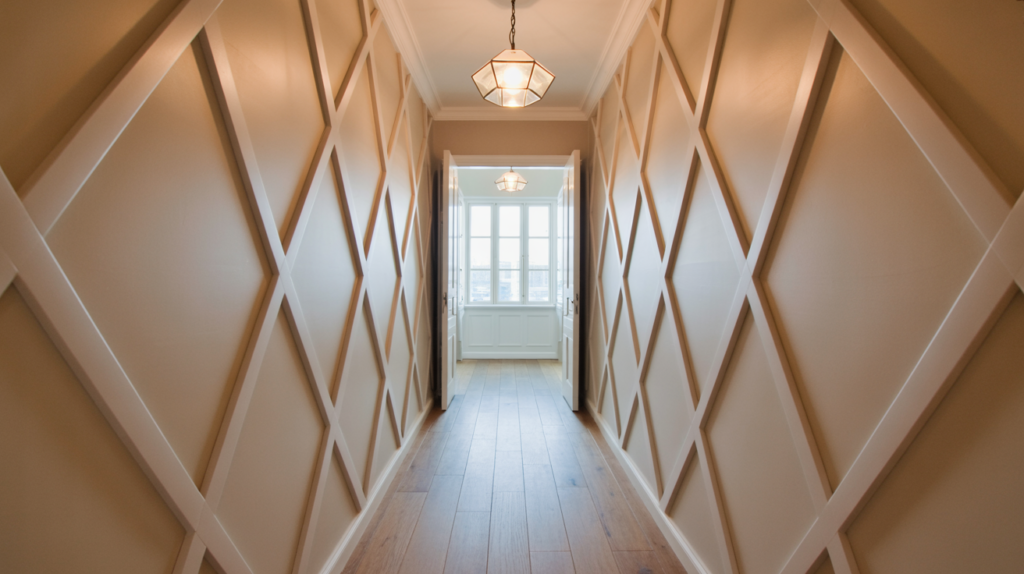
Long corridors can feel like endless tunnels. Paneling introduces a vertical rhythm that breaks up the monotony, guiding the eye forward. In narrow spaces, we recommend a “board and batten” style, where vertical strips of wood create a geometric grid. This adds depth without encroaching on the physical width of the hall. Keep the palette light and airy here to maximize the sense of space, or use the paneling to bridge the color palettes of the rooms that lead off the hallway.
11. The Spa Sanctum: Bathroom Architecture
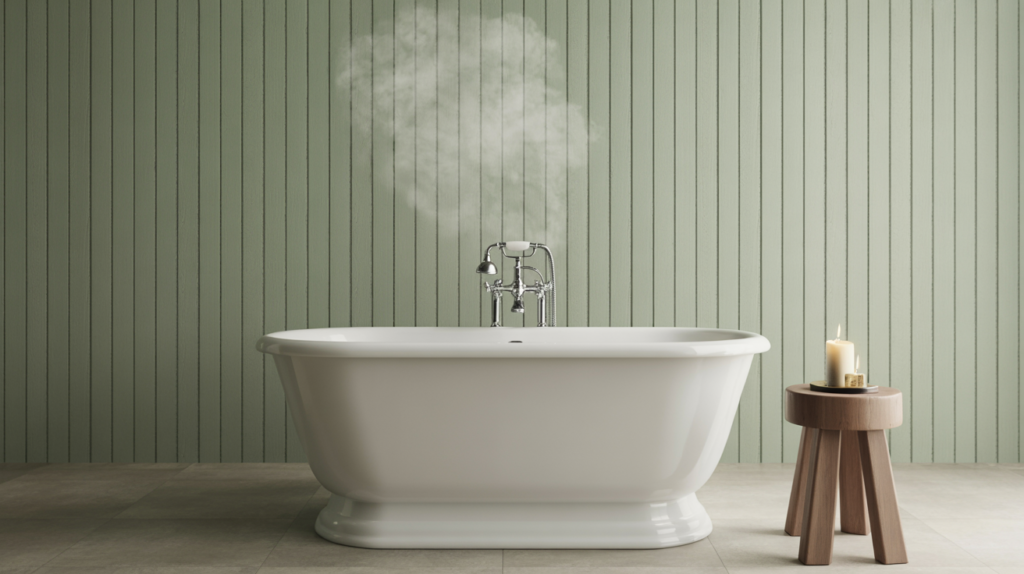
To bring the boutique hotel aesthetic home, introduce millwork to the bath. Hard surfaces like tile and porcelain can feel cold; wood paneling (properly treated for moisture) softens the acoustics and the aesthetic. A half-wall of tongue-and-groove paneling behind a freestanding tub creates a focal point and provides a shelf for bath salts and candles. Painted in soft, aquatic mists or warm neutrals, it bridges the gap between a utilitarian washroom and a restorative spa.
12. Old World Patina: Paneling Meets Plaster
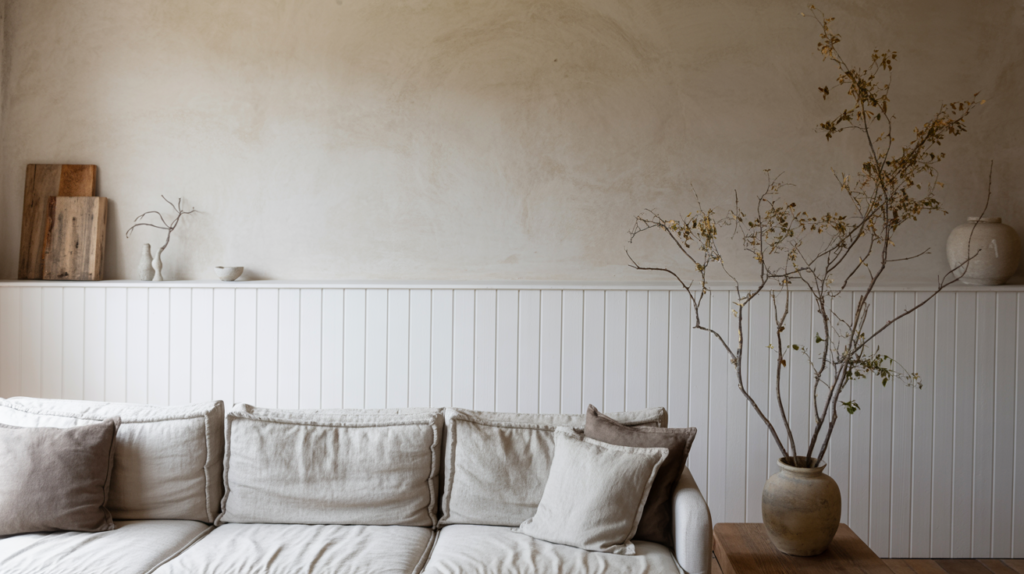
For the tactile obsession, the combination of crisp wood paneling and organic lime wash or plaster is the pinnacle of design. The contrast between the sharp, machined lines of the wood and the cloudy, hand-troweled movement of the plaster creates a vibration of textures. It feels ancient yet modern. This pairing works best in neutral palettes—think warm whites, stones, and clays—where the materials themselves are the main event. It invokes the feeling of a European chateau undergoing a modern renovation.
13. The Negative Space: The Minimalist Line
Sometimes, the suggestion of paneling is more powerful than the thing itself. For the ultra-modernist, a simple “chair rail”—a single strip of horizontal molding running the perimeter of the room—can define the space without the visual noise of vertical stiles. When painted the same color as the wall, it creates a subtle shadow line, a distinct horizon that organizes the furniture placement. It is architectural minimalism: stripping the concept of wainscoting down to its barest essential bone structure.
14. The Avant-Garde Clash: Color Blocking
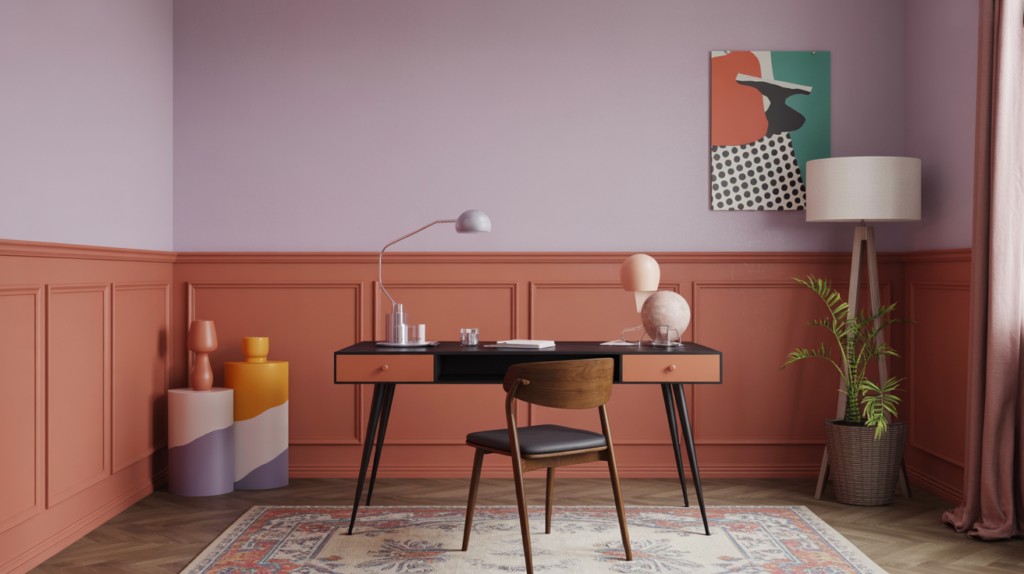
For the fearless, the half-wall is a permission slip for color blocking. This is not about matching; it is about the friction between two confident hues. Imagine a burnt orange paneling sitting beneath a pale lavender wall, or a chocolate brown base paired with a sky blue. This approach treats the wall as a piece of abstract art. It requires confidence and a keen eye for undertones, but when executed correctly, it vibrates with energy. It turns the architecture itself into the room’s primary accessory.
15. Utilitarian Chic: The Mudroom Workhorse
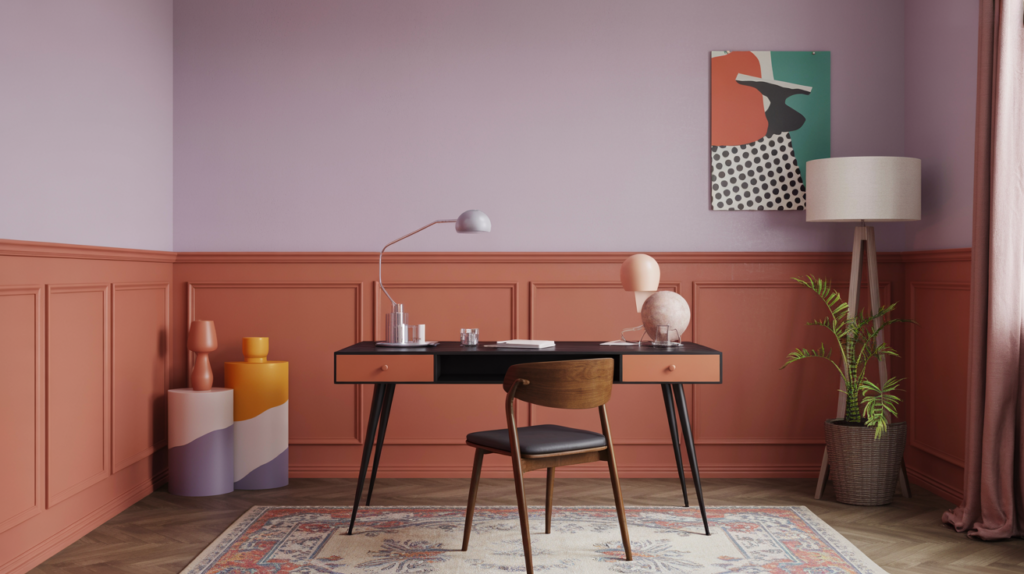
In high-traffic zones, beauty must serve function. Here, the paneling becomes a structural necessity. Heavy-duty board-and-batten provides the framework for hooks, shelving, and bench seating. By painting this joinery in a dark, forgiving color—slate grey or hunter green—you hide the scuffs of daily life while creating a handsome “drop zone.” The repetitive vertical lines of the batten create a sense of order in a space that is often prone to chaos.
16. Ascending Architecture: The Staircase Rake
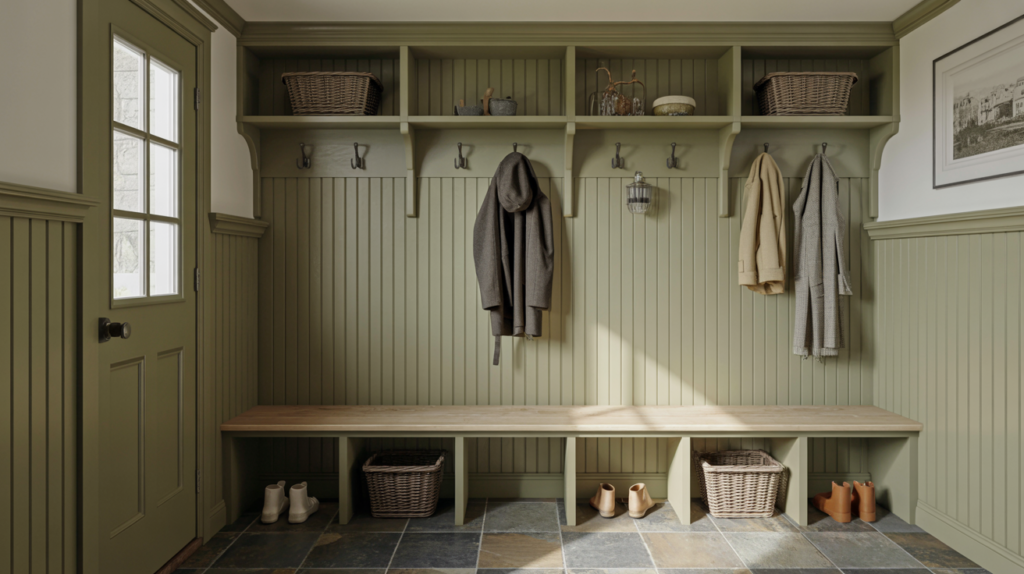
The staircase is the spine of the home, yet often neglected. Running paneling up the stairs, following the angle (the rake) of the ascent, creates a tremendous sense of movement and grandeur. It draws the eye upward to the next level. Whether it’s a traditional raised panel or a modern slat, the continuity of the line from the hallway up the stairs ties the floors together. It turns a functional transition into a celebrated architectural moment.
17. The Camouflaged Portal: Hidden Joinery
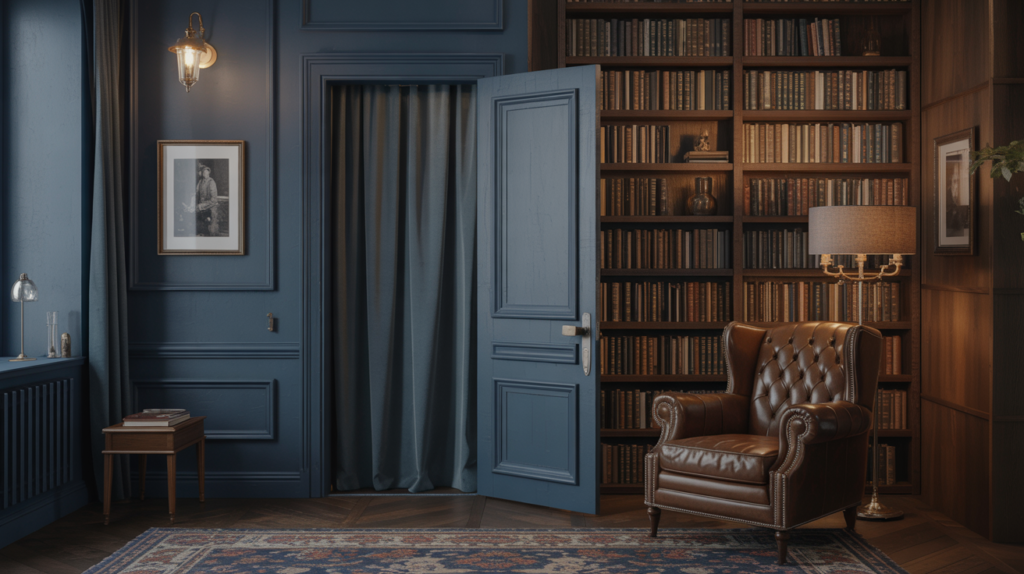
In the “Jewel Box” concept, interruptions are the enemy. Standard white doors can break the visual spell of a room. A sophisticated application of paneling involves carrying the design across the doors. By applying the molding directly to the door leaf and painting it to match the surrounding walls, the exit disappears. The room feels complete, unbroken, and secret. It is a trick borrowed from historic libraries and speakeasies that adds a layer of mystery and seamlessness to the interior architecture.
18. The Fifth Wall: Connecting to the Cornice
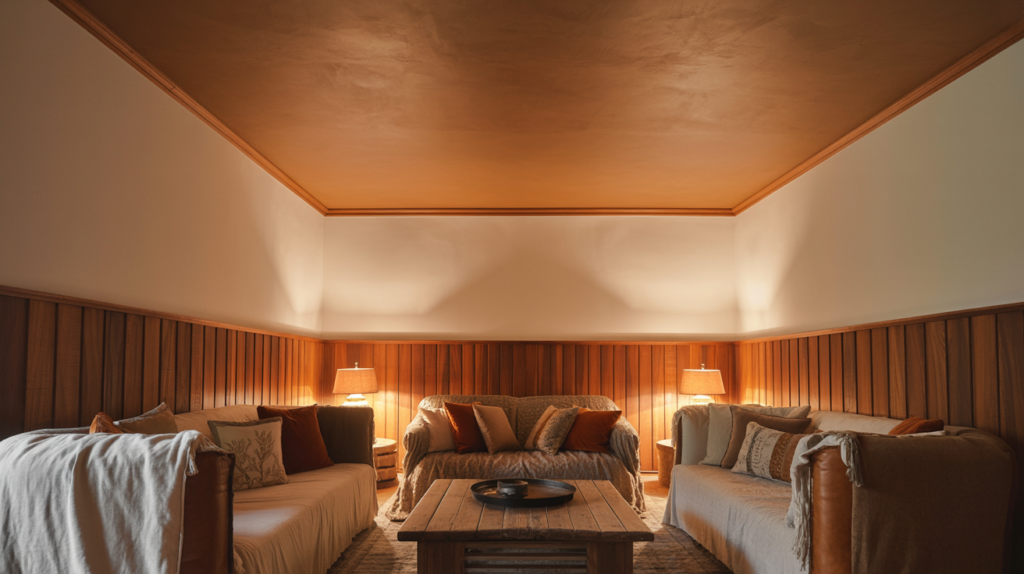
To truly envelop a space, one must consider the ceiling. A stunning way to modernize half-paneling is to coordinate it with the ceiling color, sandwiching the upper wall. For example, paint the paneling and the ceiling in the same warm taupe, leaving the middle band of the wall in a lighter cream. This creates a “lid” effect that makes the room feel cozy and intimate. It lowers the visual height of the room in a way that feels protective rather than oppressive.
19. The Marble Wainscot: Stone Integration
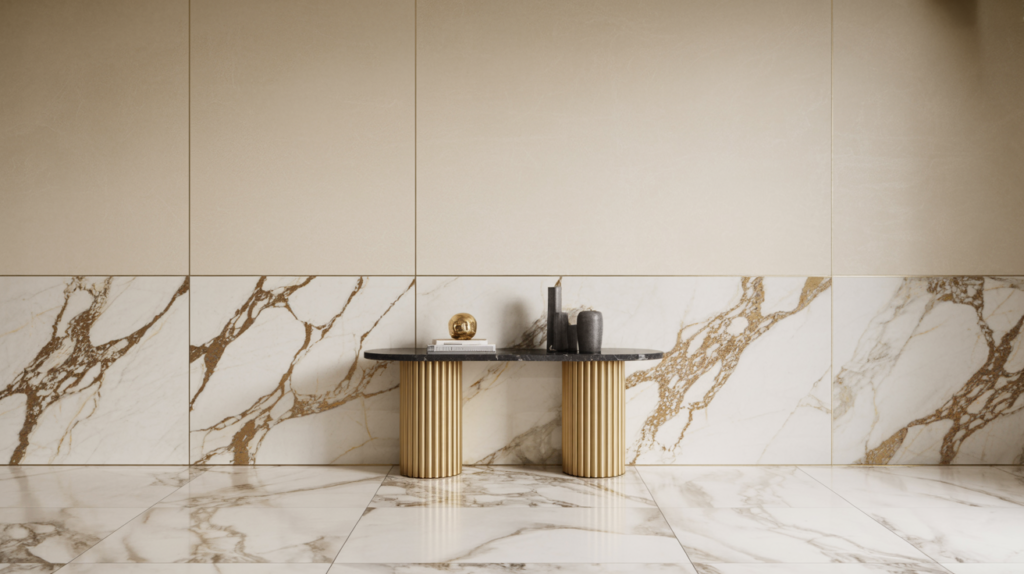
For the ultimate expression of luxury, we move beyond wood entirely. Using slabs of marble or travertine as the “paneling” on the lower half of the wall is a nod to classical Italian architecture. The veining of the stone provides the pattern, and the cool touch of the material contrasts beautifully with warm plaster or velvet wallpaper above. This is a high-investment look, best reserved for powder rooms, master baths, or a dramatic foyer where the material can be admired up close.
20. Tactile Rhythm: Fluted and Reeded Detail
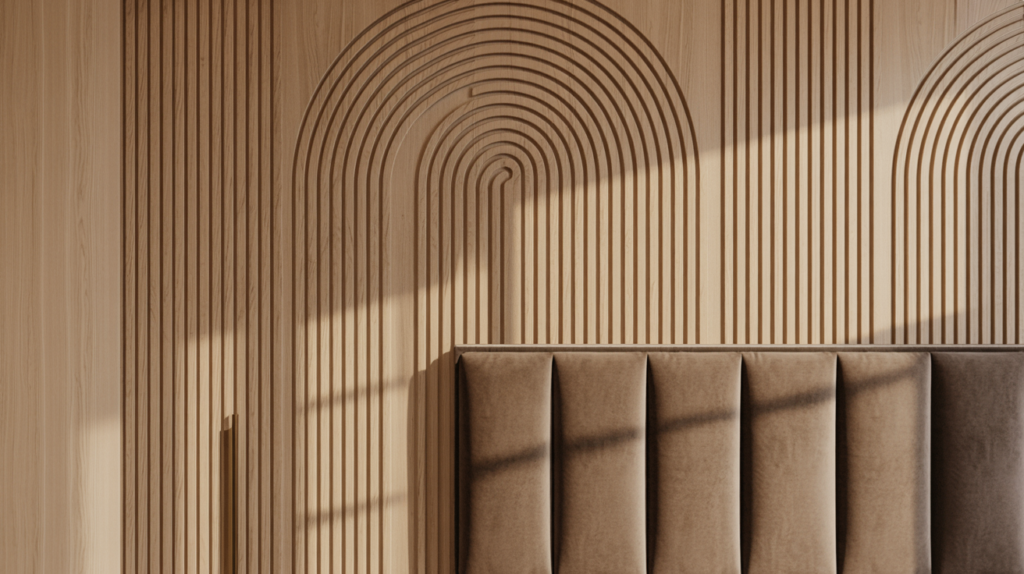
The current zeitgeist favors soft curves over sharp angles. Reeded or fluted paneling—comprising tightly packed, convex vertical ridges—adds a incredible amount of texture to a space. It interacts with light differently than flat panels, creating a soft, rolling gradient of shadows. It feels incredibly tactile, begging to be touched. Used as a half-wall, particularly in curved spaces or behind a headboard, it introduces a contemporary, Art Deco-revival feel that is both soft and structured.
21. Gilded Edges: Metallic Inlays
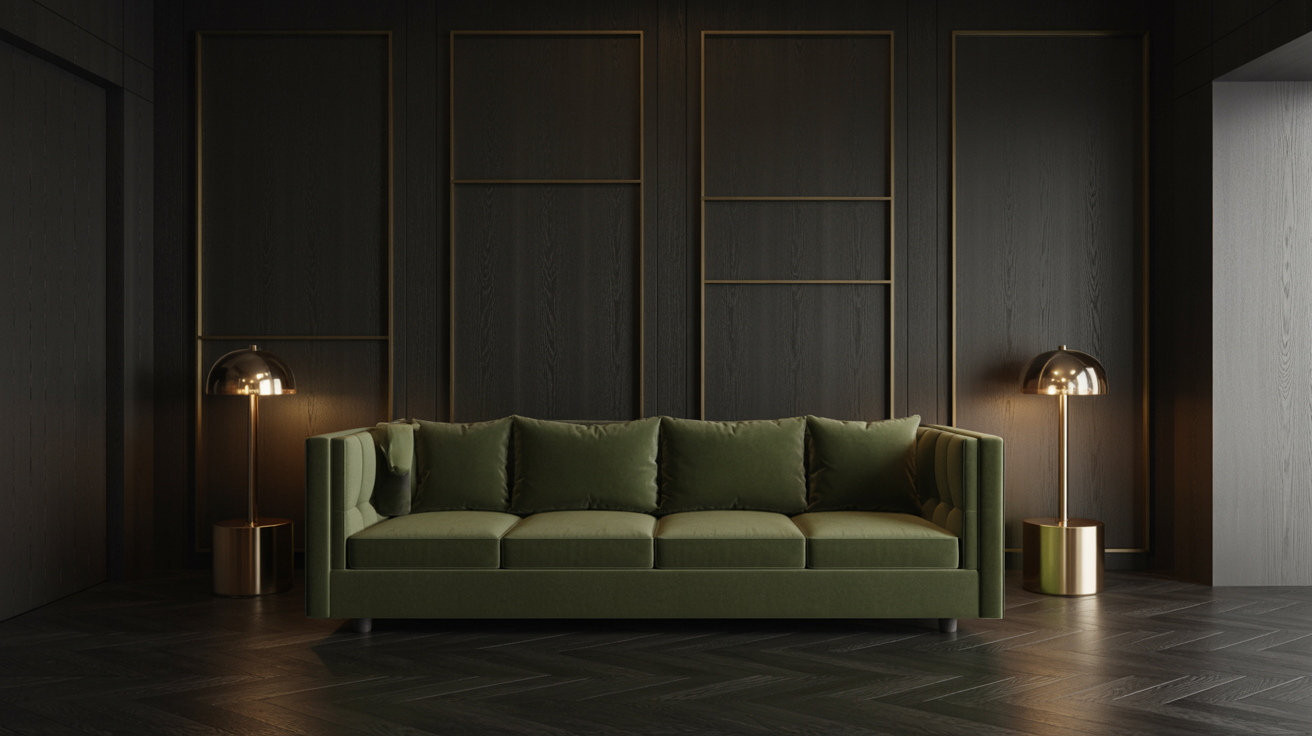
Finally, for the room that demands glamour, we look to metal. This is paneling reinvented for the evening. By inlaying thin strips of brass, copper, or chrome into the wood paneling, you catch the glimmer of ambient light. It is a subtle detail—a pinstripe of gold running through a dark matte wall—that speaks of custom craftsmanship and refined opulence. It pairs magnificently with geometric lighting and jewel-toned velvets, creating a space that feels like a private members’ club.
Final Note
The half-paneled wall is not a relic of the past; it is the canvas of the future. It allows us to introduce the “Jewel Box” feeling—that sense of being held by a room—through texture, color, and shadow. As you curate your home, look to these 21 styles not just as carpentry, but as the foundational architecture of your life’s backdrop.