

20 Pro Level House Cleaning Tips That Save Time
Professional cleaning is not just about the effort you put in but the strategy you apply to every square inch of your home. To clean like a pro, you must transition from a reactive mindset to a systematic approach that maximizes efficiency and minimizes wasted motion. This guide distills years of professional expertise into twenty actionable tips designed to streamline your routine, ensuring your living space remains pristine without consuming your entire weekend. By mastering techniques like the top-to-bottom rule and leveraging the right tools, you can achieve a level of cleanliness that rivals commercial services while reclaiming your precious free time for the things that truly matter. Embracing these methods transforms cleaning from a daunting chore into a fast, predictable process that delivers high-impact results with every session.
1. The Top-to-Bottom Workflow
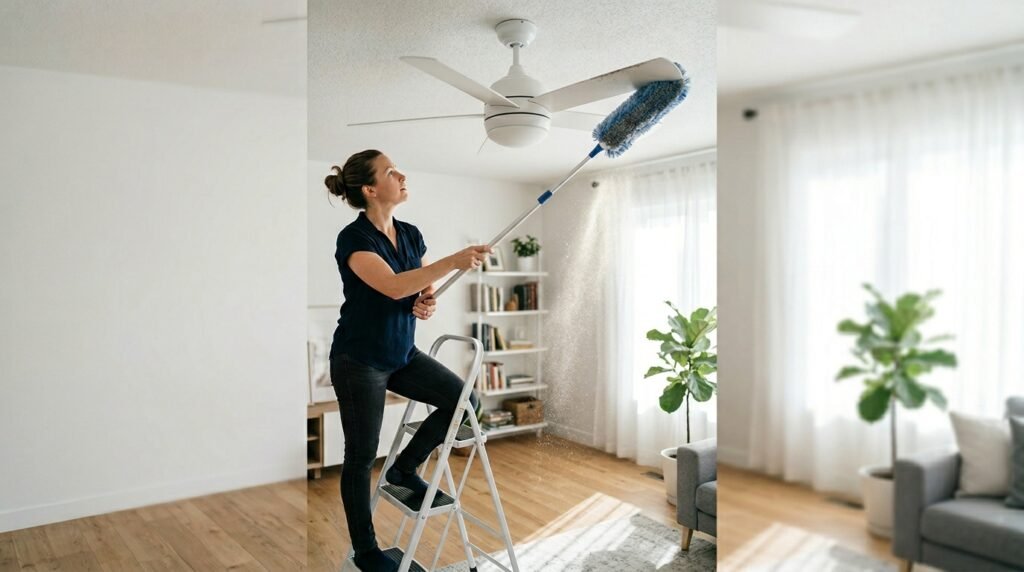
One of the most fundamental rules of professional cleaning is to always work from the highest point in the room down to the floor. Dust and debris naturally fall as you clean, so starting with ceiling fans, crown molding, and high shelves ensures that you are not dirtying surfaces you have already finished. By following this vertical sequence, you prevent the need for repetitive work and ensure that the final step—vacuuming or mopping—captures everything that was dislodged from above. This systematic approach saves an immense amount of time by eliminating the frustration of cleaning a coffee table only to have dust from a bookshelf land on it minutes later. Professionals rely on this gravity-based logic to maintain a fast pace without sacrificing quality or thoroughness.
—
2. Leveraging Microfiber Technology
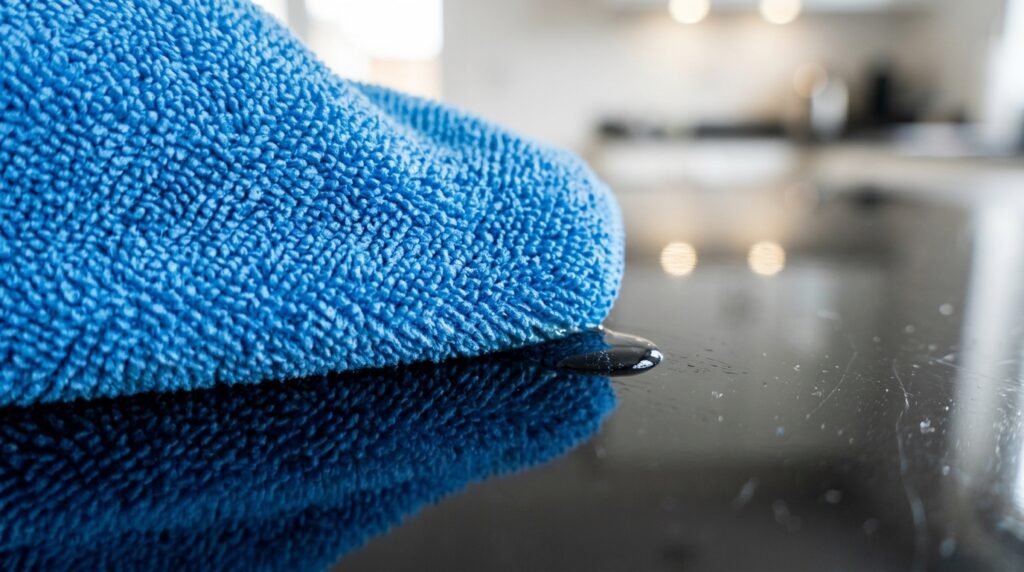
Switching from paper towels or old cotton rags to high-quality microfiber cloths is a game-changer for speed and efficiency. Microfiber is engineered with tiny fibers that physically grab and hold onto dirt, bacteria, and moisture rather than just pushing them around the surface. This means you can often clean with just water or a minimal amount of product, reducing the chemical residue left behind and the time spent buffing out streaks. These cloths are also incredibly durable and can be washed and reused hundreds of times, making them an eco-friendly choice for any household. Using color-coded cloths for different areas—such as blue for glass and red for bathrooms—prevents cross-contamination and helps you stay organized throughout your cleaning session.
—
3. The Power of Dwelling Time
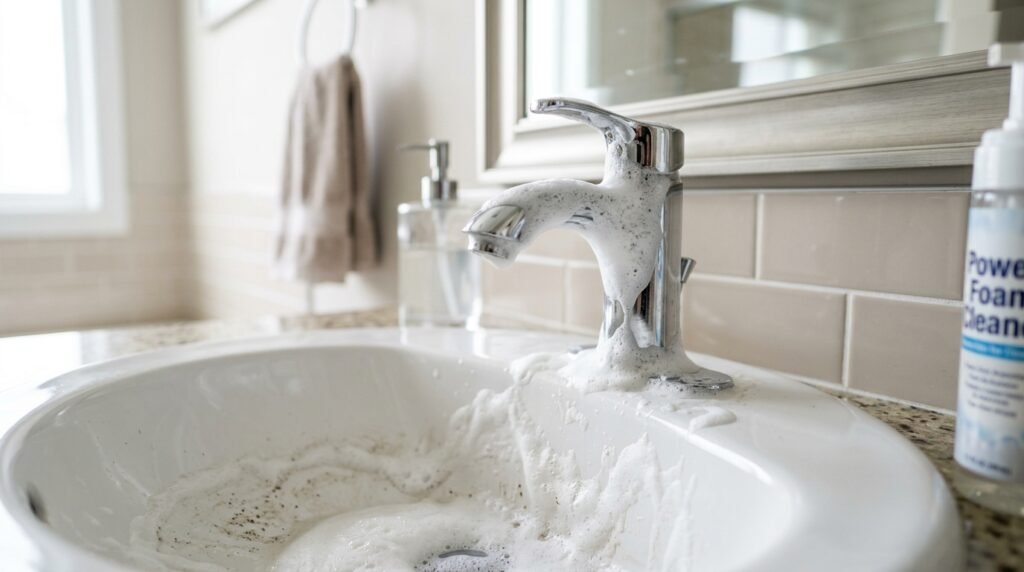
Professional cleaners know that the secret to easy cleaning is letting the products do the heavy lifting for you. Instead of spraying a surface and immediately scrubbing, apply your cleaning solution and allow it to ‘dwell’ for five to ten minutes. This waiting period gives the chemicals time to break down grease, soap scum, and dried-on grime, making it much easier to wipe away without intense physical labor. While the product is working its magic in the bathroom, you can move on to dusting the bedroom or tidying another area to maximize your productivity. This ‘work smarter, not harder’ technique significantly reduces the physical strain on your arms and back while delivering a much deeper level of sanitation.
—
4. Squeegee Method for Streak-Free Glass
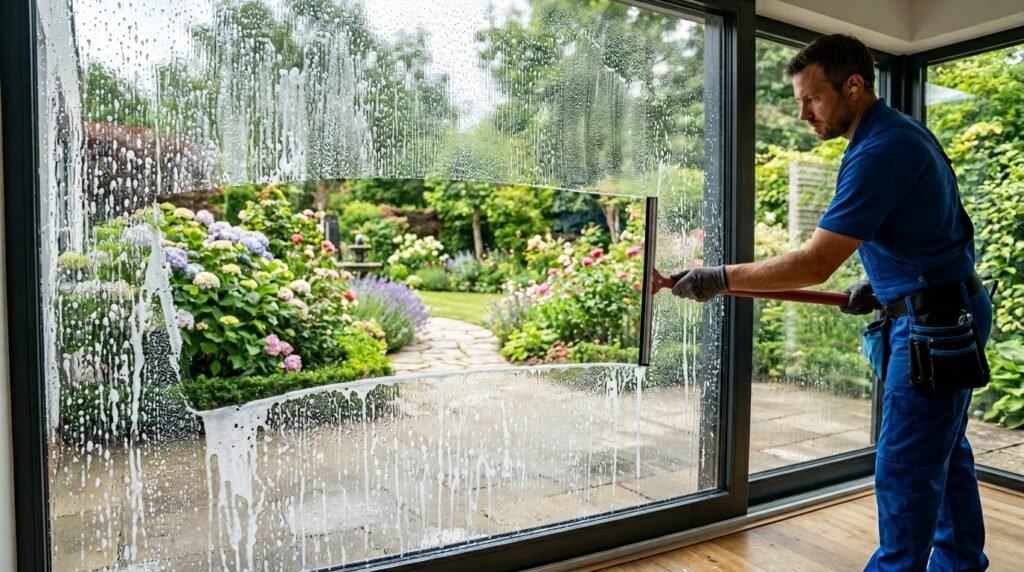
If you want windows and mirrors that look like they were cleaned by a pro, put down the glass cleaner and paper towels and reach for a high-quality squeegee. Paper towels often leave behind lint and streaks, but a squeegee removes the cleaning solution and moisture in one smooth motion, leaving a perfectly clear finish. Start at the top corner and pull the squeegee down or across in a continuous stroke, wiping the blade with a dry cloth between each pass. This method is incredibly fast once you master the technique and works equally well on glass shower doors to prevent the buildup of hard water spots. It transforms a tedious task into a quick, satisfying process that yields professional-grade results every single time.
—
5. The Portable Cleaning Caddy System
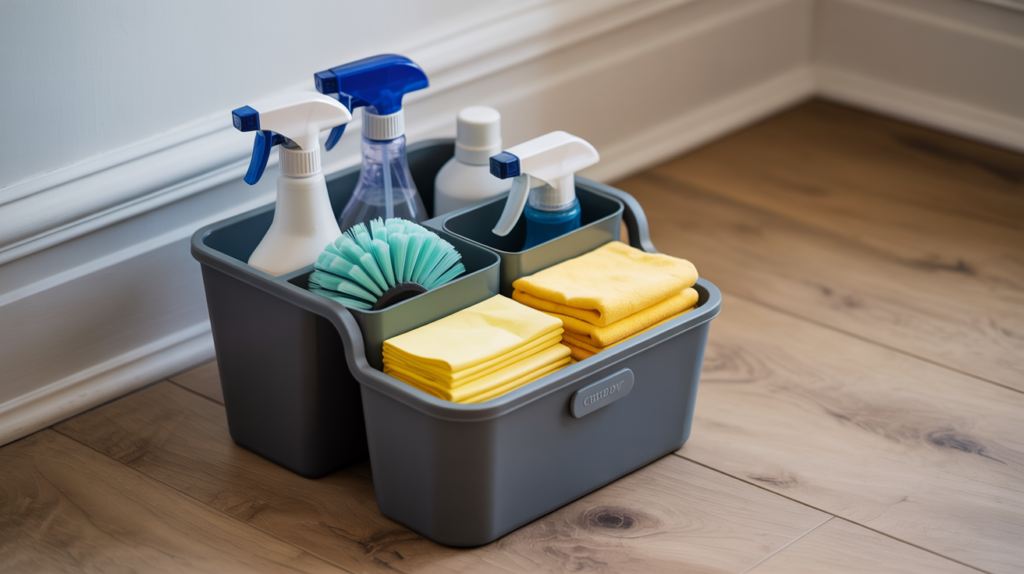
Walking back and forth to a supply closet or under-sink cabinet can waste a surprising amount of time during a cleaning session. Professionals use a portable cleaning caddy to keep all their essential tools—sprays, cloths, brushes, and scrapers—right at their fingertips as they move from room to room. This prevents distractions and keeps you focused on the task at hand, allowing you to move through the house in a continuous flow. Organize your caddy so that the most frequently used items are easily accessible, and always restock it at the end of a session so it is ready for next time. Having everything you need in one hand makes the entire process feel more manageable and professional, turning a chaotic chore into a streamlined routine.
—
6. Detail Brushing for Narrow Gaps
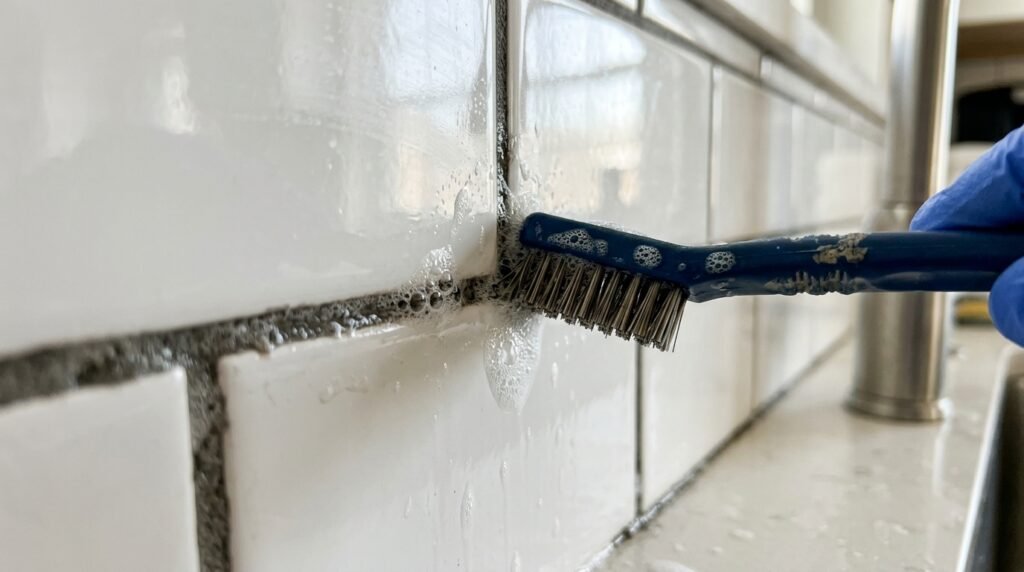
One of the hallmarks of a pro-level clean is the attention to detail in areas that most people overlook, such as the tracks of sliding doors or the space around faucet bases. Using a small detail brush or a repurposed toothbrush allows you to reach into these narrow gaps and dislodge hidden grime that a standard cloth cannot touch. This small step makes a massive difference in the overall appearance of a room, making it look truly revitalized rather than just surface-cleaned. For best results, use the brush in combination with a little bit of cleaning solution to create a paste that lifts away stubborn buildup. It is a quick habit that adds a layer of polish to your home, proving that the smallest details often have the biggest impact.
—
7. The ‘S’ Pattern Cleaning Motion
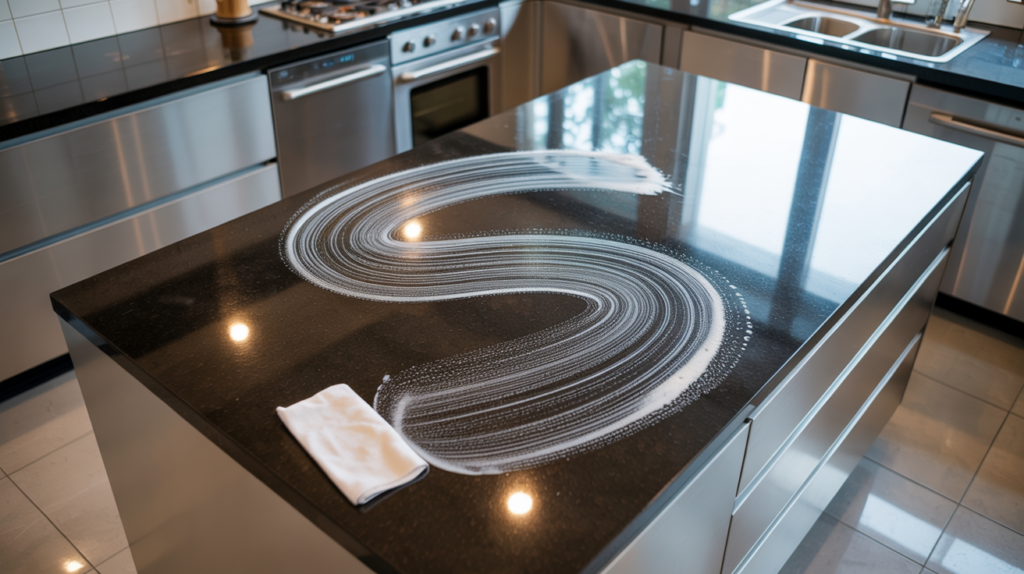
Many people clean in circular motions, but this actually just redistributes dirt back onto the area you just wiped. Professionals use an ‘S’ or ‘Z’ pattern, starting at the top left corner and wiping across to the right, then dropping down and wiping back to the left. This ensures that you cover every inch of the surface without overlapping too much or missing spots in the middle. By using this systematic motion, you move the dirt in one direction until it is eventually wiped off the edge or captured in your cloth. It is a more efficient use of your movement and ensures a more consistent level of cleanliness across all flat surfaces, from countertops to dining tables. Mastering this simple movement will immediately speed up your workflow.
—
8. Buffing Stainless Steel with Oil
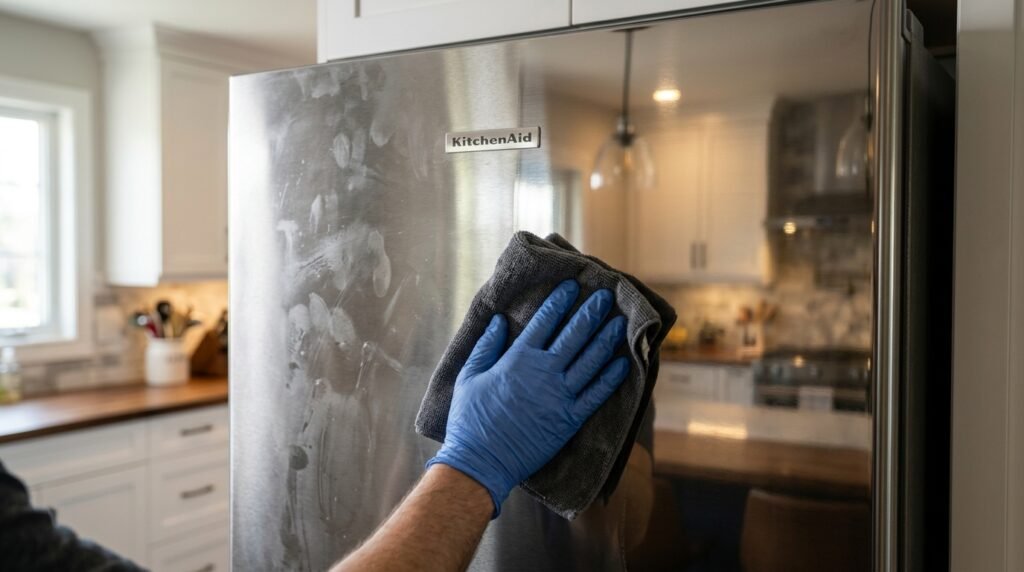
Stainless steel appliances are notorious for showing fingerprints and water spots, but professionals have a secret to keeping them looking brand new. After cleaning the surface with a degreaser or soapy water, apply a tiny drop of mineral oil or olive oil to a clean microfiber cloth and buff it into the metal. This creates a thin, protective barrier that repels prints and gives the steel a deep, luxurious luster that lasts for days. The key is to follow the grain of the metal and use very little oil to avoid a greasy residue that attracts more dust. This simple finishing touch elevates the look of your kitchen and reduces the frequency with which you need to wipe down your fridge, dishwasher, and stove. It is the ultimate pro secret for a high-end finish.
—
9. Steam Cleaning for Deep Sanitization
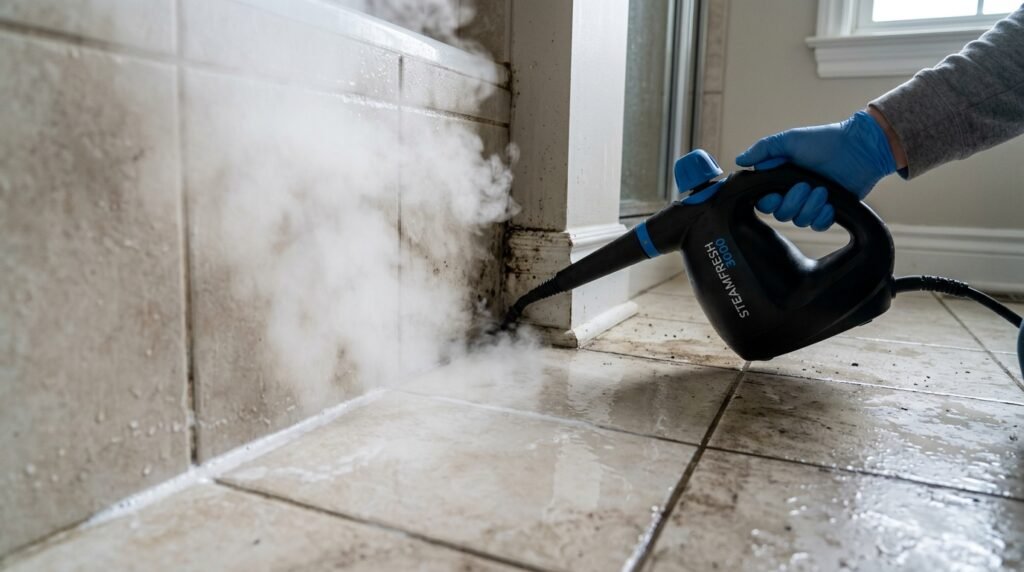
Steam cleaners are powerful tools that use nothing but pressurized hot water to sanitize surfaces and blast away stubborn dirt. Professionals use steam to clean everything from tile grout and upholstery to oven interiors and window tracks without the need for harsh chemicals. The high temperature kills bacteria, mold, and dust mites on contact, making it an excellent choice for households with allergies or pets. Because steam dries almost instantly, it is much faster than traditional mopping or scrubbing methods that leave surfaces wet for long periods. Investing in a small handheld steam cleaner can drastically reduce the time you spend on deep-cleaning tasks while providing a level of hygiene that manual scrubbing simply cannot match. It is a versatile and efficient addition to any cleaning arsenal.
—
10. Strategic Pre-Cleaning Declutter
One of the biggest time-wasters in house cleaning is having to stop and move items out of the way as you go. Professional cleaners always start by decluttering a space completely before they ever touch a spray bottle or vacuum. Clearing the surfaces of mail, toys, and miscellaneous items allows you to work in a continuous, uninterrupted flow, which significantly boosts your speed. Keep a ‘relocation basket’ with you to quickly gather items that belong in other rooms, so you don’t get sidetracked by walking back and forth. By separating the tidying phase from the actual cleaning phase, you create a mental and physical environment that is optimized for efficiency. This disciplined approach ensures that your cleaning time is spent actually cleaning, not just shuffling objects around.

—
11. Dawn Dish Soap as a Universal Degreaser
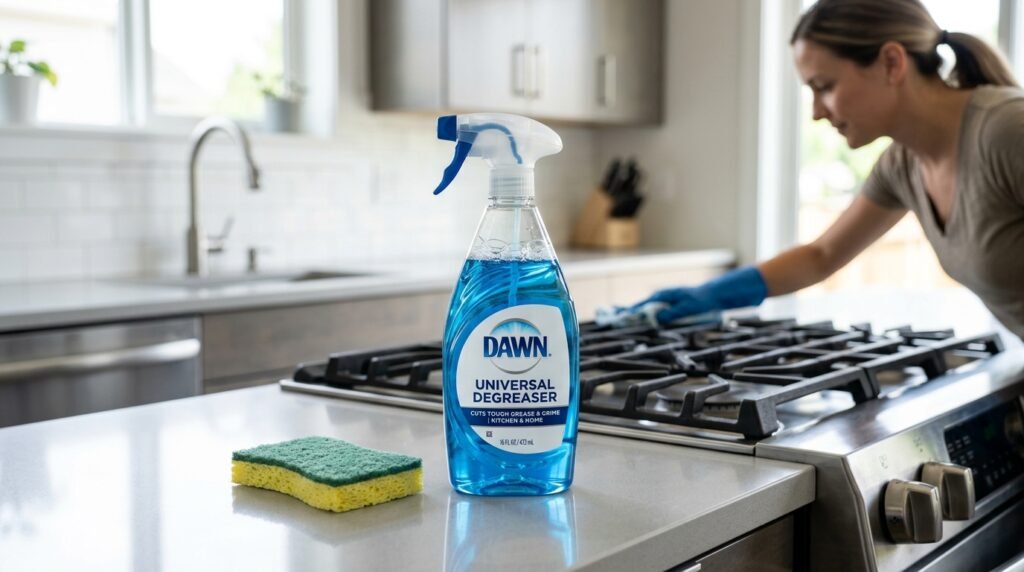
You don’t need an expensive collection of specialized cleaners when you have a high-quality grease-cutting dish soap like Dawn. Professionals often use a diluted solution of dish soap and water as a universal cleaner for everything from kitchen cabinets to greasy backsplashes and even bathroom surfaces. Because it is designed to break down tough food grease on plates, it is incredibly effective at lifting oils and grime from household surfaces without damaging them. It is gentle enough for most finishes yet powerful enough to tackle the buildup that accumulates in high-traffic areas. Using a single, versatile product simplifies your cleaning kit and reduces the time spent switching between different bottles. It is a cost-effective and highly efficient professional staple that every homeowner should utilize.
—
12. Melamine Foam for Stubborn Scuffs
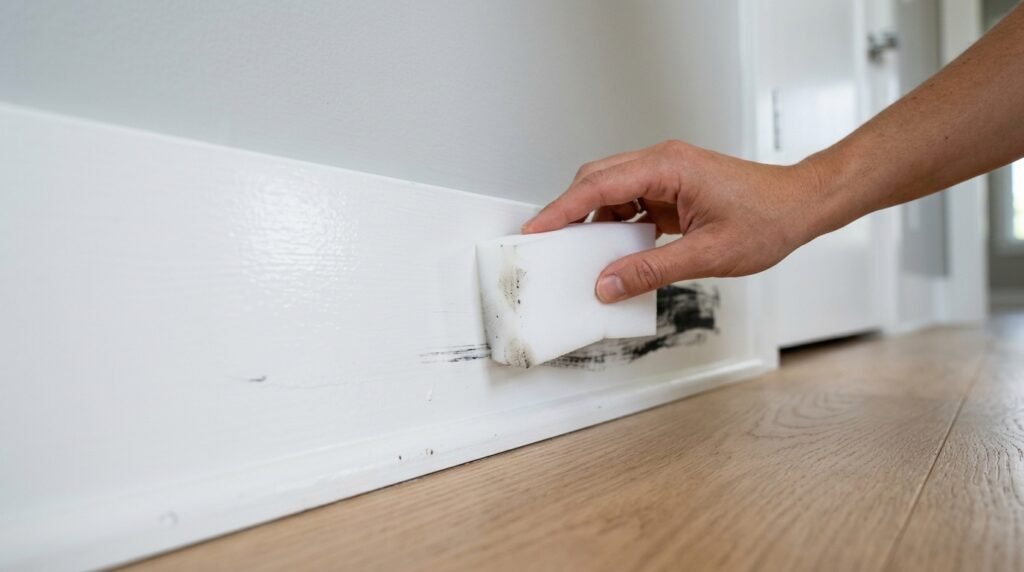
Melamine foam sponges, commonly known as ‘magic erasers,’ are an essential tool for pros who need to remove scuffs and marks quickly. These sponges act like extremely fine sandpaper, lifting stains from walls, baseboards, and light switches that traditional cleaners can’t touch. They are particularly effective for removing crayon marks, shoe scuffs on floors, and the dark grime that accumulates on white window frames. Because they work with just a little bit of water, they are incredibly convenient for quick spot-cleaning during your regular routine. However, because they are abrasive, professionals always test them on an inconspicuous area first to ensure they don’t dull the finish of the surface. Having one in your caddy allows you to handle unexpected marks in seconds rather than minutes.
—
13. Air Vent Detail Cleaning
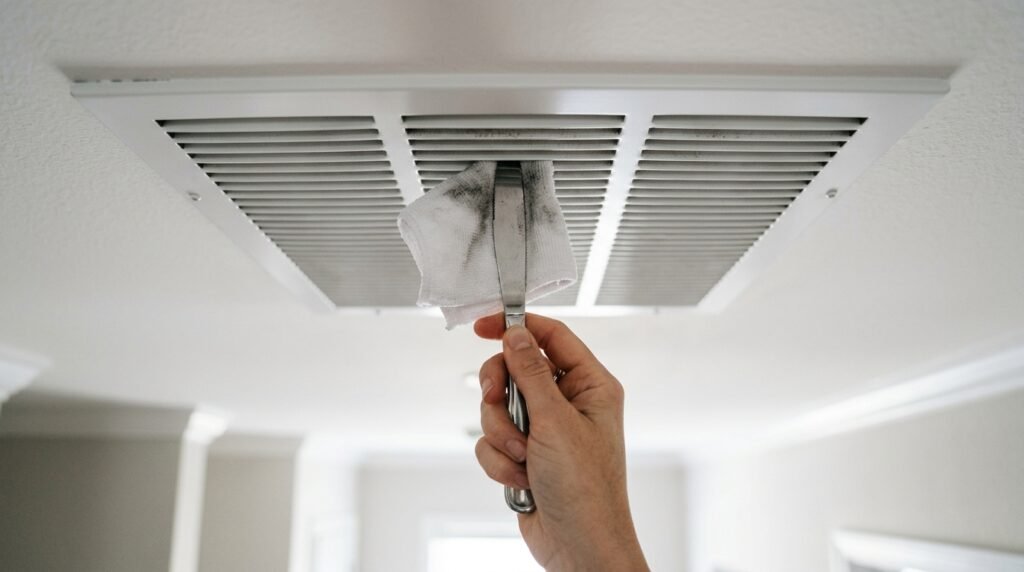
Dusty air vents can circulate allergens throughout your home and make a clean room look neglected. To clean them like a pro without removing the entire vent cover, wrap a thin microfiber cloth around a butter knife or a flat spatula. This allows you to reach deep into the narrow slats of the vent to pull out dust and debris that a vacuum or duster might miss. For a deeper clean, you can dampen the cloth with a bit of all-purpose cleaner to trap the dust and leave the vents looking freshly painted. This quick trick takes only a minute per vent but has a massive impact on the air quality and the overall ‘finished’ feel of your home. It is a hallmark of a professional cleaning job that pays attention to every detail.
—
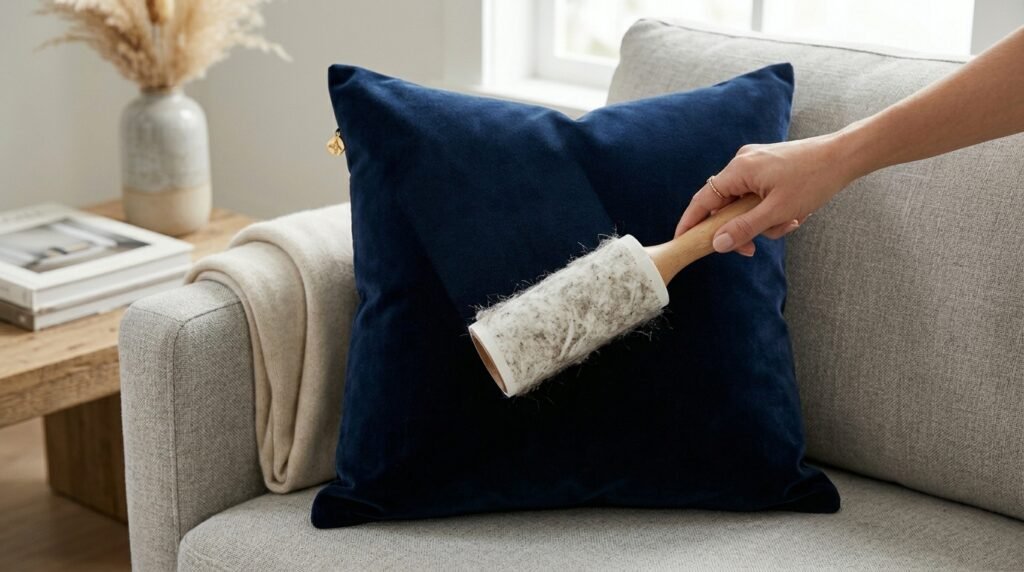
14. Lint Rollers for Soft Surfaces
Vacuuming lampshades, velvet pillows, and fabric headboards can be awkward and often ineffective. Professional cleaners use lint rollers to quickly and easily lift dust, pet hair, and lint from these delicate soft surfaces. The adhesive picks up debris that vacuum attachments might skip over, and the process is much faster than dragging out a heavy machine for a small task. This is also an excellent way to clean the inside of drawers or the bottom of closets where small crumbs and dust bunnies tend to hide. Keeping a lint roller in your cleaning kit allows you to refresh upholstered items in seconds, adding to the polished look of the room. It is a simple, low-tech solution that saves time and energy while delivering a high level of detail.
—
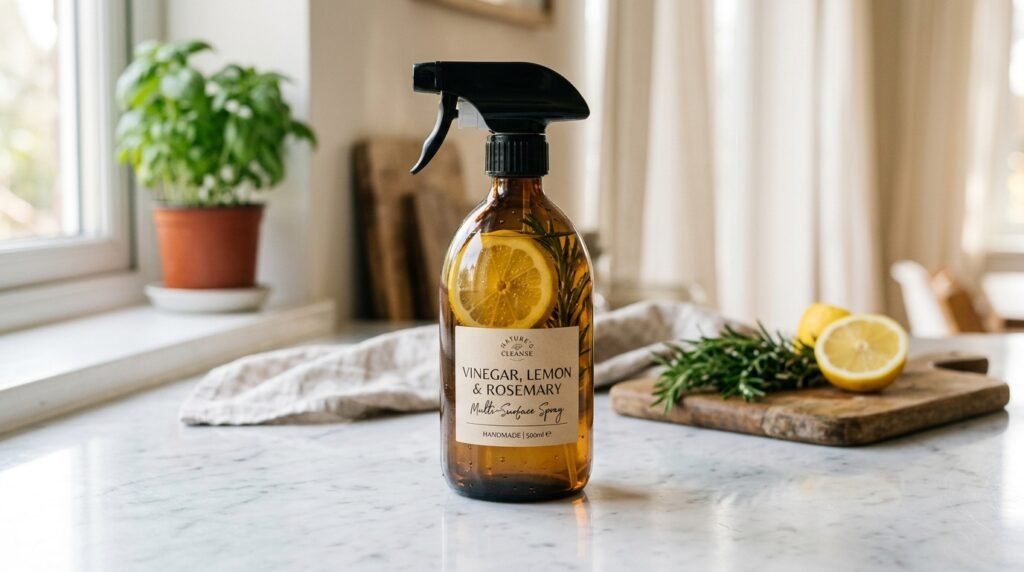
15. Essential Oil and Vinegar Solutions
Many professionals are moving away from harsh chemicals in favor of natural solutions that are both effective and pleasant to use. A mixture of white vinegar, water, and a few drops of essential oils like lemon or eucalyptus creates a powerful, eco-friendly cleaner for floors, windows, and countertops. The acetic acid in vinegar cuts through mineral deposits and grease, while the essential oils provide antimicrobial properties and a fresh, clean scent that doesn’t smell like a laboratory. This approach is not only safer for families and pets but also reduces the chemical film that some commercial cleaners can leave behind. It allows you to clean multiple surfaces with one bottle, simplifying your routine and making your home smell like a high-end spa rather than a bleach-filled facility.
—
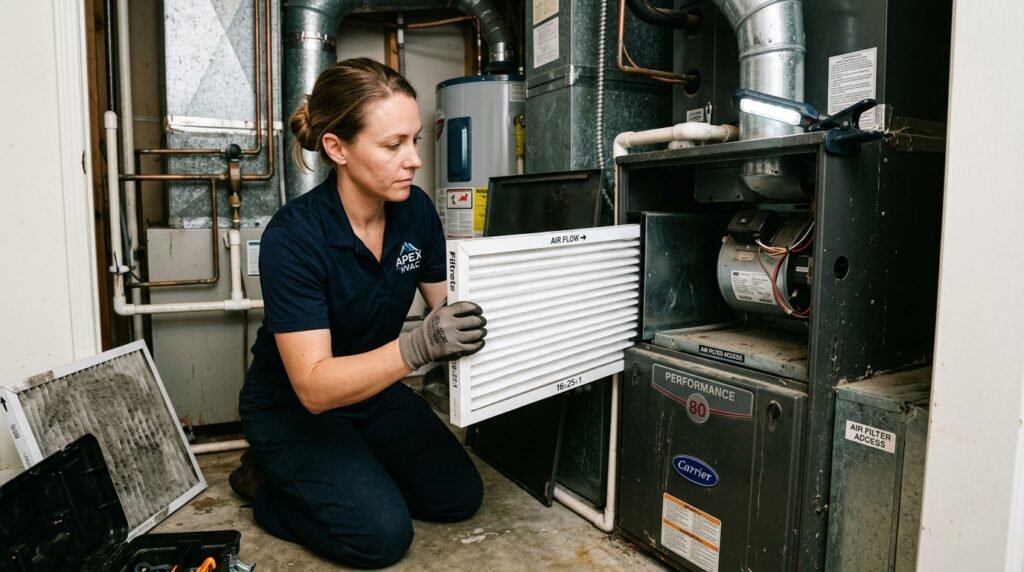
16. HVAC and Filter Maintenance
If you want your house to stay clean longer, you must address the source of the dust: your HVAC system. Professionals know that a clogged or dirty air filter will constantly recirculate dust throughout the home, making your cleaning efforts feel futile. Changing your filters every one to three months ensures that the air is properly filtered and that dust is captured before it can settle on your furniture. Additionally, using a vacuum with a HEPA filter ensures that you are actually removing particles from the air rather than just blowing them back out the exhaust. This proactive maintenance reduces the overall amount of dust in your environment, meaning you have to spend less time dusting your surfaces. It is a ‘behind the scenes’ pro tip that makes a visible difference in cleanliness.
—
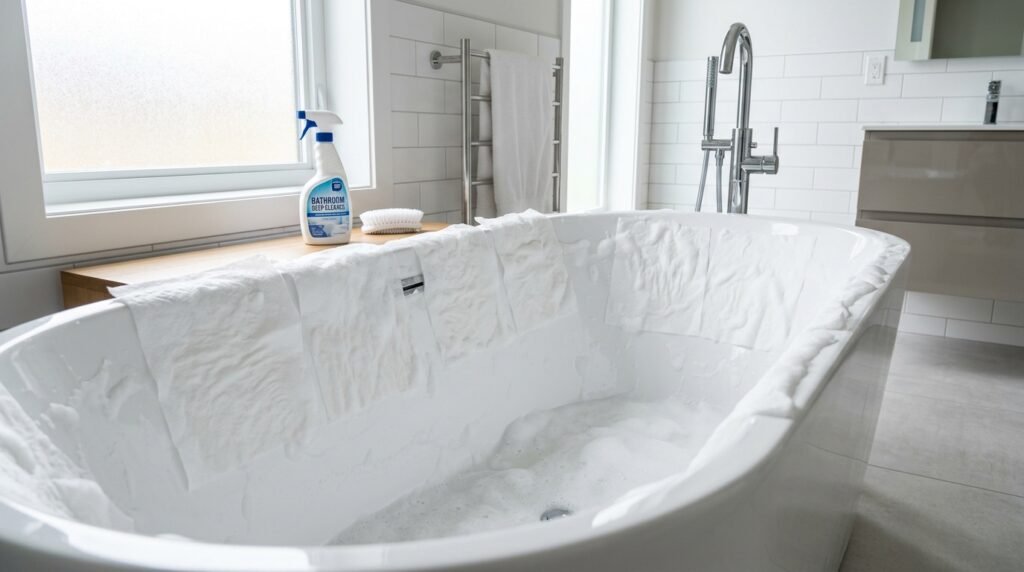
17. Deep-Soaking Bathroom Surfaces
The bathroom is often the most time-consuming room to clean, but pre-soaking can cut that time in half. Professionals start their bathroom routine by spraying down the shower, tub, and toilet with a strong cleaner and then leaving the room to clean something else. By the time they return, the soap scum and hard water stains have been loosened by the product, allowing for a quick wipe-down rather than heavy scrubbing. For extremely tough stains, you can even lay paper towels over the sprayed area to keep the product in contact with the surface for longer. This ‘soak and walk’ method is the most efficient way to handle high-grime areas without exhausting yourself. It ensures that even the toughest areas are sanitized and sparkling with minimal effort on your part.
—
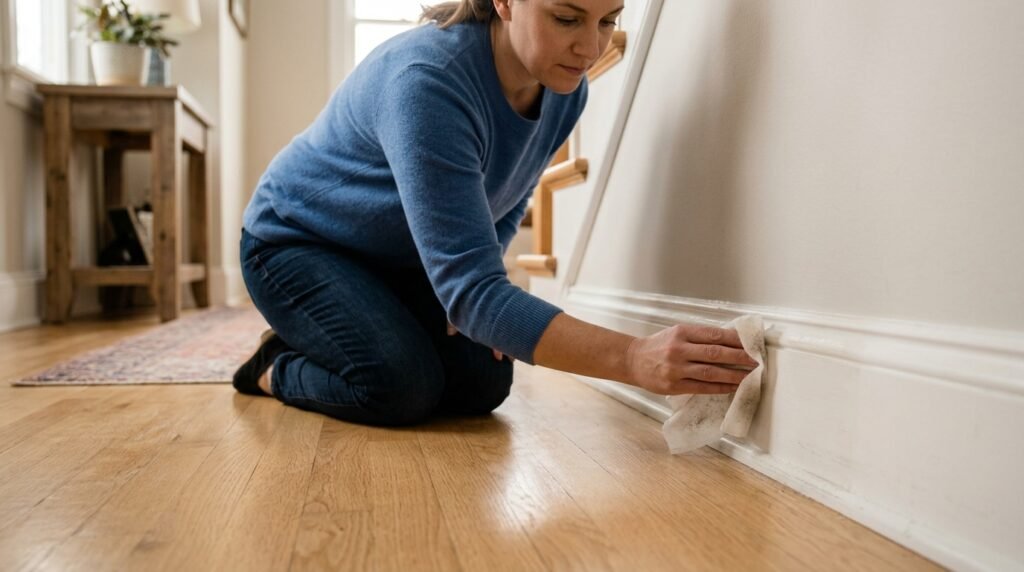
18. Dryer Sheets for Baseboard Dusting
Baseboards are a magnet for dust and pet hair, but cleaning them can be a literal pain in the neck. Professional cleaners often use dryer sheets—new or used—to wipe down baseboards because they have antistatic properties. The coating on the dryer sheet leaves behind a microscopic layer that actually repels dust, meaning your baseboards will stay clean for much longer than if you had used a standard cloth. This trick also works on other dust-prone areas like the tops of picture frames and electronic stands. The sweet scent of the dryer sheet provides a bonus burst of freshness to the room. It is a quick, easy, and effective way to finish a room with a pro-level touch that keeps the home looking better for longer periods.
—
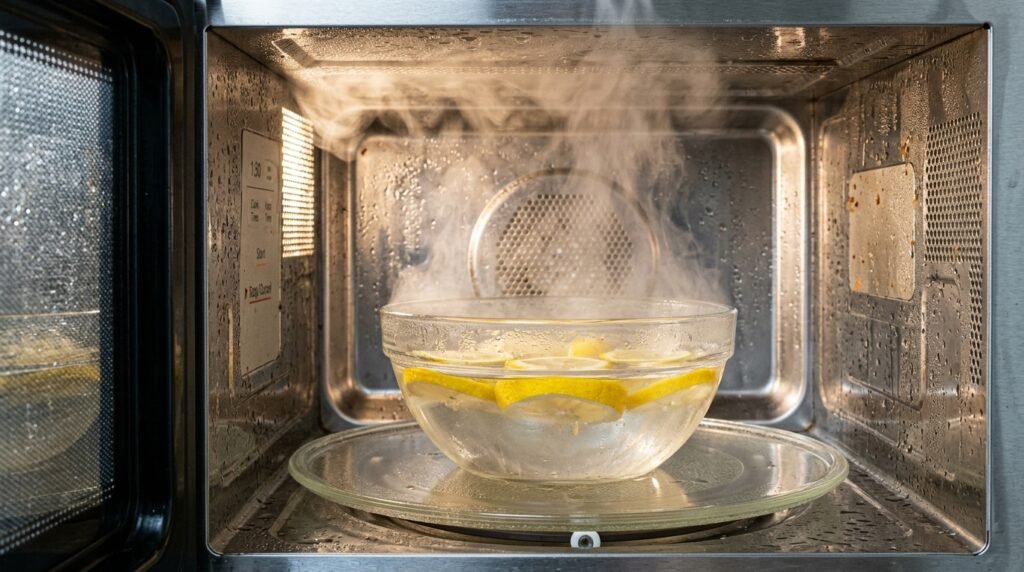
19. Microwave Steam Cleaning Technique
Scrubbing baked-on food inside a microwave is a frustrating and messy task, but there is a much faster professional way. Simply place a bowl of water with a few lemon slices or a splash of vinegar inside and run the microwave on high for three to five minutes. The resulting steam will penetrate and soften even the most stubborn food splatters, allowing you to wipe the entire interior clean with a single cloth in seconds. The lemon also helps to deodorize the appliance, leaving it smelling fresh and citrusy. This method avoids the use of harsh chemicals in a food-preparation area and turns a dreaded chore into a effortless thirty-second task. It is a perfect example of using simple physics to achieve a professional result with almost no physical labor required.
—
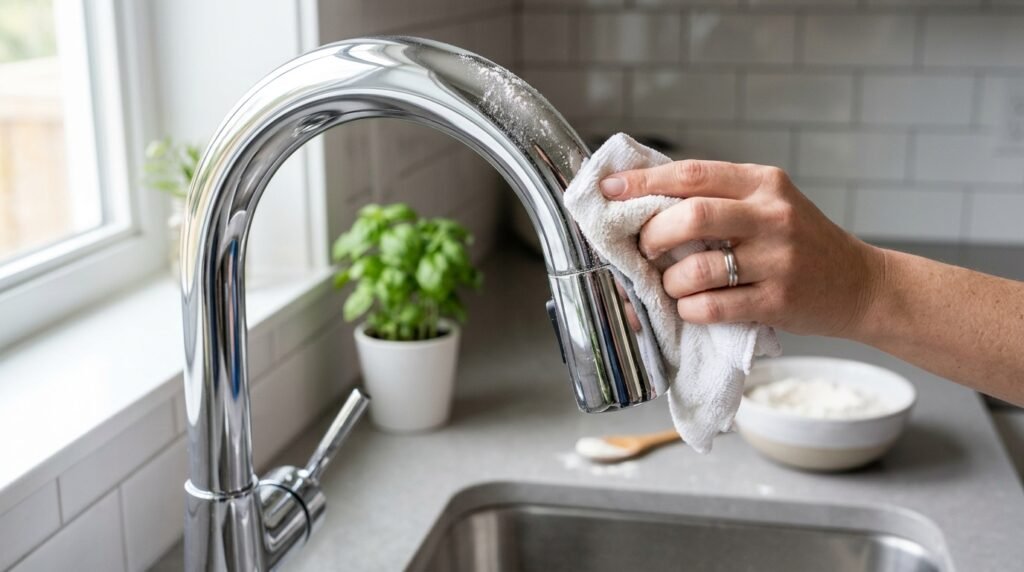
20. Polishing Chrome with Flour
For an incredible shine on chrome faucets and sinks that you usually only see in luxury hotels, use a bit of dry flour. After cleaning and thoroughly drying the chrome, sprinkle a small amount of flour onto a dry microfiber cloth and buff the metal in circular motions. The flour acts as an incredibly mild abrasive that polishes out tiny imperfections and removes the last traces of film, leaving a mirror-like finish that is stunning to look at. Just be sure to rinse away any excess flour from the sink basin afterward to avoid a pasty mess. This old-school professional secret is a fantastic way to give your kitchen or bathroom a high-end, ‘staged’ appearance for special occasions or when you simply want your home to look its absolute best.
—