23 Creating Your Dream Kitchen Ideas That Work
A dream kitchen isn’t just a prettier room—it’s a private theater of daily rituals: the hush of morning espresso, the low gleam of brass at dusk, the comforting weight of a wooden drawer that closes like a well-made book. Creating your dream kitchen ideas that work means balancing romance with real life—storage that behaves, lighting that flatters, finishes that age with a graceful patina, and layouts that make even weeknight cooking feel composed.
This list is designed for homeowners, renovators, and design-lovers who want an elevated, magazine-worthy kitchen without sacrificing function. Expect moody materials, Dutch Masters-style contrast, and practical moves you can actually implement—whether you’re doing a full renovation or a surgical refresh.
1. The Jewel-Box Color Story That Makes Everything Look Custom
A saturated palette turns “nice” into unforgettable—without changing your footprint.
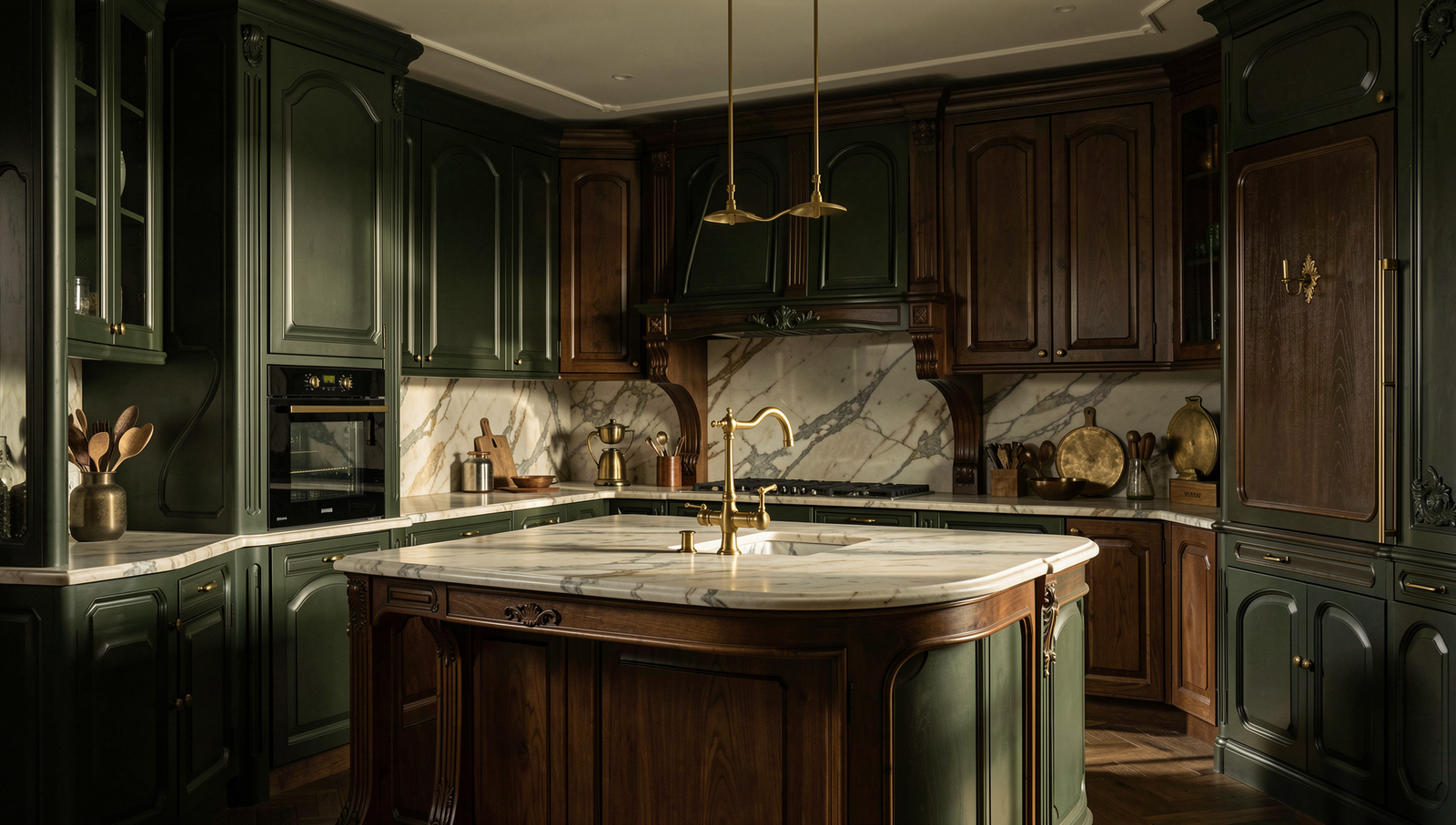
Color is the fastest way to make your kitchen feel collected, not catalog. A jewel-box approach—deep olive, aubergine, inky navy—creates chiaroscuro contrast that flatters stone, wood, and brass. It works because darker hues visually calm busy cabinetry lines and disguise daily wear, while lighter ceilings and counters keep the room buoyant.
Choose one dominant shade for lowers or a full run of cabinets, then add a soft counterpoint (warm ivory walls, pale plaster hood, or creamy zellige). Keep hardware consistent so the color reads intentional, not chaotic. Finish with one “old-world” element: a framed still life, a damask runner, or an antique breadboard.
Styling Tip: Paint swatches in morning and night light—moody colors shift dramatically.
2. The “Furniture-First” Island That Anchors the Room
An island that looks like furniture makes the whole kitchen feel bespoke.
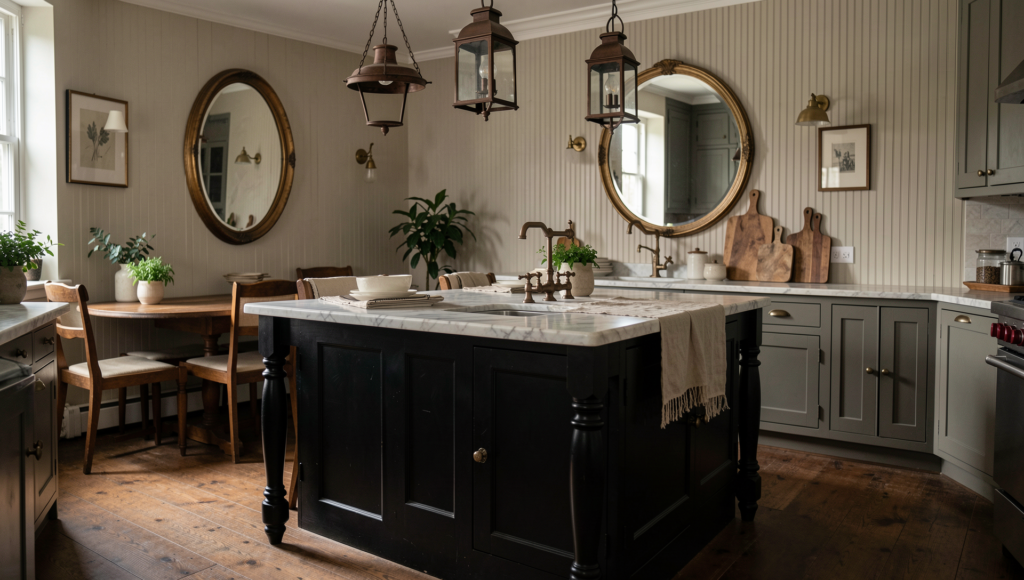
Instead of a standard boxy island, think of a piece you’d find in a grand old dining room: paneled legs, a thicker top edge, maybe even a skirt detail. This works because it visually breaks up the “all-cabinetry” effect and adds a human scale—warm, grounding, and quietly luxurious.
Style it with a countertop that can handle life: honed marble for elegance (accept patina), or quartzite for durability with drama. Add statement pendants overhead, but keep them sculptural rather than sparkly—milk glass or aged bronze feels timeless. On the seating side, choose stools with backs and a tactile material (woven leather, oak, or caned detail) so the island reads like a destination.
Styling Tip: Add one shallow drawer for napkins and candles—hosting magic.
3. Unlacquered Brass Hardware for Instant Patina and Depth
The finish that ages like jewelry—soft, warm, and never sterile.
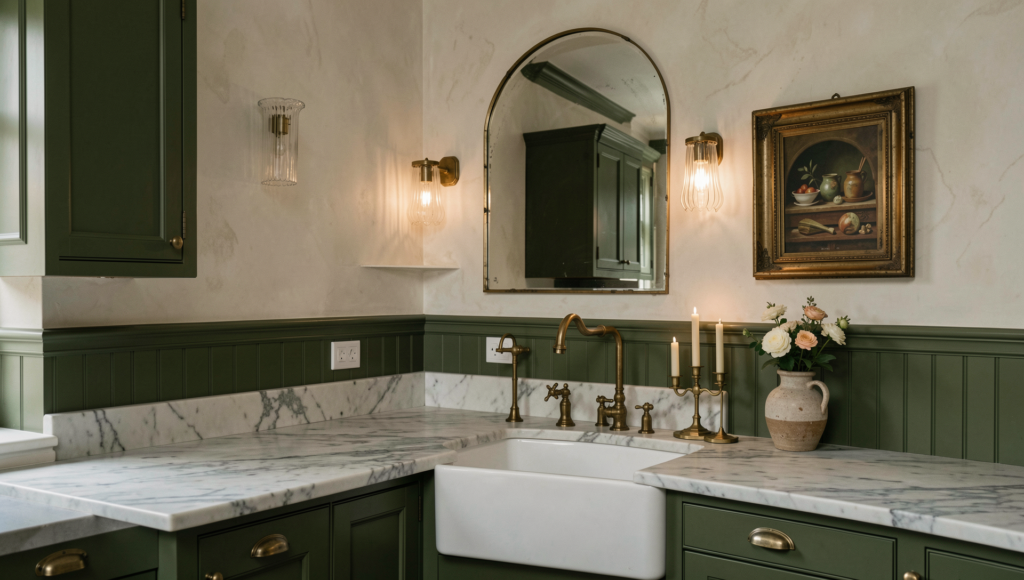
If your kitchen feels flat, hardware can fix it. Unlacquered brass starts bright and slowly deepens into a lived-in glow—an effect that pairs beautifully with marble veining and stained wood. It works because it introduces warmth (even in cool palettes) and adds a layer of “time,” like a treasured heirloom.
Commit to one brass family across pulls, faucet, and lighting so the finish reads cohesive. In a modern kitchen, use slimmer bar pulls and minimal knobs; in a classic space, choose latches or cup pulls for a Victorian nod. Balance brass with one quieter metal—like nickel in appliances or blackened steel in stools—to keep it sophisticated.
Styling Tip: Don’t polish everything; selective patina is the point.
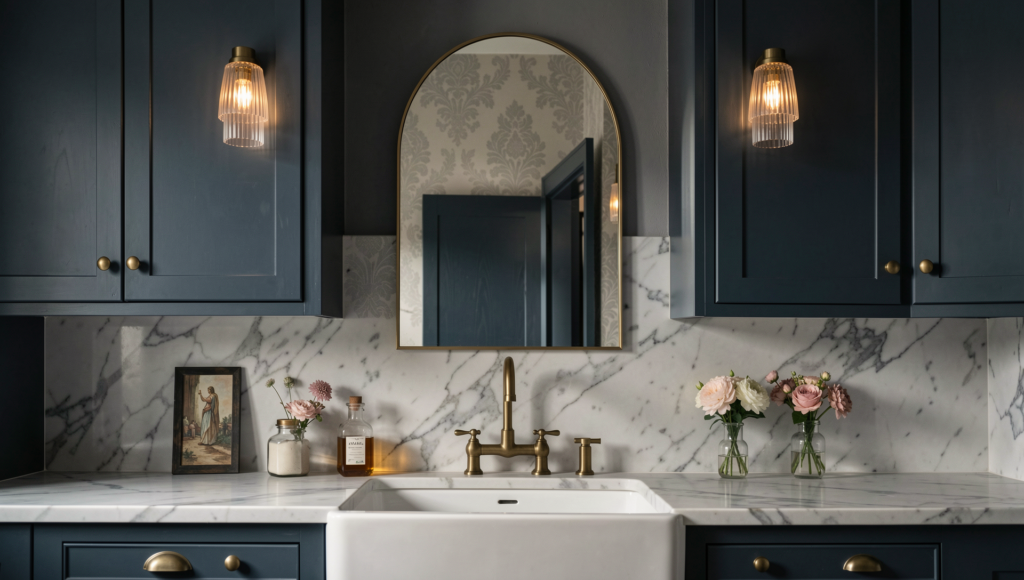
4. A Statement Stone Backsplash (Full-Height, No Apologies)
One bold slab can do the work of a dozen accessories.
A full-height stone backsplash—especially behind the range—creates instant gravitas. It works because it reads like architecture, not decoration: a single, uninterrupted surface with natural movement and depth. Choose a stone with character (Calacatta, soapstone, dramatic quartzite) and consider bookmatching for an editorial, high-end look.
Keep surrounding finishes quieter so the stone becomes the focal point: matte cabinetry, restrained hardware, and a range hood that frames rather than competes. For practicality, select a finish that suits your lifestyle—honed for a soft, moody feel; polished for maximum light bounce. Pair with warm lighting (sconces or picture lights nearby) to emphasize the veining at night.
Styling Tip: Let the stone climb to the ceiling for “custom build” energy.
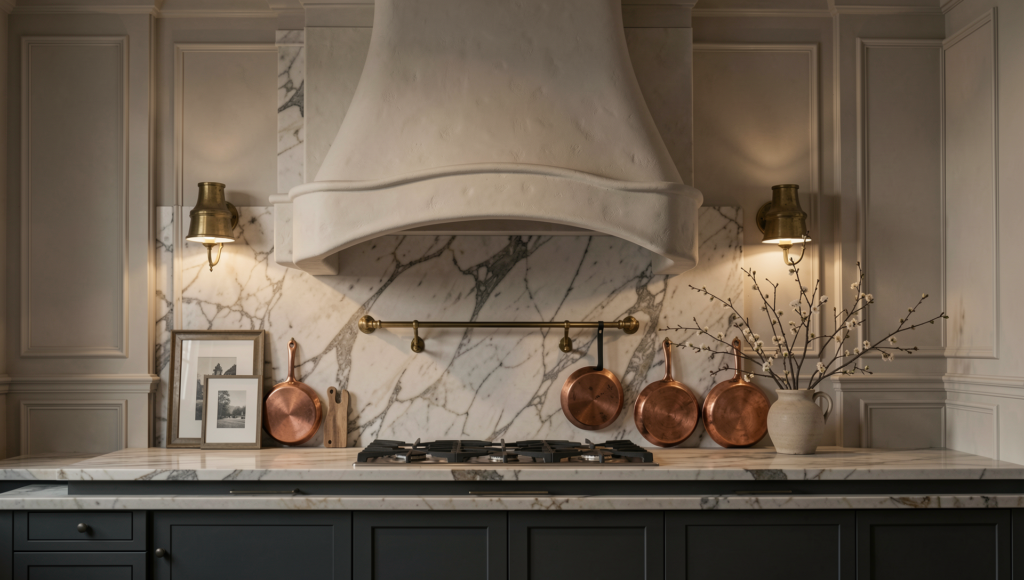
5. Wainscoting or Beadboard Details for Architectural Warmth
Texture on the walls makes modern kitchens feel rooted and refined.
When a kitchen feels too slick, add relief. Wainscoting or beadboard brings quiet shadow play—subtle chiaroscuro that makes the room feel finished, especially in open-plan homes. It works because it adds architecture without crowding counters, and it protects walls in high-traffic zones like breakfast corners and mudroom entries.
Paint the paneling the same color as the walls for a soft, tailored look, or match cabinetry for a wrapped, jewel-box effect. Pair with classic elements: a lantern pendant, an arched mirror in a nook, or a small gallery wall in gilt frames. If you love pattern, use beadboard as the calm base and bring damask or chinoiserie in textiles.
Styling Tip: Cap wainscoting with a slim ledge for leaning art.
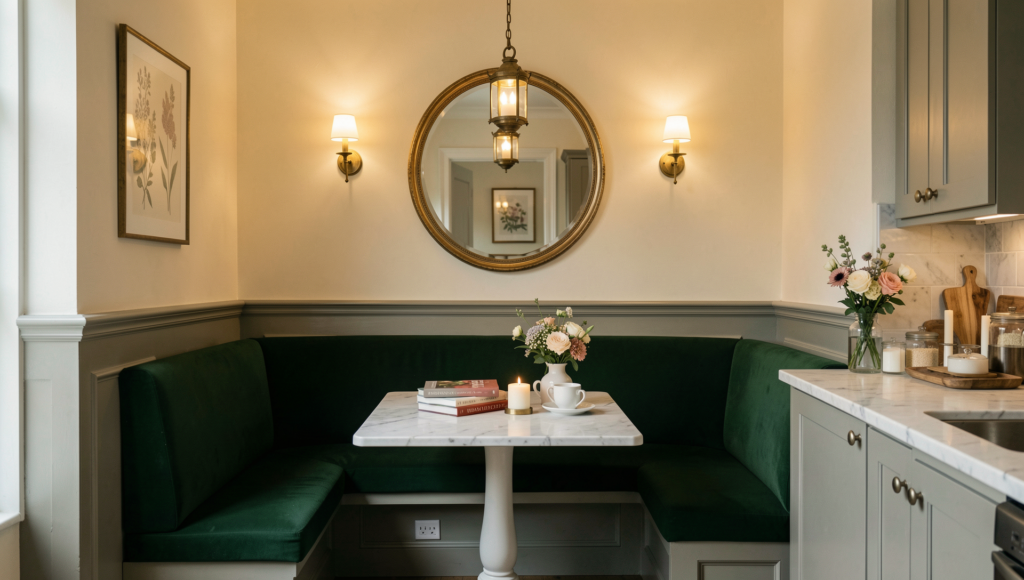
6. A Pantry Wall That Swallows Clutter Beautifully
The most elegant kitchens are the ones that hide the loud stuff.
A pantry wall—tall cabinetry, appliance garages, pull-out shelves—creates visual calm. It works because it moves countertop chaos (toasters, snack bins, bulk staples) into a single, organized zone. The result feels quietly expensive: fewer objects on display, more room for light to land on beautiful materials.
Design it like a “cabinet library.” Mix closed storage with one glass-front section for everyday ceramics. Add interior lighting so it feels boutique, not utilitarian. If space allows, dedicate a landing spot for groceries and charging devices. Choose hardware that’s comfortable in the hand—this is where you’ll feel quality most.
Styling Tip: Store a tray inside for instant counter-clearing before guests arrive.
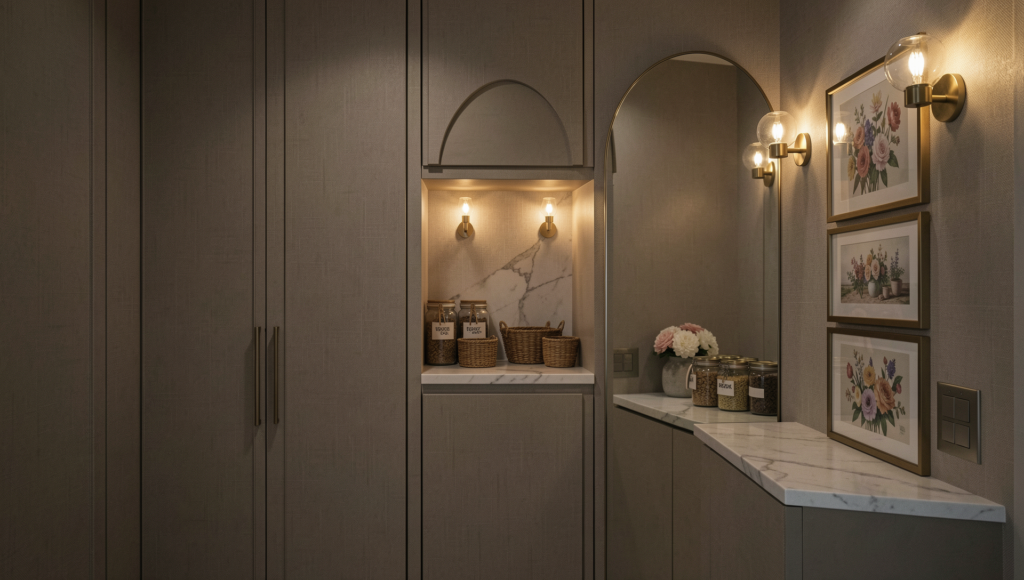
7. The Right Range Hood: Sculptural, Not Shouty
A hood is your kitchen’s crown—choose one with presence and restraint.
A well-designed range hood can make the entire room feel intentional. It works because it’s often the central vertical element on the main wall—your eye goes there whether you plan for it or not. Instead of stainless steel dominance, consider plaster, stained wood, or a paneled hood that echoes cabinetry lines.
Shape matters: a soft curve nods to Art Nouveau, while a squared frame feels classic and tailored. Add a thin trim detail in brass or wood to outline the silhouette. Pair with full-height stone or tile so the hood looks integrated, not pasted on. Then light it gently—sconces flanking the range wall can feel surprisingly grand.
Styling Tip: Keep the hood wider than the range for a custom, balanced look.
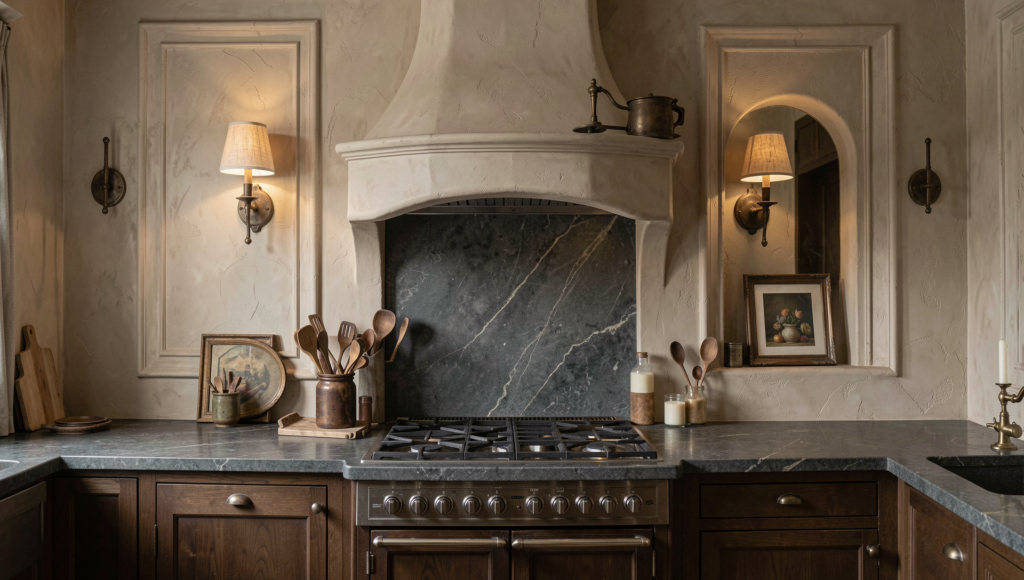
8. Chinoiserie & Damask Moments—Quiet Pattern, Big Atmosphere
Pattern belongs in kitchens—just in the right dosage.
Chinoiserie and damask are the design world’s velvet notes: rich, historic, and deeply mood-setting. They work in kitchens because they add softness against hard surfaces (stone, metal, glass) and make the space feel more like a room—not just a work zone. The key is restraint: one patterned wallpapered nook, a runner, or café curtains.
Choose a palette that echoes your cabinetry so the pattern feels tailored. Pair with warm metals (brass, antique gold) and classic lighting (glass sconces) to keep it elevated. If wallpaper feels risky, introduce pattern via upholstered stools, framed prints, or a single Roman shade.
Styling Tip: Keep counters minimal—let pattern be the “art.”
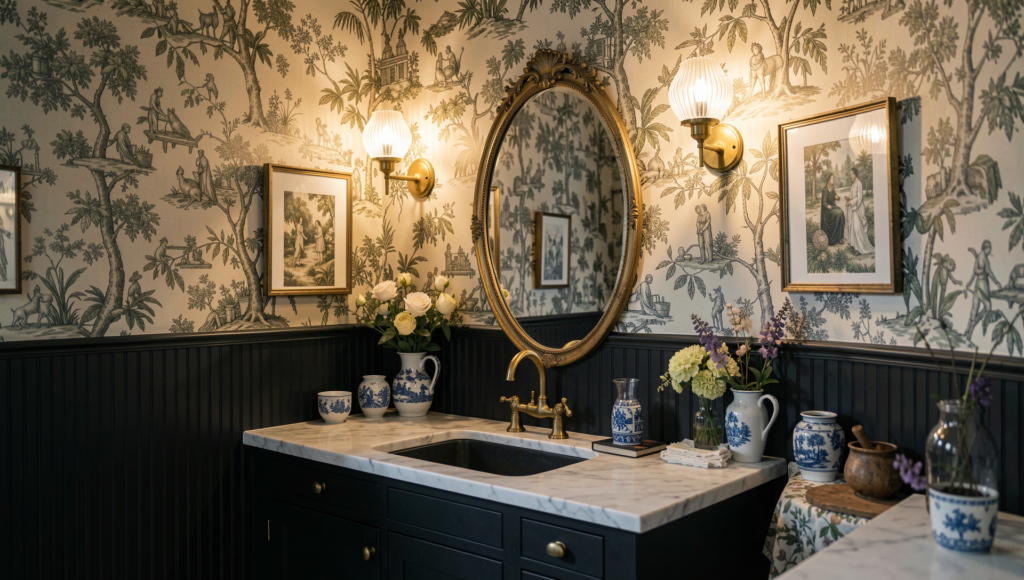
9. Layered Lighting with Sconces (Yes, in Kitchens)
Overhead lights are not a mood—layering is.
If you want a kitchen that feels expensive at night, lighting is the lever. Layered lighting works because it eliminates harsh shadows and creates a flattering glow—like a dining room, not a cafeteria. Start with practical recessed lights, then add pendants over the island, and finish with sconces on key walls (range wall, sink wall, or open shelves).
Choose sconces with character: fluted glass, aged bronze arms, linen shades for softness. Put them on dimmers—non-negotiable. Then treat under-cabinet lighting as “invisible jewelry”: warm temperature, concealed strips, no glare.
Styling Tip: Aim for 2700K bulbs for a golden, candlelit tone.
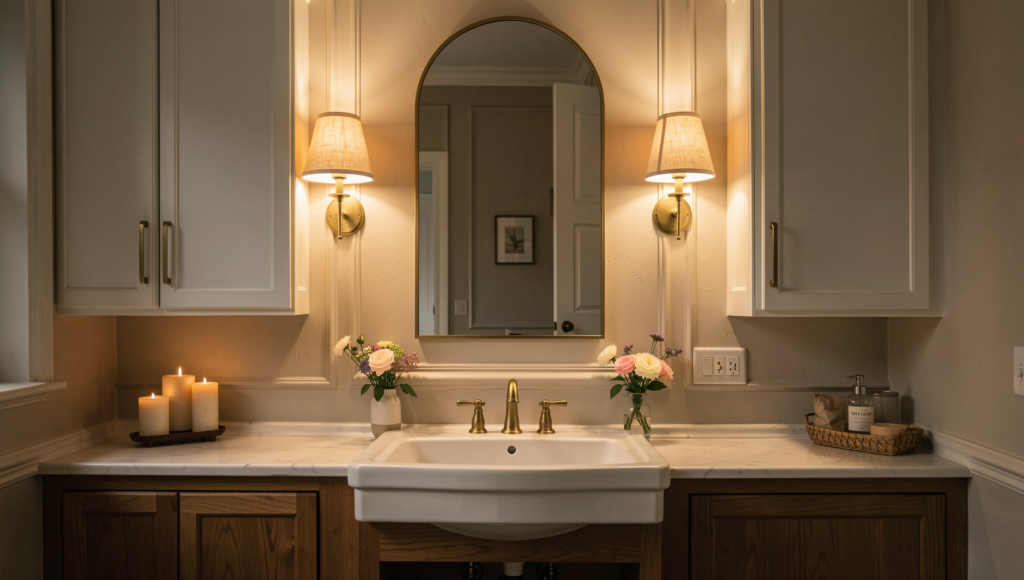
10. A Coffee & Cocktail Niche with Gallery-Level Styling
A small niche can make the kitchen feel like a boutique hotel.
A beverage niche—coffee by morning, cocktails by night—works because it creates a dedicated ritual zone, reducing clutter everywhere else. You don’t need a full wet bar; a recessed cabinet, a slim counter, or a pantry section can become a jewel-box moment with the right styling.
Use a contrasting finish inside the niche: a dark paint, a damask wallpaper panel, or antiqued mirror backing. Add a small sconce or picture light to make it glow. Keep accessories curated: one tray, matching glassware, a stoneware canister, and a framed print. If you can, add a tiny under-counter fridge or hidden drawer for pods and mixers.
Styling Tip: Edit like a gallery—leave negative space so it feels intentional.
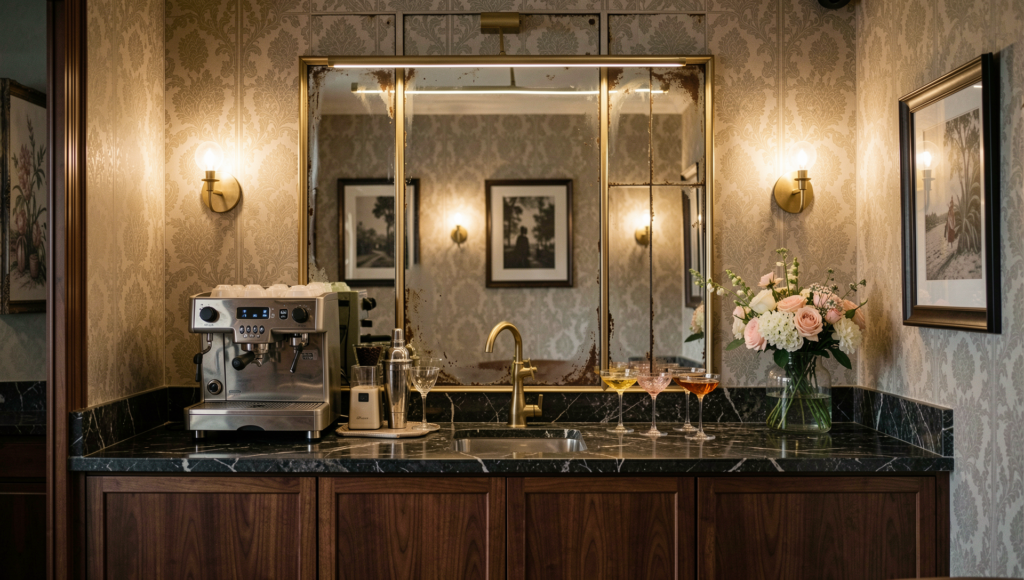
11. Mirror or Antiqued Glass to Multiply Glow
Reflection is a secret weapon—especially in darker kitchens.
Mirrors aren’t just for powder rooms. In kitchens, antiqued glass or a mirror backsplash adds depth and doubles light, especially when you’re working with moody paint colors. It works because reflection creates visual expansion without removing a single cabinet, and antiqued finishes add softness (no harsh glare, no “gym mirror” vibe).
Try mirrored panels inside open shelves, an antiqued-glass backsplash in a niche, or a single statement mirror near a breakfast table. Pair with warm metals and dimmable sconces so the reflection feels candlelit. Keep surrounding materials tactile—wood, plaster, honed stone—so the mirror reads like a layered design choice.
Styling Tip: Use antiqued mirror near a sconce to create a halo effect.
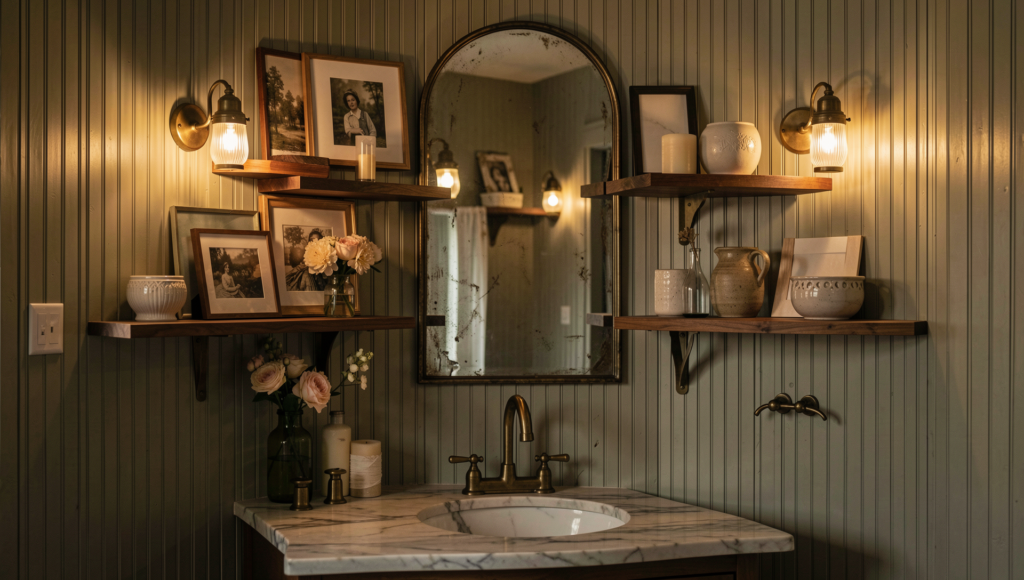
12. Two-Tone Cabinetry Done Like an Heirloom
Contrast adds depth—when it’s tonal and intentional.
Two-tone cabinetry can look trend-driven… or timeless. The difference is how you choose the tones. This works when the palette feels inherited: warm white uppers, walnut or deep green lowers, or charcoal paired with ivory. The upper color keeps the room airy; the lower tone grounds the space and hides scuffs.
Tie the two tones together with repeating materials: the same brass hardware, one consistent countertop, and a backsplash that bridges both (stone is your best friend). If you want extra polish, add a thin rail molding at the transition line or use glass-front uppers for a lighter visual rhythm.
Styling Tip: Keep the undertones aligned—warm with warm, cool with cool.
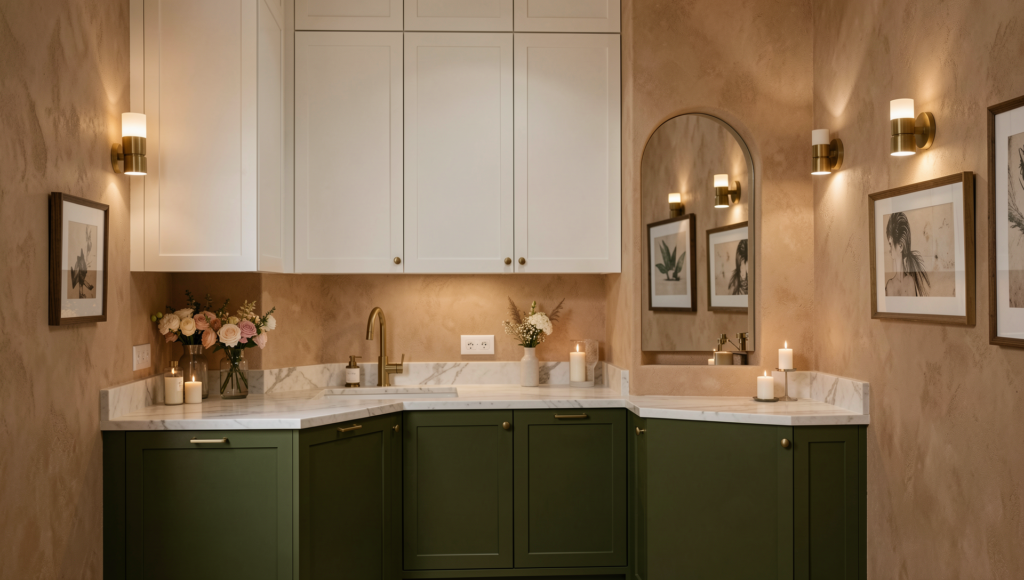
13. The “Work Triangle” Upgrade: Zones That Actually Work
Your kitchen shouldn’t just look good—it should move well.
Classic work triangles are a start, but modern life wants zones: prep, cook, clean, store, serve. This works because it reduces bottlenecks—multiple people can exist in the kitchen without bumping hips and tempers. Start by mapping your daily flow: where groceries land, where coffee happens, where trash is accessed, where the dishwasher opens.
Add function-forward details: a dedicated prep counter near the sink, pull-out trash by the cutting area, a drawer for oils and spices beside the range, and a “landing strip” near the oven. Lighting should follow zones too—task lighting for prep, softer layers for serving and evening ambiance.
Styling Tip: Store tools at the point of use; beauty follows efficiency.
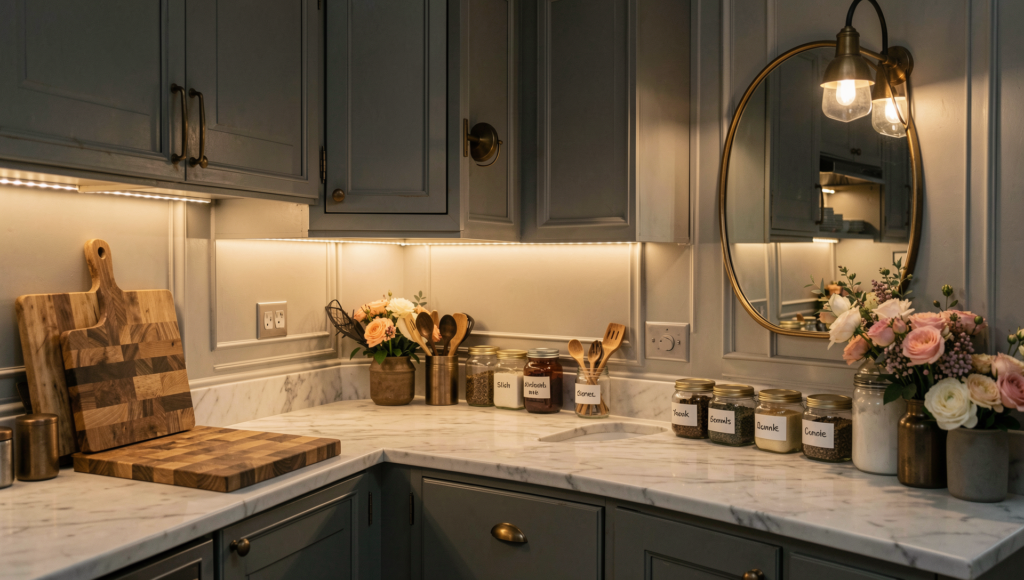
14. The Finishing Layer: Textiles, Art, and One Dramatic Floral Note
The final 10% is what makes it feel like you.
A dream kitchen without soul can feel like a showroom. The finishing layer works because it adds softness and narrative: a runner underfoot, art that interrupts all the hard lines, and a floral moment that feels like a Dutch Masters painting come alive. Choose textiles that can handle reality—washable runners, performance fabric on stools, café curtains if privacy is needed.
Art matters more than you think. A single framed still life, an antique landscape, or a series of sketches can elevate even the simplest cabinets. Finish with one dramatic arrangement—branches, dark tulips, or garden roses—kept in a weighty vessel so it looks intentional.
Styling Tip: Repeat one color from your cabinetry in the textiles for cohesion.
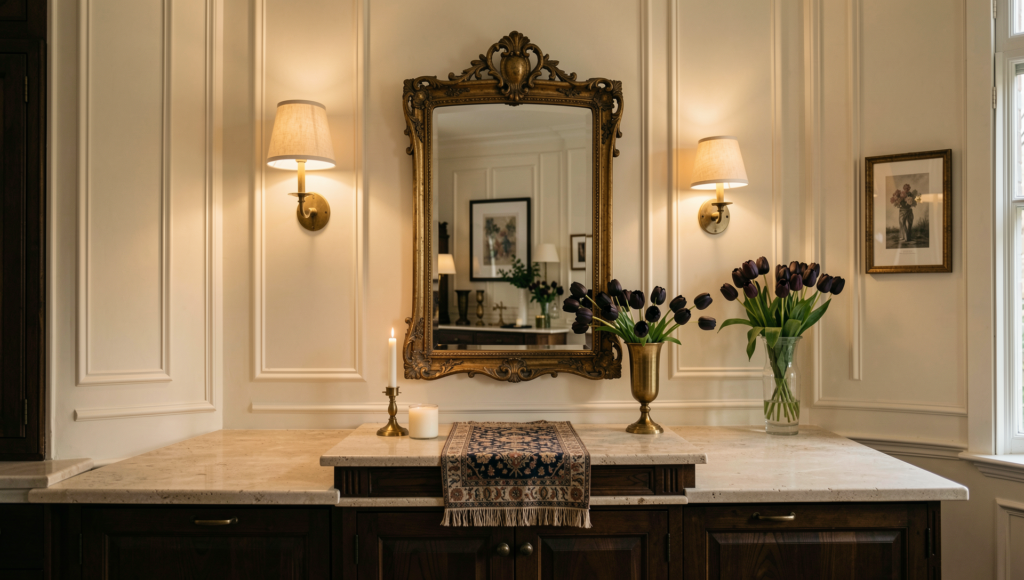
Conclusion
The kitchens that linger in your memory aren’t just “updated.” They’re atmospheric—lit like an evening painting, textured with patina, grounded in materials that feel honest under your hands. The trick is to choose a few bold anchors (a stone moment, a sculptural hood, a jewel-box palette) and support them with hard-working decisions: storage that swallows clutter, lighting that layers, zones that make movement effortless.
Most of all, let your kitchen tell the truth about how you live. Keep what serves you; hide what doesn’t; elevate the rituals you repeat daily. With these creating your dream kitchen ideas that work, you’re not just designing a room—you’re composing a mood, one thoughtful detail at a time