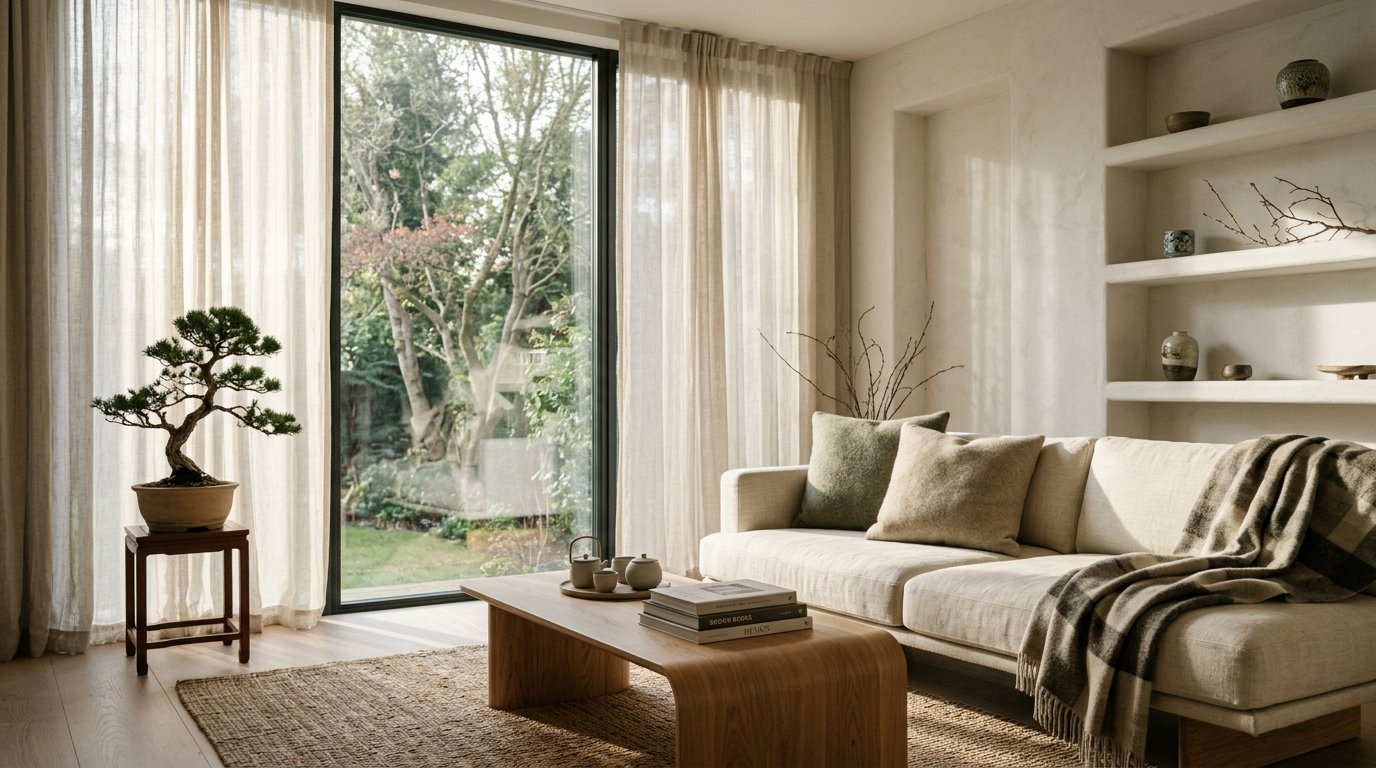
25 Japandi Living Room Design Ideas Designers Love
1. Embrace the Philosophy of Wabi-Sabi
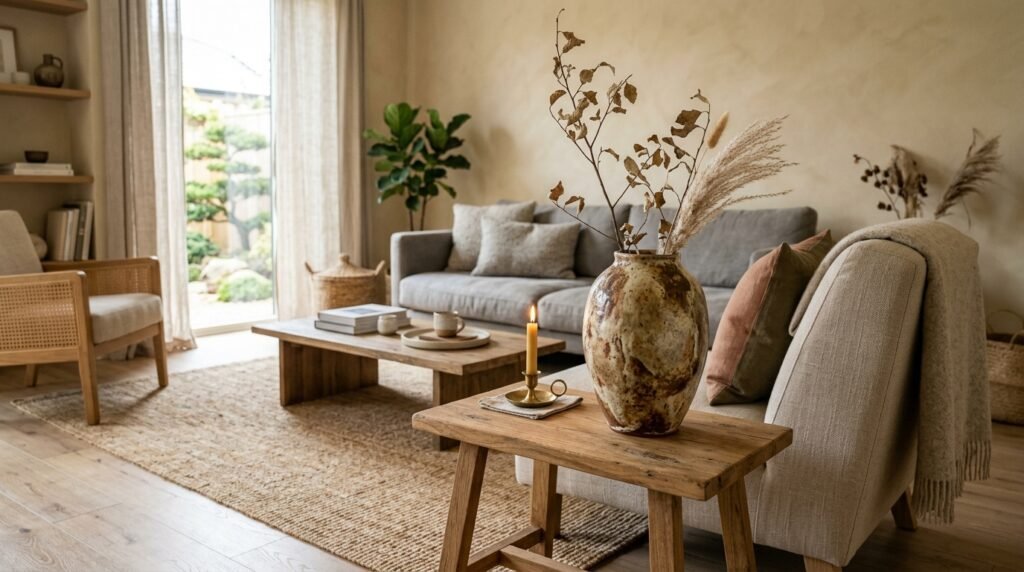
Japandi living room design is deeply rooted in the Japanese concept of wabi-sabi, which is about finding beauty in imperfection, impermanence, and incompleteness. This principle invites you to celebrate the unique character of handmade or vintage items, adding depth and warmth to your space.
2. Master a Muted, Earthy Color Palette
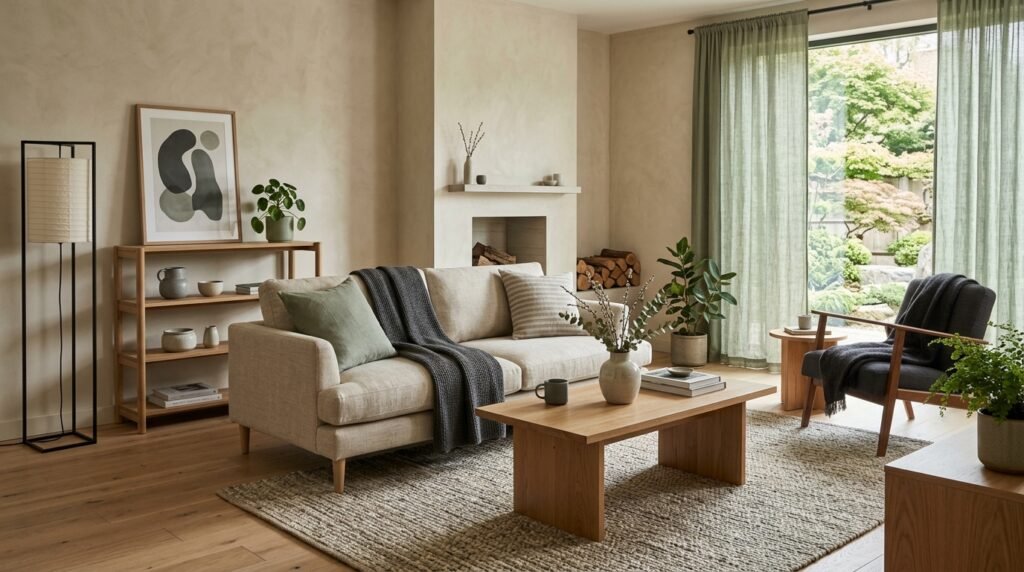
The Japandi color scheme is characterized by its warm, earthy tones and cool, bright neutrals, creating a soothing atmosphere. By choosing shades like oatmeal, stone, beige, mushroom, and cream, and adding subtle accents of charcoal grey, indigo blue, or sage green, you can create a space that feels both expansive and cozy.
3. Prioritize Natural Light and Soft Illumination
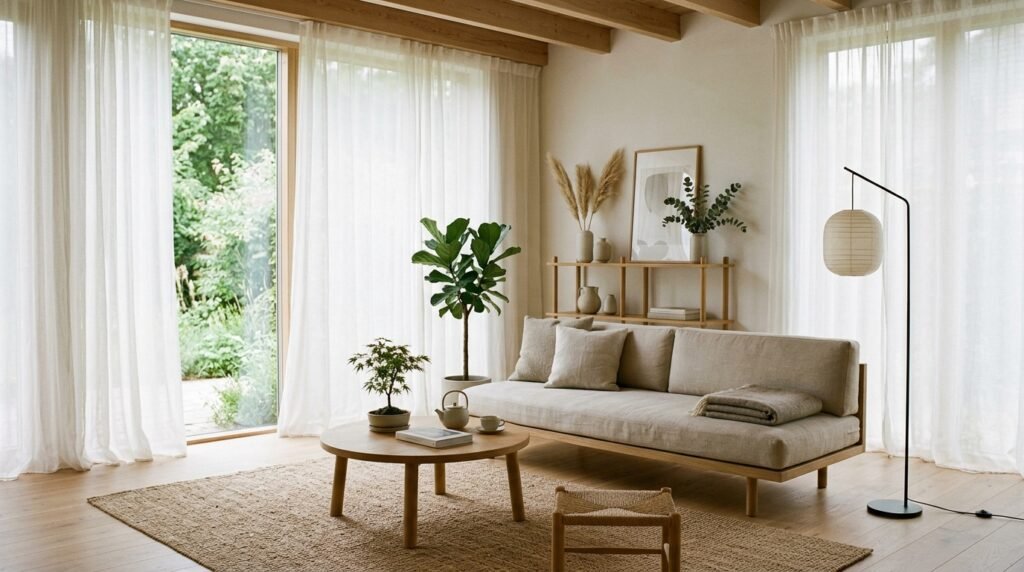
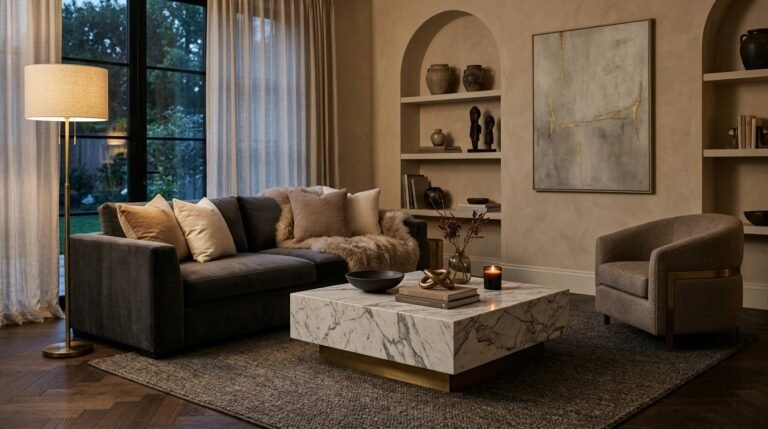
Natural light is a crucial element in Japandi design, creating an airy, open feeling that connects the indoors with the outdoors. To maximize natural light, use sheer curtains and keep window sills uncluttered. For artificial lighting, opt for gentle, ambient light sources like paper lanterns or minimalist floor lamps with fabric shades.
4. Invest in Low-Profile, Functional Furniture
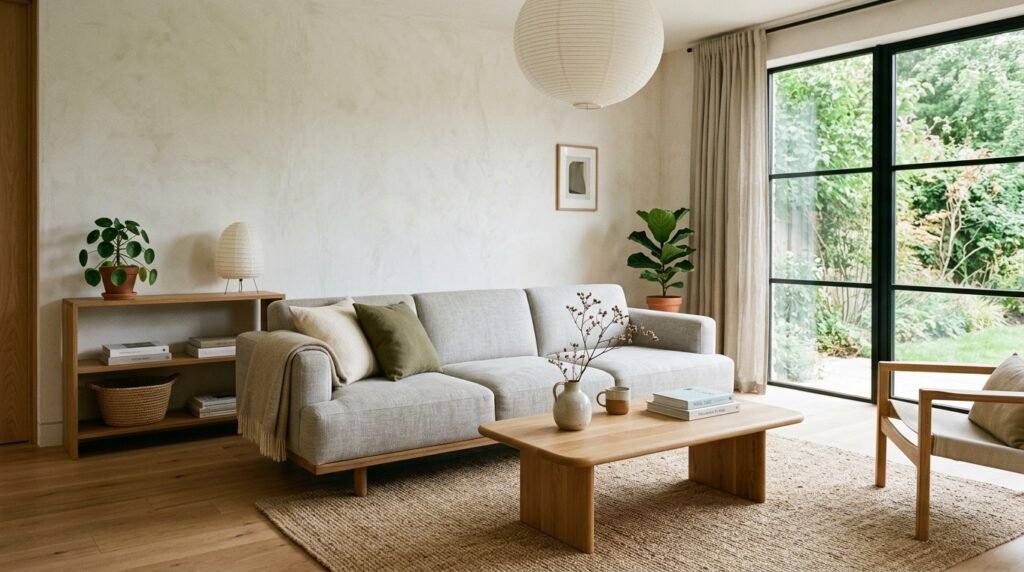
Japandi furniture is known for its clean lines, quality craftsmanship, and low-slung silhouettes, which create a calming, horizontal visual line. Choose a few well-made, functional pieces that are both beautiful and highly practical, considering the flow and negative space in your room.
5. Layer a Symphony of Organic Textures
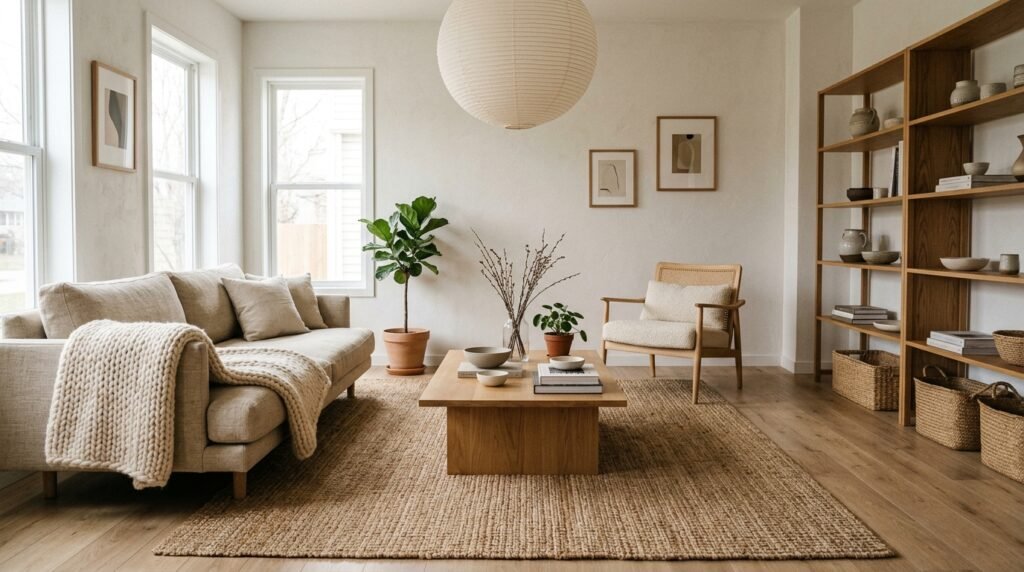
A successful Japandi living room is a masterclass in tactile diversity, featuring a variety of natural materials that contrast and complement each other. Introduce textures like linen, wool, and wood to create a rich sensory experience that is subtle yet deeply satisfying.
6. Curate with Statement Pottery and Ceramics
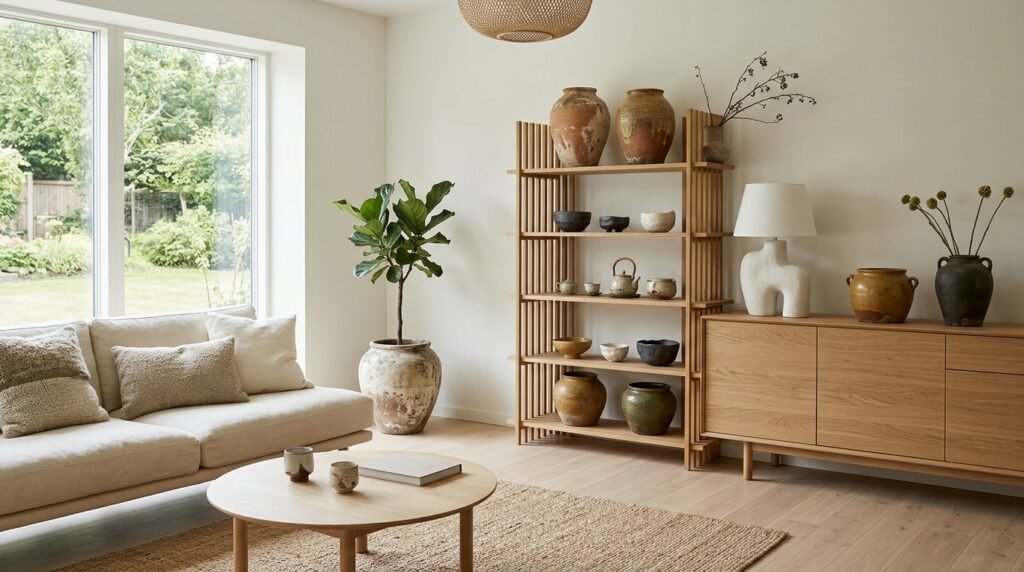
In a minimalist space, every object carries more weight. Japandi design champions the idea of ‘fewer, better things,’ particularly in the use of ceramics and pottery. Select a few high-impact, artisanal pieces that can stand on their own, adding a touch of wabi-sabi imperfection and human touch to your room.
7. Integrate Biophilic Design Elements
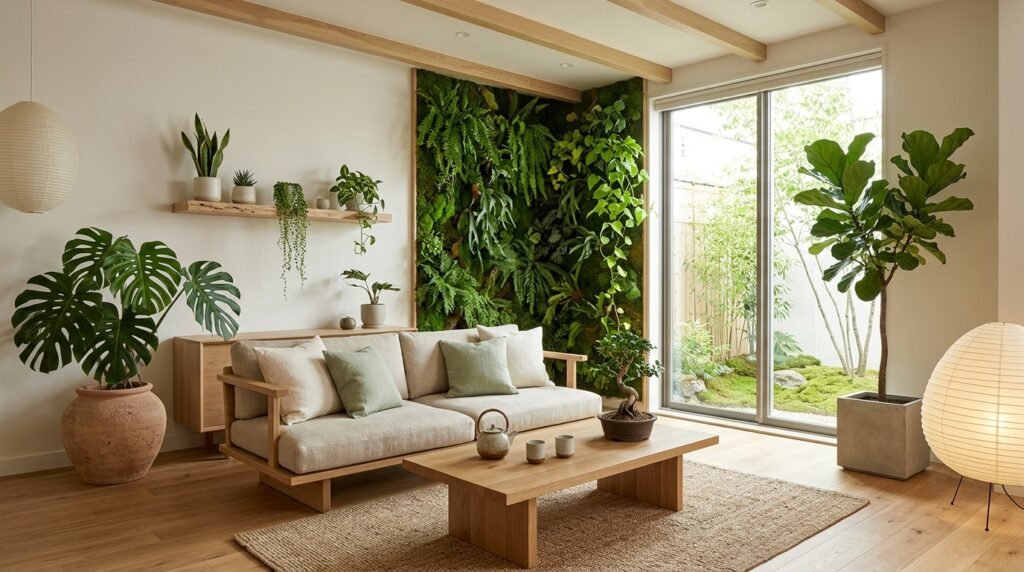
Bringing the outdoors in is essential for a true Japandi living room. Integrate natural elements like plants with strong, sculptural forms, or incorporate nature through materials like oak floors, linen curtains, and wool rugs. This creates a space that feels harmonious with the natural environment, promoting well-being and reducing stress.
8. Choose Minimalist, Meaningful Wall Art
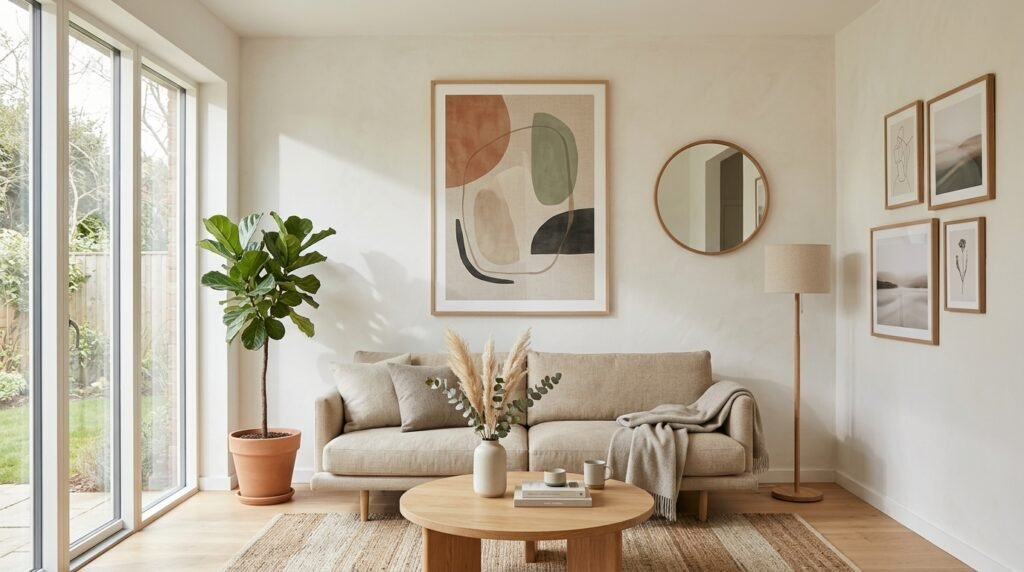
In a Japandi living room, walls are not meant to be covered but rather thoughtfully adorned. Opt for one or two large-scale pieces of art that create a significant impact, complementing the room’s serene atmosphere without overwhelming it. Consider simple, high-quality frames in natural wood tones or slim black frames for a touch of modern contrast.
9. Focus on Functional Simplicity and Decluttering
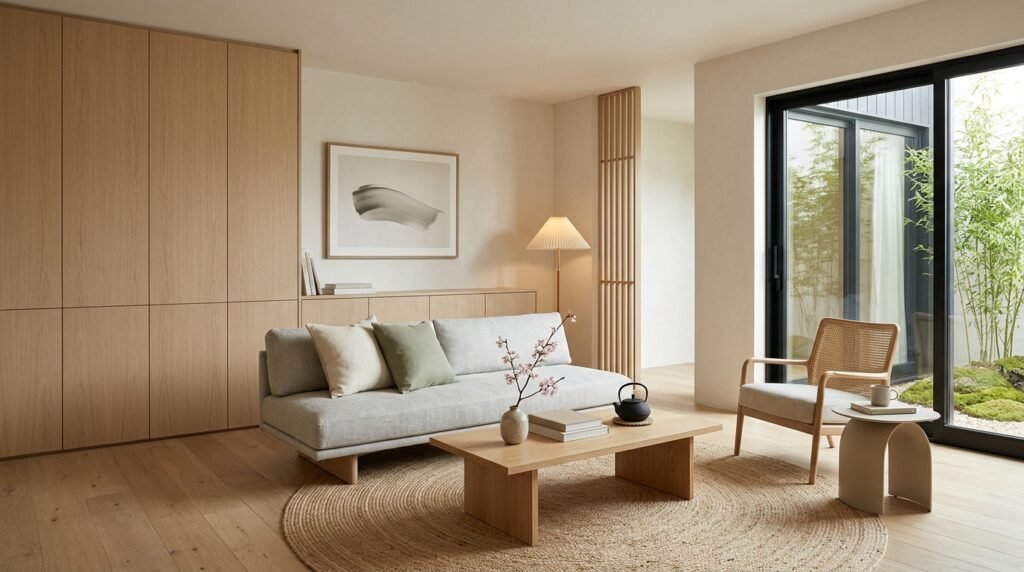
Japandi design is fundamentally about living with intention, which means embracing functionalism and decluttering. Ensure that everything in your living room has a purpose and a place, investing in clever, concealed storage to maintain a clean, uncluttered look.
10. Play with Contrasting Wood Tones
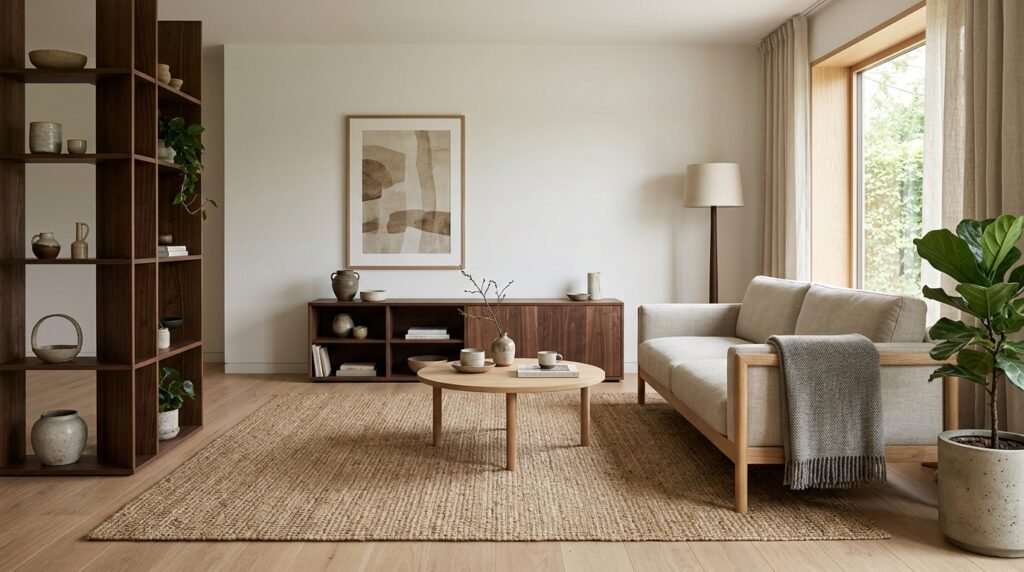
Introducing contrast through different wood tones is a hallmark of Japandi style. Pair light woods like oak with darker woods like walnut to create a dynamic yet harmonious visual balance. Choose woods with similar undertones to ensure they feel cohesive rather than chaotic.
11. Incorporate Natural Fabrics
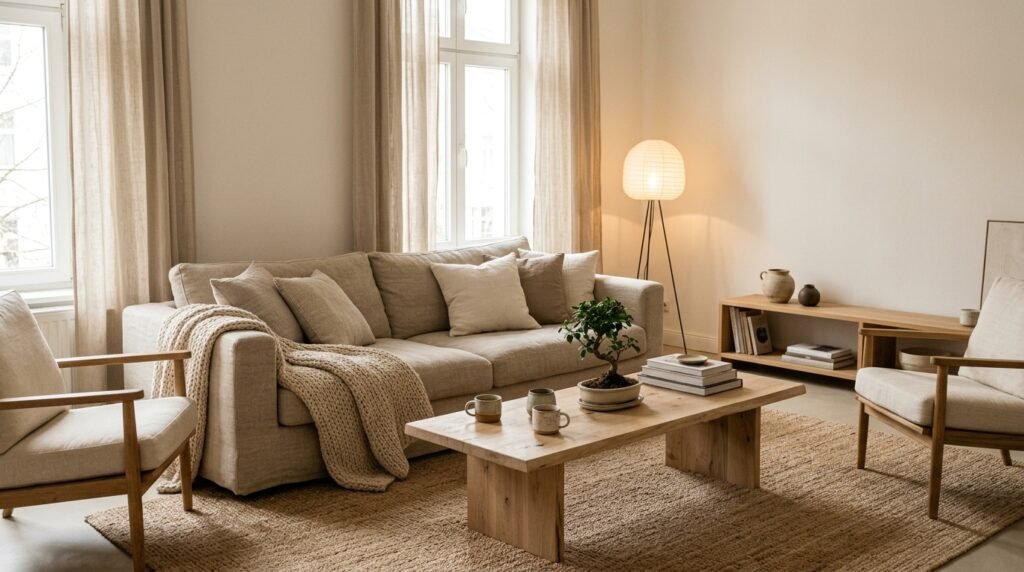
Natural fabrics like linen, cotton, and wool are essential in Japandi design, adding warmth and texture to your space. Use them for upholstery, throw blankets, and rugs to create a tactile and inviting atmosphere.
12. Bring in Plants with Sculptural Forms
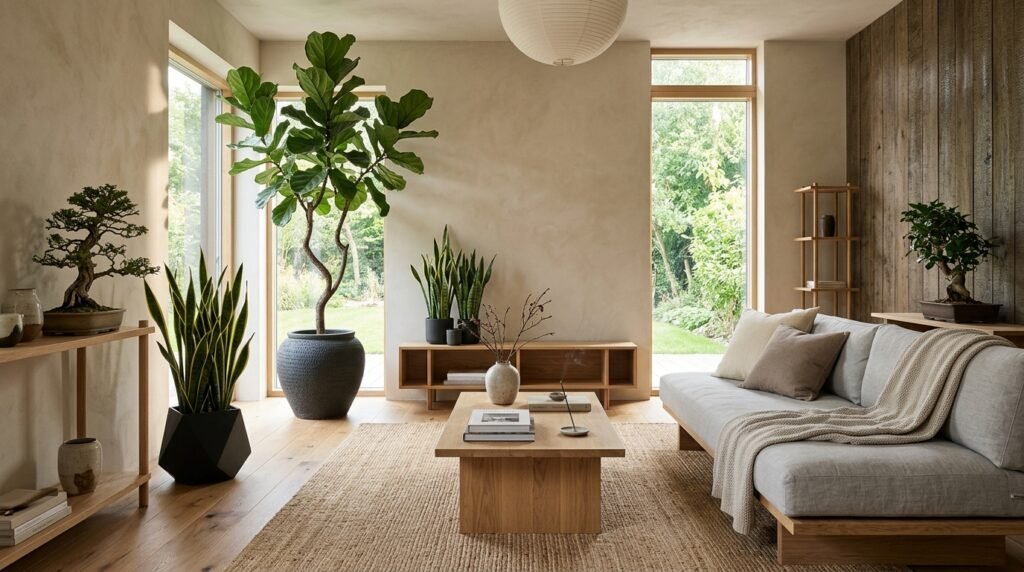
Plants are not just decorative elements in Japandi design; they are also a way to bring in natural beauty and serenity. Choose plants with strong, sculptural forms like Fiddle Leaf Figs or snake plants to add a touch of elegance to your space.
13. Use Rugs to Define Spaces
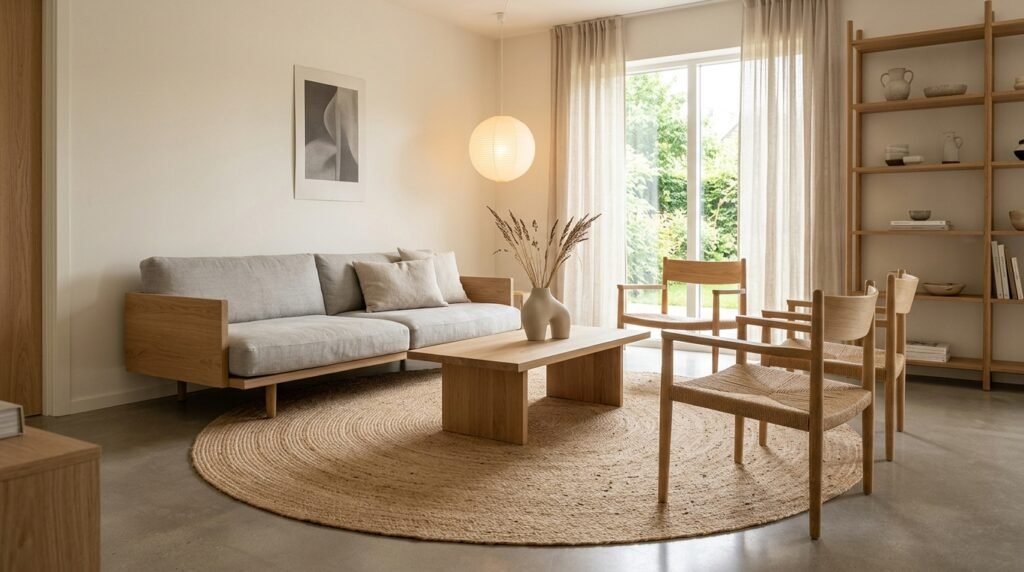
Rugs are a crucial element in Japandi design, helping to define different spaces within an open-plan living room. Choose natural fiber rugs like jute or sisal to add warmth and texture underfoot.
14. Select Simple, Elegant Lighting Fixtures
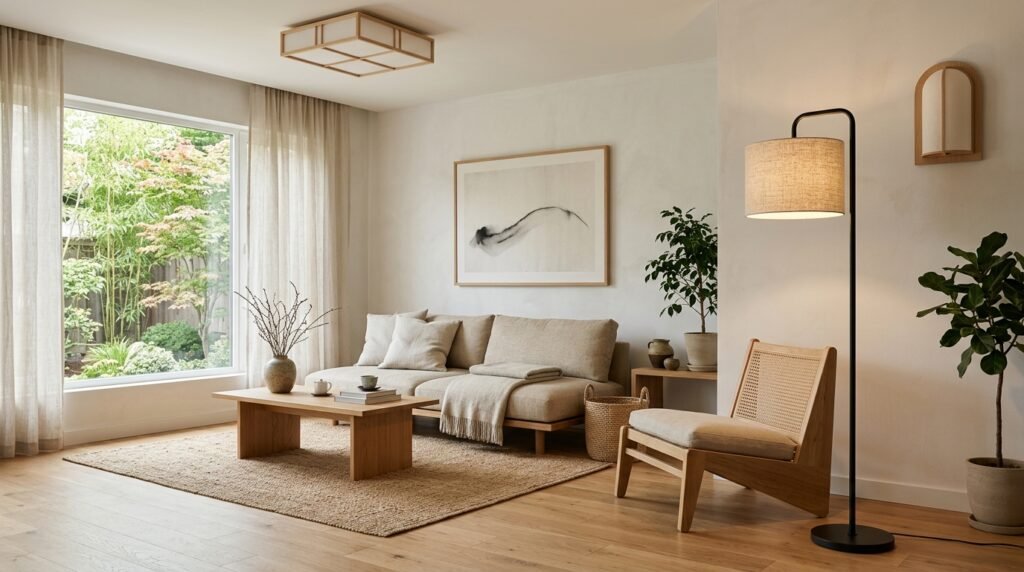
Lighting fixtures in Japandi design are characterized by their simplicity and elegance. Opt for minimalist floor lamps or table lamps with natural linen shades to create a warm and inviting atmosphere.
15. Incorporate Handmade or Vintage Items
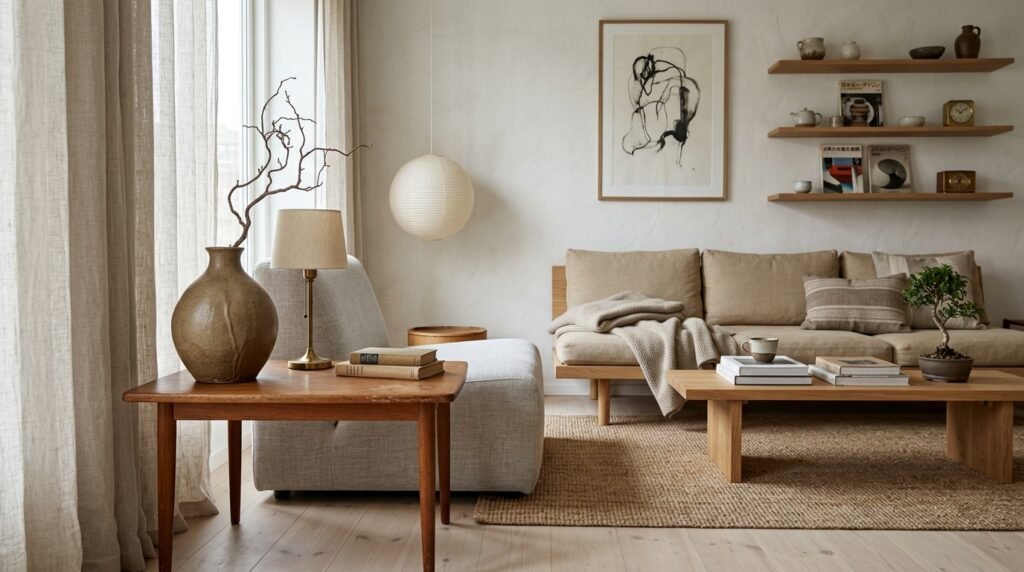
Handmade or vintage items are a great way to add personality and character to your Japandi living room. Look for unique pieces like handmade ceramics, vintage textiles, or antique furniture to create a space that truly reflects your style.
16. Create a Sense of Flow with Neutral Colors
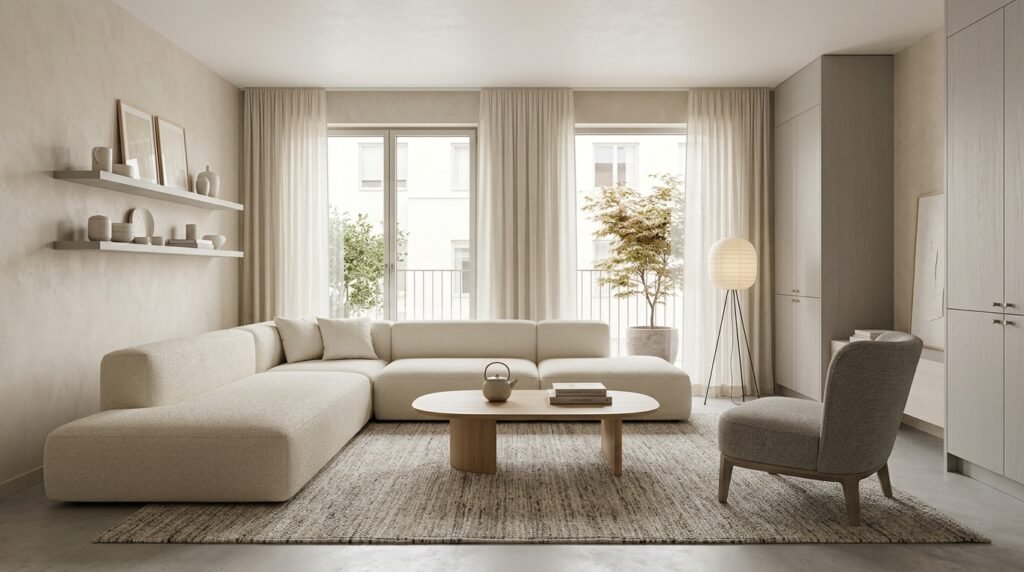
Neutral colors are essential in Japandi design, creating a sense of flow and continuity throughout your living room. Use shades like beige, cream, or grey to create a soothing atmosphere that promotes relaxation.
17. Add Warmth with Natural Wood Accents
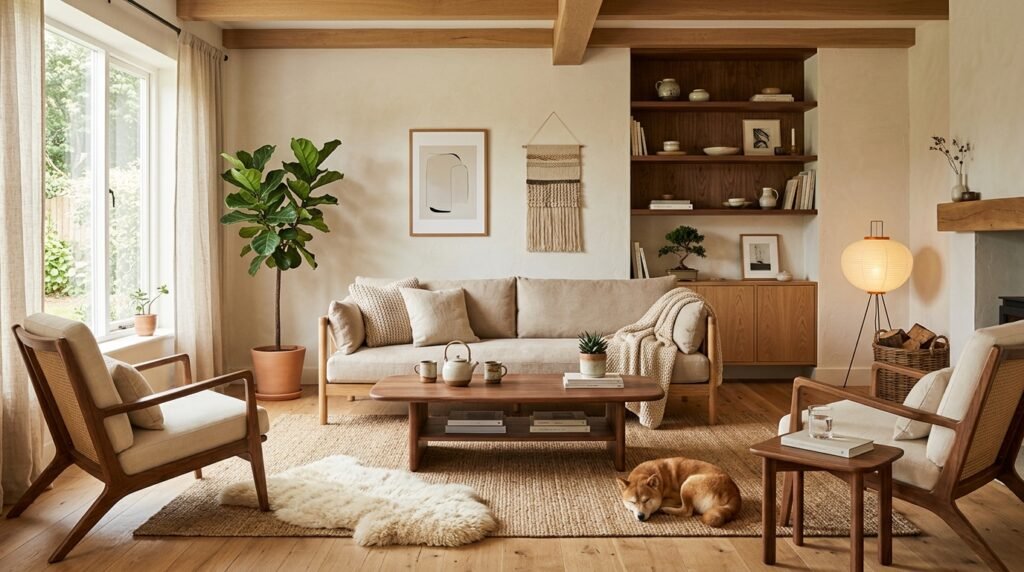
Natural wood accents like oak or walnut can add warmth and character to your Japandi living room. Use them for furniture, flooring, or wall paneling to create a cozy and inviting atmosphere.
18. Use Sheer Curtains for Soft, Filtered Light
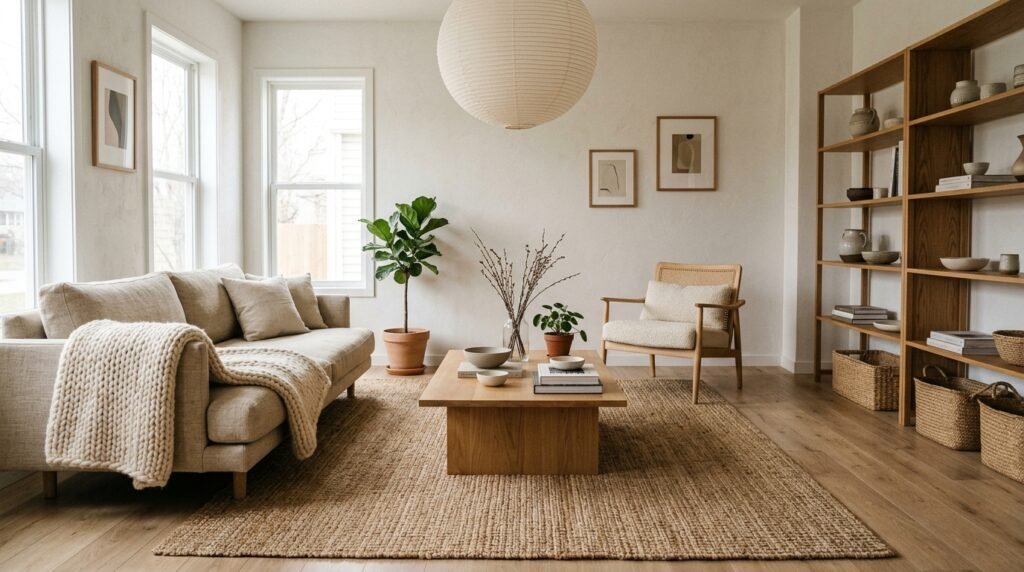
Sheer curtains are a staple in Japandi design, allowing soft, filtered light to enter your living room. They also help to create a sense of separation between indoors and outdoors, promoting a feeling of calm and serenity.